Ελληνικά
 English
 Deutsch
 Italiano
 Français
 Español
 Nederlands
 Polski
Kythnos, still known to locals as Thermia after its hot springs, is one of the Cyclades islands closest to Attica. Bare hills crossed by dry-stone walls, white chapels and dozens of coves make up a landscape that has changed very little.
The question of where to stay in Kythnos is simpler than on larger islands: there are few settlements and distances are short. Here you’ll find the areas and places to stay that we select one by one, based on their details.
Holiday homes and rental rooms are the most common types of accommodation on the island, while hotels are few and far between. You can find the full list on our page for places to stay in Kythnos.
How to choose an area
The island’s bases are few and clearly distinct:
- Chora: the central village, tucked away from the sea on the slopes of Prophet Elias; in the evening, you can get around on foot.
- Dryopida: the second mountain village, quieter, with tiled roofs rarely seen in the Cyclades.
- Merichas and Episkopi: the port and, a little farther north, a sandy beach with shallow water.
- Loutra: on the northeast coast, with a small marina and hot springs.
- Kanala: a pine-covered stretch of coast in the southeast, surrounding the pilgrimage site of Panagia.
For a first visit, Chora comes out on top, because everything is just a few minutes away by car. With young children, the Merichas area saves you daily trips. Let’s look at the places to stay.
Where to stay in Kythnos: our hand-picked homes
All four are self-contained homes with kitchens, making them convenient for longer stays. The first three are in Chora, Kythnos, where cars are left outside the village.
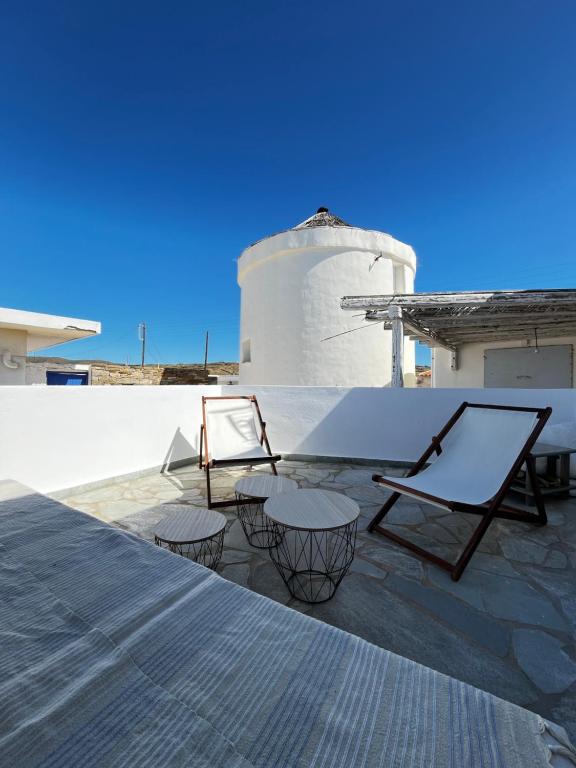
ONCE UPON, 3bedroom house in Chora
A three-bedroom home for up to six people, suitable for two couples or a family with older children. The kitchen has an oven and hob, the balcony and terrace are ideal for breakfast outdoors, and pets are welcome at no extra charge. The upper floors are accessible only by stairs, and there is no private parking.
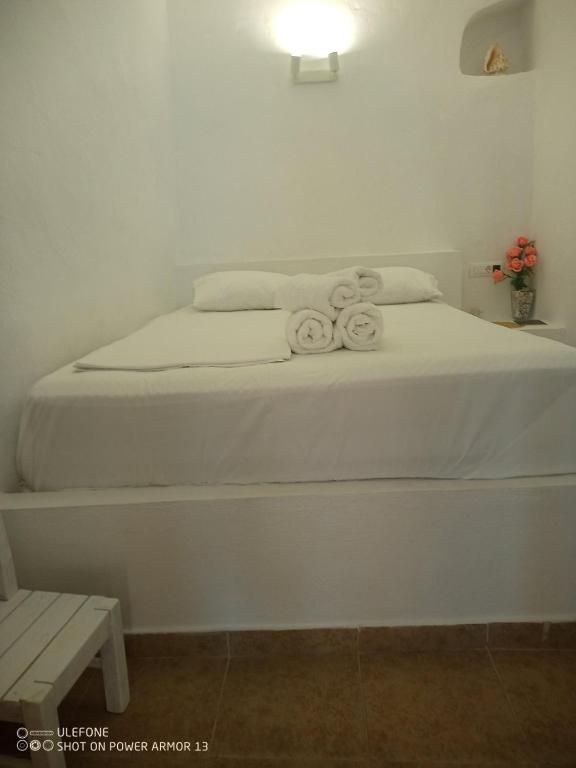
''RENATA'' Studio
A self-contained one-bedroom home designed for couples. In addition to a kitchen and dining area, it has a washing machine, useful for a week-long holiday, as well as a terrace and patio for evenings outdoors. There is no parking, so you’ll need to leave your car on the edge of the village.
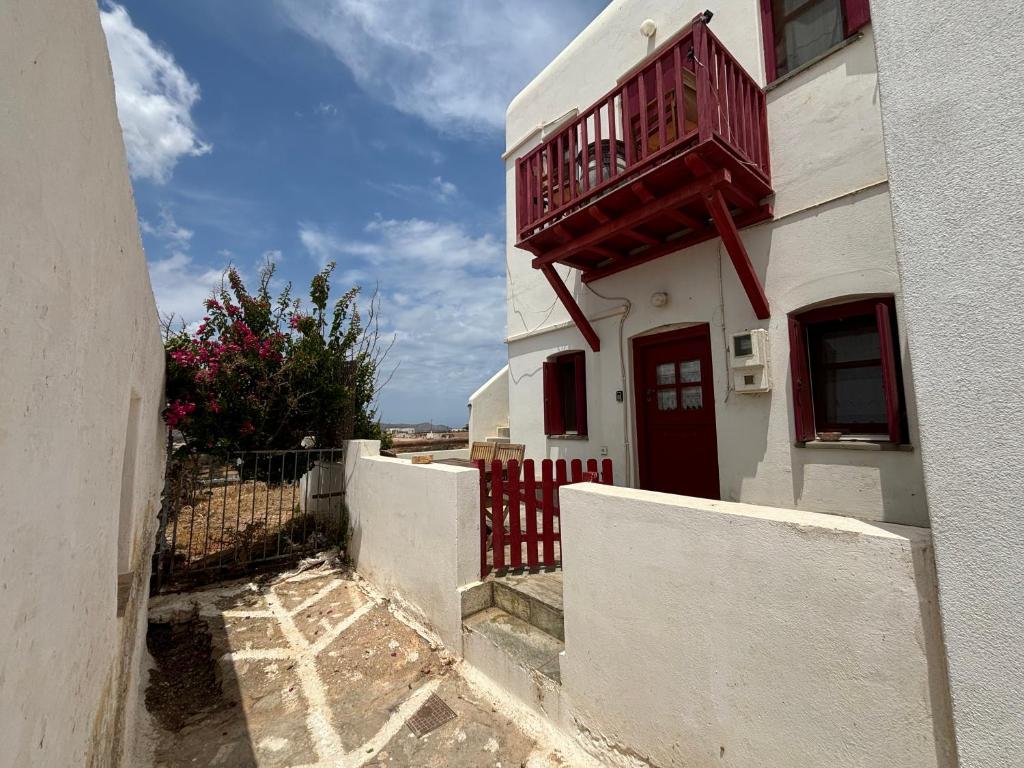
Verantaki
Two separate homes, each for four or five people, with their own kitchen and balcony, patio or terrace. They’re a good choice for families or two groups travelling together who don’t want to share the same space. Quiet hours apply from midnight to 8:00 am, and there is no parking.
If you’d rather wake up to a sea view, the fourth option is on the west coast, near Episkopi beach.
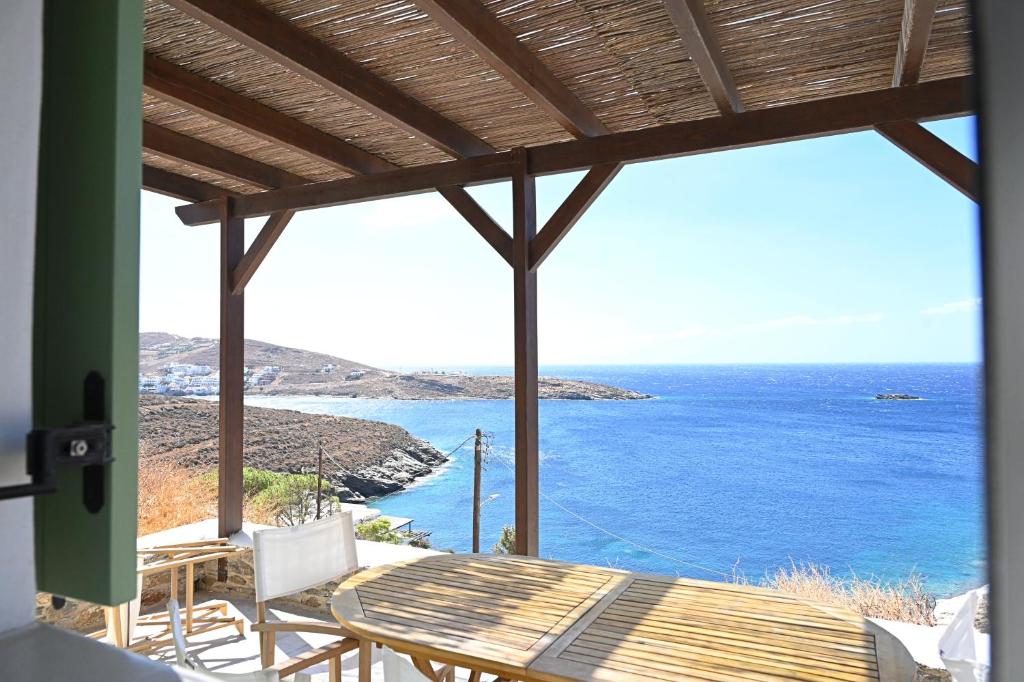
Sto Faro - Green
Two bedrooms and a living room with sofa beds accommodate up to six people, while the terrace looks out to sea. Episkopi’s sandy beach is a few minutes’ walk away, the kitchenette is enough for simple meals, and pets stay free. Check-in is only available from 15:00 to 18:00, and you must let the property know your arrival time in advance.
What to see in Kythnos
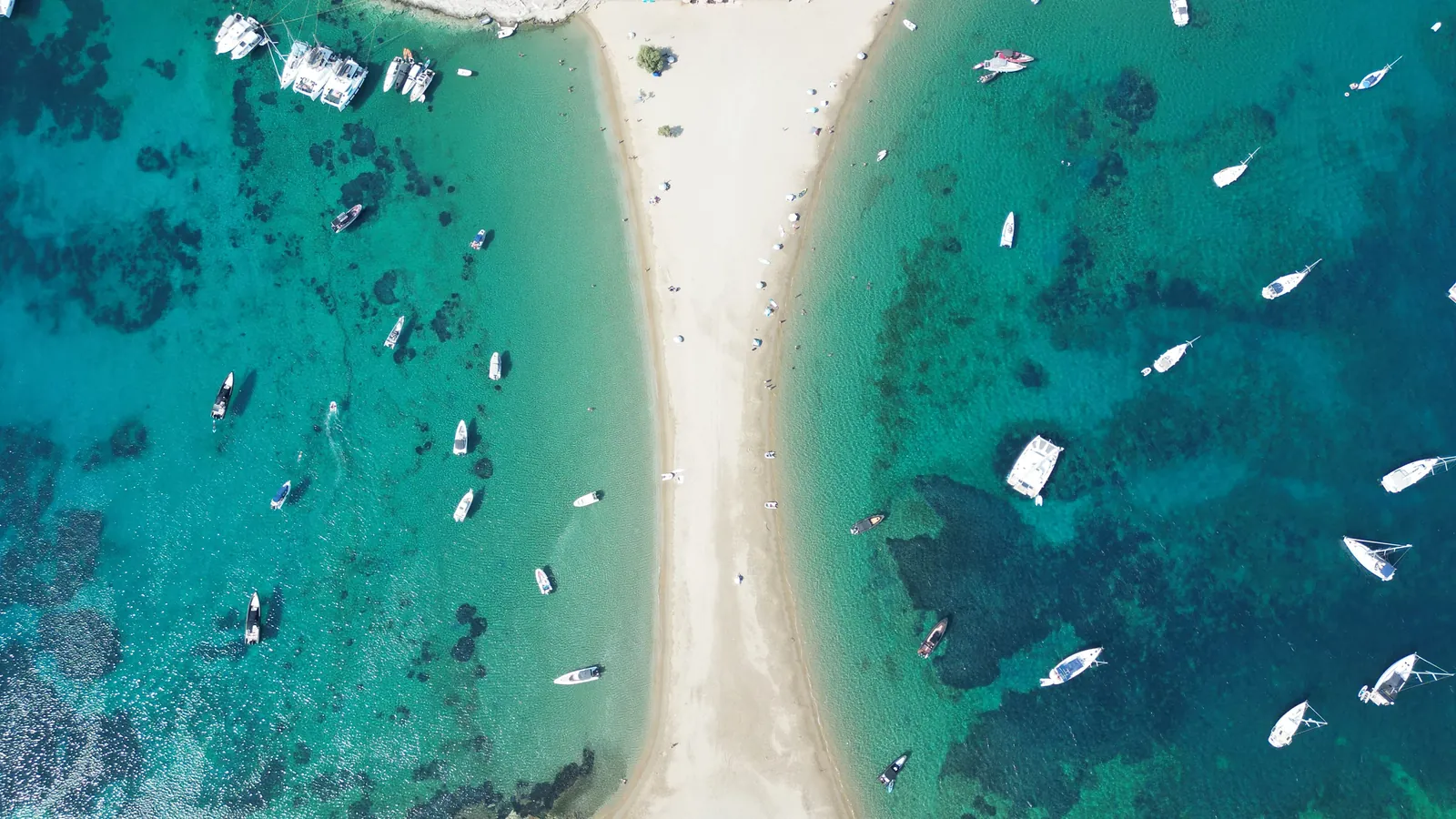
The island’s best-known sight is Kolona, a strip of sand about 230 metres long that connects the coast to the islet of Agios Loukas, with sea on both sides. Fikiada and the busy Apokrousi are on the same coast.
At Loutra, the Kakavos spring bubbles up at around 52 degrees and flows into the sea, where a natural pool among the rocks mixes the hot spring water with seawater. The historic hydrotherapy centre, dating from the time of Otto, has been closed for two decades. Its restoration as a wellness hotel is planned, but work had not begun by summer 2026.
In Chora, the old primary school houses the Archaeological Museum, with finds from the ancient city at Vryokastro and the Mesolithic settlement at Maroulas. A path from Chora leads to the ruins of Vryokastro on the west coast.
Dryopida and Katafiki
Dryopida has paved lanes, a folklore museum and the Piața square with its cafés. At the edge of the village is Katafiki Cave, where locals took refuge during pirate raids; part of it was used as a mine until 1945. If you’d like to visit, ask in the village whether it’s open at that time of year.
Walking paths connect the villages with beaches and chapels. At the table, try , fried meatballs made with local cheese, and the island’s thyme honey.
When to visit Kythnos
June and September are the most balanced months, with warm sea temperatures and quiet beaches. In August, the island’s proximity to Athens brings crowds, especially at weekends, and the meltemi winds often blow hard.
On 15 August and 8 September, the island celebrates Panagia Kanala, its patron saint, with festivals that bring the whole of Kythnos together. In summer, the “Kythnia” events programme brings concerts, theatre and exhibitions to the small theatre in Dryopida, Chora and the ports. If you’re travelling on those dates, book early.
How to get there and get around
Kythnos has no airport. Ferries dock at Merichas: the journey from Lavrio takes under two hours, while the trip from Piraeus takes about three, with fewer sailings. Many ferries continue to Serifos and Sifnos.
A car or scooter is almost essential on the island, as most beaches are reached by dirt roads. Local buses run infrequently. For other bases in the Aegean, see our page on the Cyclades.
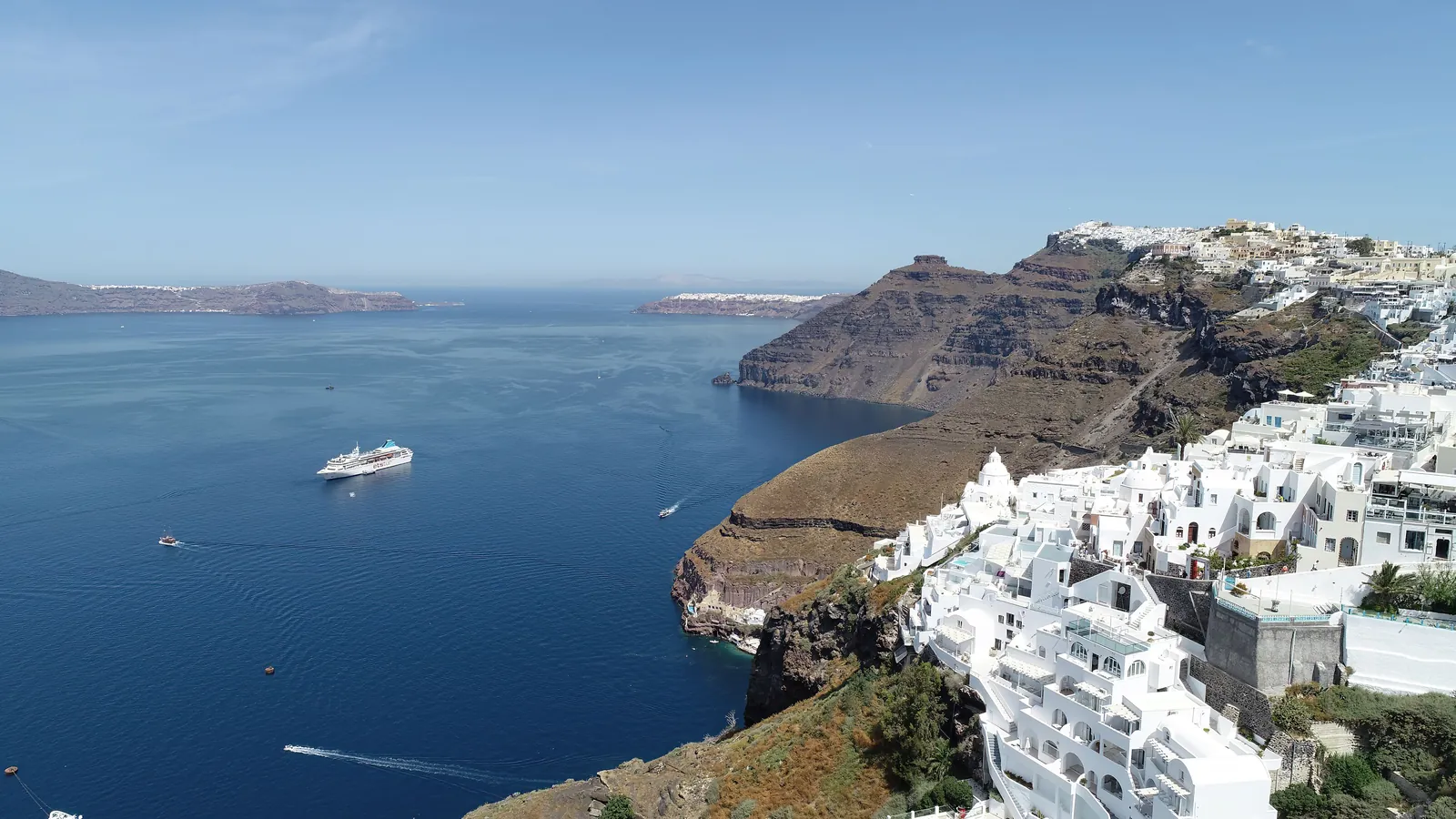
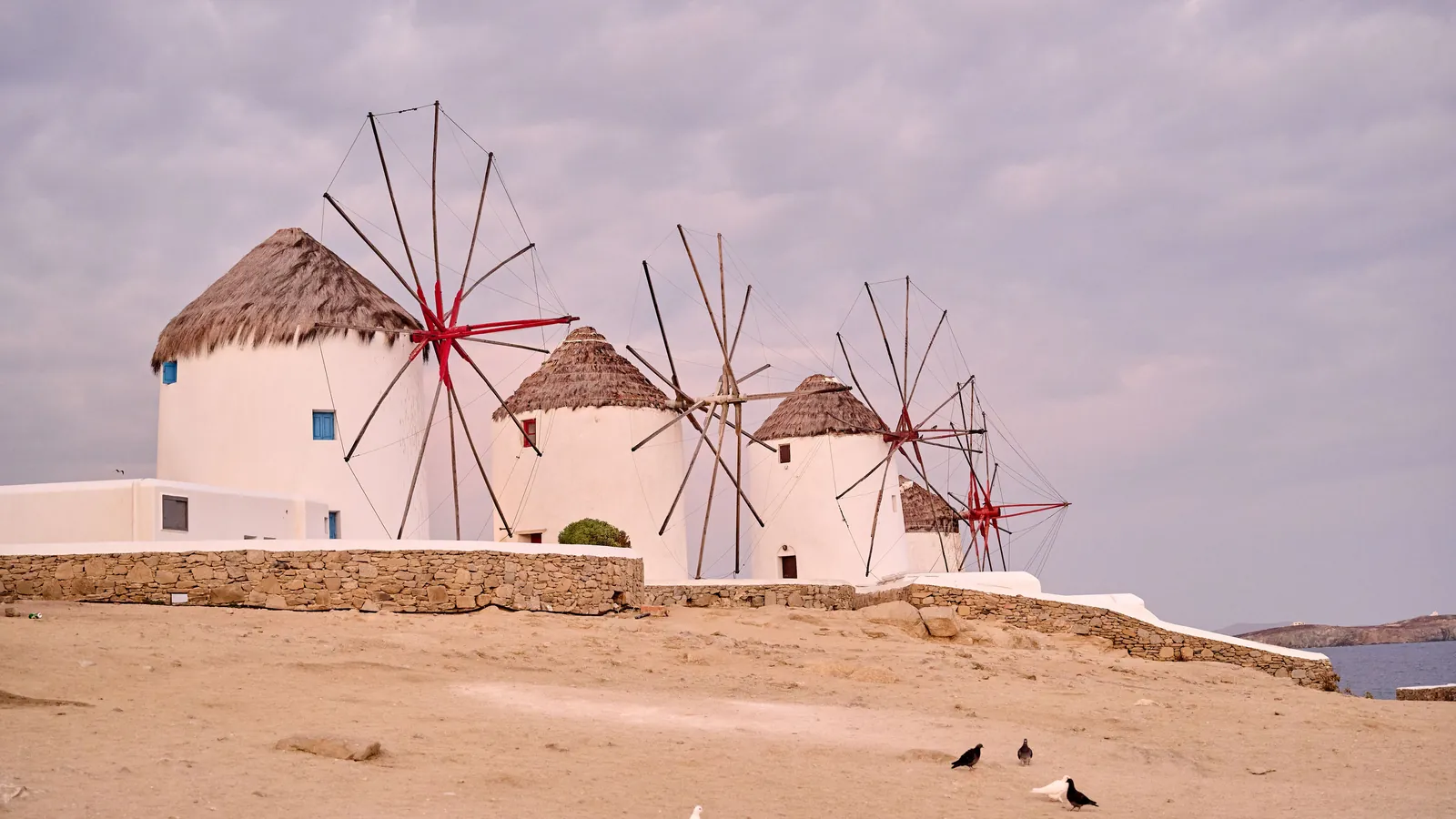
Kythnos is included in our guide to where to stay in the Cyclades, and our article on how to get to the Cyclades will help with ferries from Piraeus and Lavrio. To compare Kythnos with busier islands, read where to stay in Santorini, for the caldera, and where to stay in Mykonos, for a livelier summer.
Frequently asked questions
Quick answers to the most common questions.
What is the best area to stay in Kythnos?
For most travellers, the best base is Chora, the island’s central village. Its lanes are closed to cars, most of the island’s restaurants are here, and all the beaches are a few minutes’ drive away. Those who want to swim without making daily trips often choose Merichas and Episkopi, while Dryopida and Loutra suit visitors looking for more peace and quiet.
How do you get to Kythnos?
Kythnos has no airport, so the only way to get there is by ferry to the port of Merichas. The shortest journey starts from Lavrio and takes under two hours, while the trip from Piraeus takes about three hours and there are fewer sailings. Many ferries on the route continue to Serifos and Sifnos. In August, book your tickets well in advance, especially if you’re bringing a car.
Do you need a car in Kythnos?
Yes, in most cases. Beaches are scattered along the coastline and many are reached by dirt roads, while local buses run infrequently. You can bring your own car or rent one at the port. In Chora, however, cars stay outside the village, so homes there usually don’t have private parking and you’ll need to walk a little with your luggage.
Can you swim in the hot springs at Loutra?
Yes. At Loutra, on the northeast coast, the Kakavos spring bubbles up at around 52 degrees and flows into the sea, where a natural pool among the rocks mixes hot spring water with seawater. Access is free, and many people swim there even in winter. The settlement’s historic hydrotherapy centre has been closed for years; restoration is planned, but work had not begun by summer 2026.
When is the best time to visit Kythnos?
June and September are the most balanced months, with warm sea temperatures, fewer people on the beaches and easier ferry bookings. In August, the island gets crowded, especially at weekends, and the meltemi winds often blow hard. Panagia Kanala is celebrated with major festivals on 15 August and 8 September, while the summer “Kythnia” events bring music and theatre to the villages.