Ελληνικά
 English
 Deutsch
 Italiano
 Français
 Español
 Nederlands
 Polski
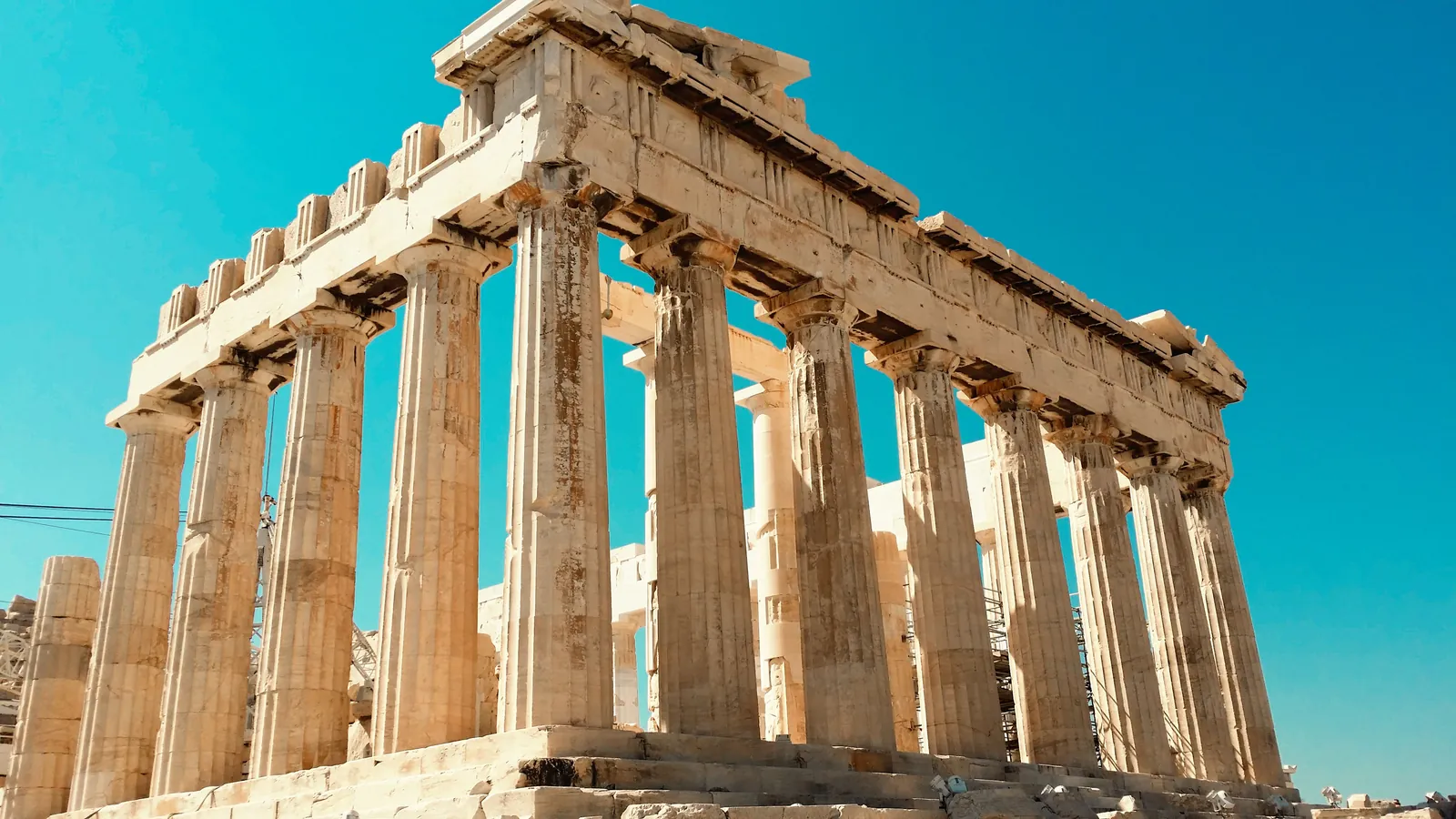
Athens lives between two eras: the rock of the Acropolis is visible from almost every rooftop in the centre, while the surrounding streets are lined with cafés, galleries and interwar apartment blocks. The capital is no longer just a stopover before the islands; it deserves three or four days, with a few more for trips around Attica.
The question of where to stay in Athens is mostly about choosing a neighbourhood: just a few streets can completely change your experience, from Plaka’s quiet steps to the bars of Psyrri. In this guide, you’ll find neighbourhoods to suit different kinds of trips, as well as places to stay that we select one by one based on their features.
Our picks are mostly hotels, followed by aparthotels with kitchens and a few villas and homes for groups. You’ll find the full list on our page of places to stay in Athens.
How to choose a neighbourhood
Athens is spread out, but almost everything you’ll want to see on a first visit fits within a few kilometres of the Acropolis. The main options:
- Plaka and Anafiotika: the old town below the rock, with pedestrian streets and neoclassical houses. The most central and quietest at night, but with few places to stay and high demand.
- Koukaki and Makrygianni: south of the Acropolis, next to the Acropolis Museum and Philopappos Hill, these are everyday neighbourhoods with metro stations.
- Monastiraki, Psyrri and Thiseio: the liveliest side of the centre, with the Ancient Agora, the flea market and plenty of bars; ideal for those who go out, less so for light sleepers.
- Syntagma and the commercial centre: a hub for the metro and airport buses, with Ermou Street and its shops close by.
- Gazi and Kerameikos: west of the centre, around Technopolis, with nightlife and newer hotels.
- Kolonaki and Pangrati: the former is more elegant, while the latter has the character of an old neighbourhood and plenty of tavernas; both are close to Lycabettus Hill and the Panathenaic Stadium.
- Northern suburbs: Marousi and Chalandri offer greenery, quiet and easier parking, but are about ten kilometres from the centre.
For a short trip focused on museums, stay as close to the Acropolis as possible: you’ll save hours that would otherwise be spent getting around. If Athens is your starting point for the islands, Piraeus is convenient for early-morning ferries. Here are our picks by neighbourhood.
Plaka, Koukaki and Makrygianni
Stay below the Acropolis and you can start the day on foot and return for a midday break, when the summer heat gets intense. Apartments with kitchens are particularly well suited to families and groups here.
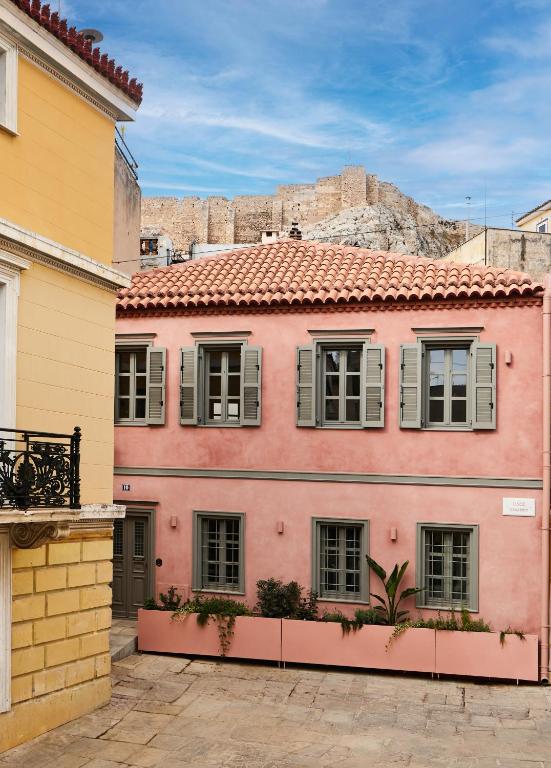
En Plaka - Athens Elegant Estate
An entire 250 sq m villa in Plaka, with four bedrooms, four bathrooms and space for up to seven guests: a rare option for a large family or two or three couples in the heart of the old town. The kitchen has an oven and dishwasher, while the private hot tub and terrace offer a place to unwind after a walk. There is no parking, and quiet hours apply from 23:00.
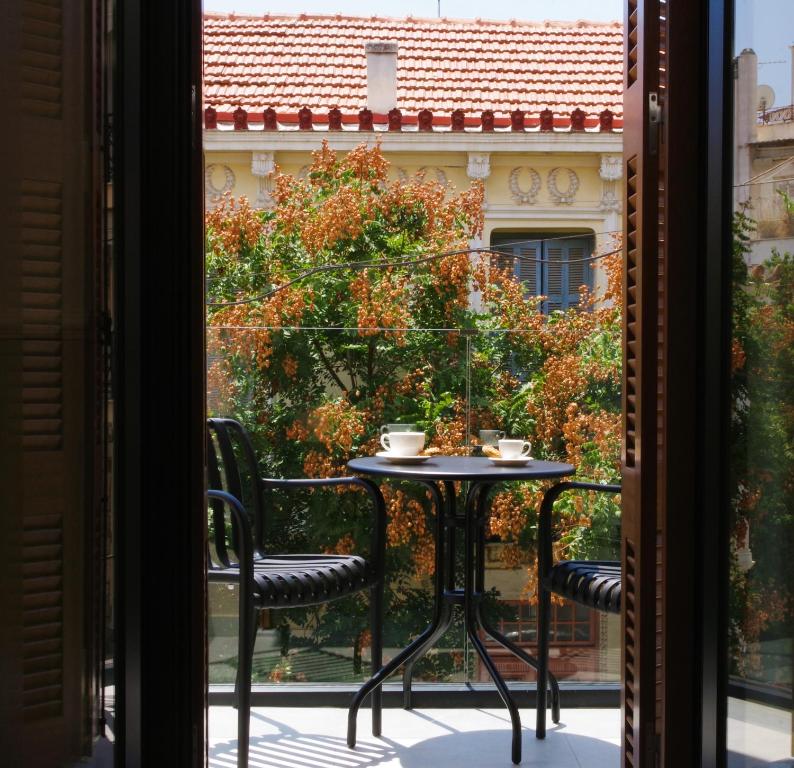
Absolute Athens Acropolis Muses
Apartments with a living area and kitchen, about 300 metres from Syngrou-Fix station, with the Acropolis and Acropolis Museum within walking distance. The 92 sq m two-bedroom apartment accommodates up to six guests, and several units have a balcony or terrace with city views. There is no parking, and quiet hours are from 22:00 to 08:00.

12 Keys Athens Apartments
An aparthotel designed for families, with 55 and 70 sq m apartments for up to five guests and kitchens in most units. Acropolis station on Line 2 is about 400 metres away, as is the Acropolis Museum. Check-in is available until midnight; please let the property know your arrival time in advance. The nearby car park is public and charges apply.

Monastik Living in Athina
Suites with a kitchenette, fridge and microwave, overlooking the city, the Acropolis or Philopappos Hill. The terrace with its outdoor hot tub is a good reason to return early in the afternoon, and the Acropolis Museum is a few minutes’ walk away. There is no free parking; public parking in the area is charged by the hour.
Monastiraki, Psyrri and Thiseio
The city never stops here: in the morning, there’s the flea market and Ancient Agora; in the evening, meze restaurants and rooftop bars. Our three picks each tackle the question of noise differently.

BED in Athens
Located in Psyrri, about 200 metres from Monastiraki station, served by Lines 1 and 3, making it convenient for both Piraeus and the airport. The rooms are soundproofed, a valuable feature in a neighbourhood that stays up late, and there’s a lift. The 35 sq m Loft sleeps up to four; there is no parking.

Bellén Athens Ηotel
A four-star hotel near Monastiraki and Thiseio stations, with the Ancient Agora and Acropolis within walking distance. It has a gym, sauna and a suite with a private pool, and is one of the few places in this guide with accessible rooms, a lift and wheelchair access. Parking is not available.
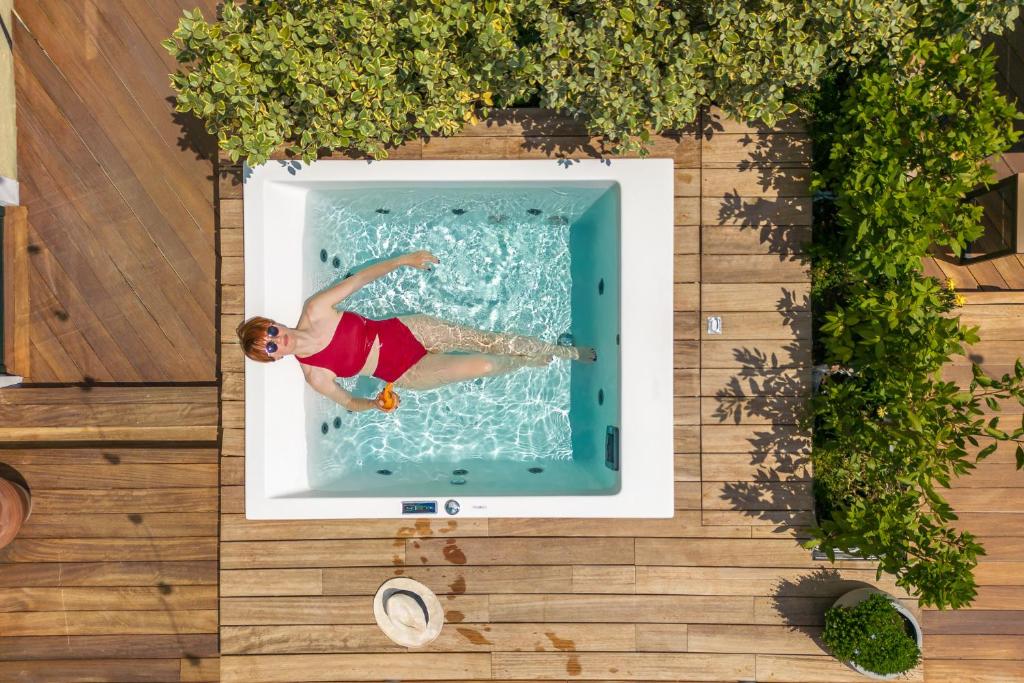
Moon And Stars Athens
In Thiseio, just steps from the Temple of Hephaestus and the Ancient Agora, with a sunny terrace, hot tub and breakfast that can be served in your room. The hotel rents bicycles and organises city rides. The building has no lift and faces a busy street, so it may not suit those who find stairs difficult or are light sleepers.
The commercial centre and Gazi
A little farther from the rock but close to metro lines, these three picks offer more amenities: spacious suites, gyms and, in Gazi, a pool.

The Pinnacle Athens
A five-star aparthotel in the commercial centre, between Monastiraki and Panepistimio stations, with Monastiraki Square and the archaeological sites within walking distance. Suites reach 60 sq m; some sleep up to six guests, and many have a kitchenette. A credit card deposit is required on arrival, and there is no parking.

Athens Woo Suites
A four-star hotel in the centre, with suites featuring separate bedrooms and living rooms, a gym, garden, terrace and free Wi-Fi throughout. It suits those who want to explore museums and archaeological sites on foot and enjoy a comfortable room for a stay of a few days. The minimum stay is two nights, and there is no parking.

Not Boutique Hotel
A five-star adults-only hotel in Gazi, about 200 metres from Kerameikos station, with an outdoor pool, gym and Greek restaurant. The Daphne and Gazia suites overlook the Acropolis, while others have a courtyard, terrace or balcony. Children are not accepted, and parking in the area is privately operated and charged.
Northern suburbs, for those with a car
The northern suburbs are greener and quieter than the centre, and suit those visiting for work, travelling by car or bringing a pet. The trade-off is the distance from the sights.
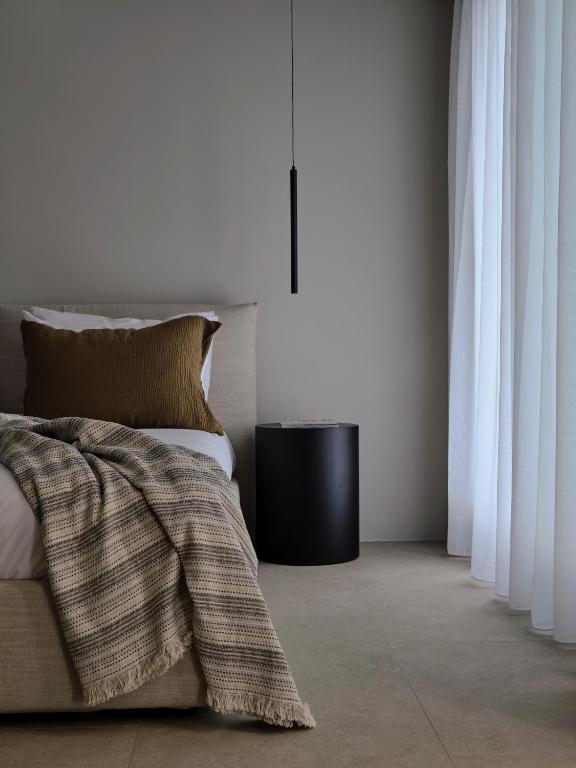
Bond Smart Living Suites
A hotel in Chalandri with suites and a maisonette, many with private balconies, and a rooftop pool. Free private parking, a gym and a hot tub make it convenient for business trips or for those travelling around Attica by car. The historic centre is several kilometres away, the nearest station is not right next door, and check-in starts at 15:00.

Orpheus Guesthouse
An independent home in Marousi, with a private kitchen, terrace and garden views, about 350 metres from Marousi station on Line 1. It’s the only place in this guide that accepts pets, and there’s no extra charge. Omonia is about ten kilometres away, so allow time for the metro; there is no parking.
What to check before booking
Places to stay in central Athens have a few particularities worth knowing about in advance, so you won’t be caught by surprise when you arrive.
- Parking: almost no places to stay in the historic centre have their own parking, and public car parks charge. If you’re arriving by car, consider the suburbs or leave it in a car park for your entire stay.
- Noise: in Monastiraki, Psyrri and Gazi, ask for a room on a higher floor or facing the courtyard, or choose somewhere with soundproofing.
- Stairs and lifts: many buildings in the centre are old, and some have no lift; check if you’re travelling with large suitcases or older people.
- Rooftops and views: views of the Acropolis are one of the city’s biggest draws, but they usually apply to specific rooms or suites, not the entire property.
- House rules: apartments and villas often have quiet hours, a two-night minimum stay or an arrival time that you need to arrange in advance.
What to see in Athens
Start early at the Acropolis, before the tour groups and the heat: the Propylaea, Parthenon, Erechtheion and Temple of Athena Nike. Tickets are for a specific entry time, and on heatwave days the site often closes around midday, so morning is the safest choice. Below, the Acropolis Museum displays the Parthenon sculptures in a glass-walled gallery overlooking the temple itself.
On the south slope of the rock, the Odeon of Herodes Atticus closed after its June 2026 performances for conservation and restoration work expected to last at least three years; in the meantime, you’ll only be able to see it from above. A little farther down, the Ancient Agora, with the Stoa of Attalos and the Temple of Hephaestus, and Kerameikos, the ancient city’s cemetery, are usually much less crowded.
The National Archaeological Museum is worth half a day on its own. At Syntagma, in front of Parliament, the changing of the Evzones’ guard takes place every hour. A little farther on, the National Garden leads to the Panathenaic Stadium, venue of the first modern Olympic Games in 1896. For views, head up Lycabettus Hill or Philopappos Hill at sunset.
Make time for the neighbourhoods too: Anafiotika, with its white houses below the rock, built in the 19th century by craftsmen from Anafi; Varvakios Central Market on Athinas Street, with its meat, fish and spices; and the tavernas of Koukaki and Pangrati for meze and wine.
Day trips around Attica
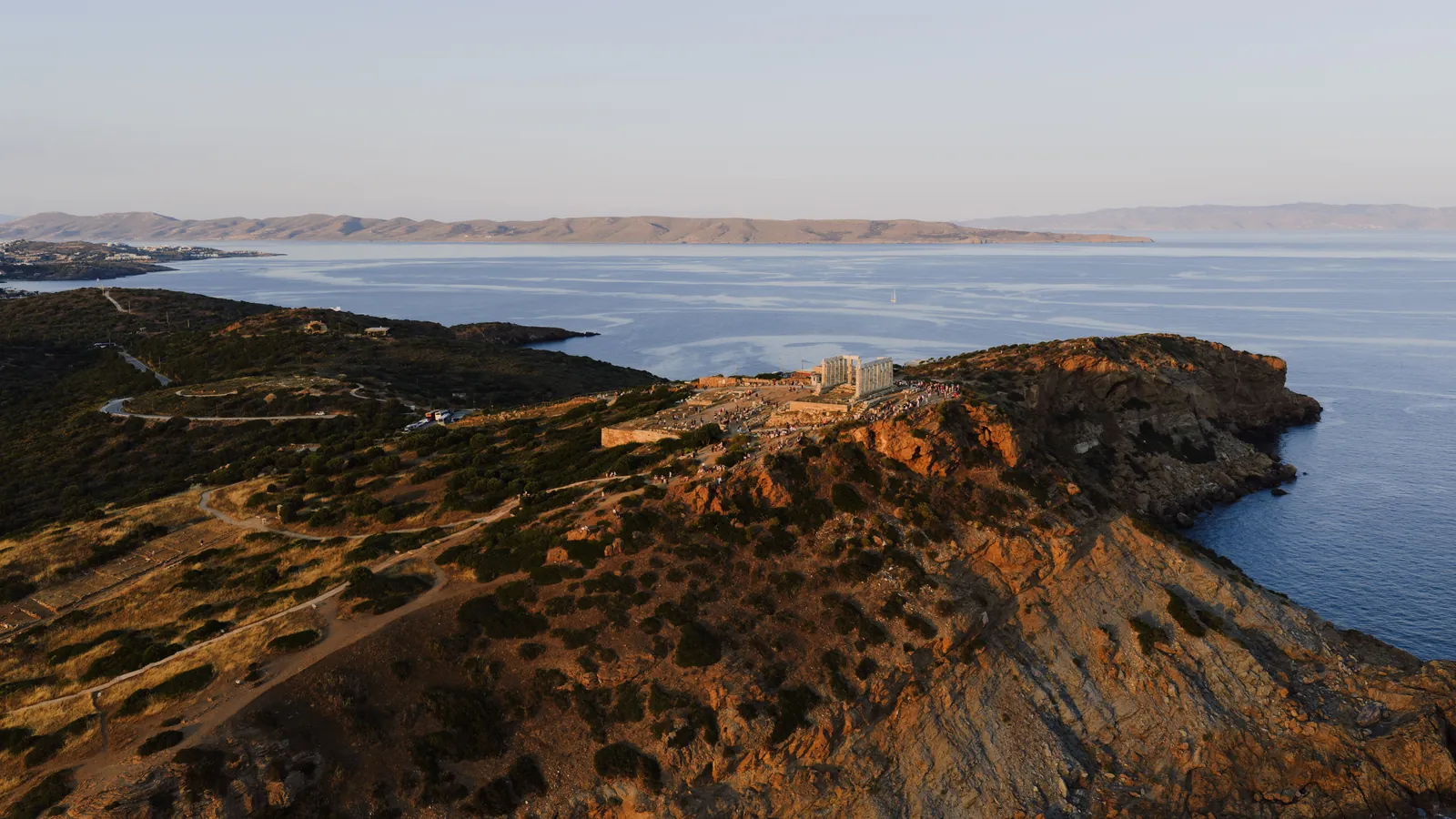
- Cape Sounion: the Temple of Poseidon at the tip of the cape, about 70 kilometres from the centre, is a classic sunset trip; see places to stay in Sounion.
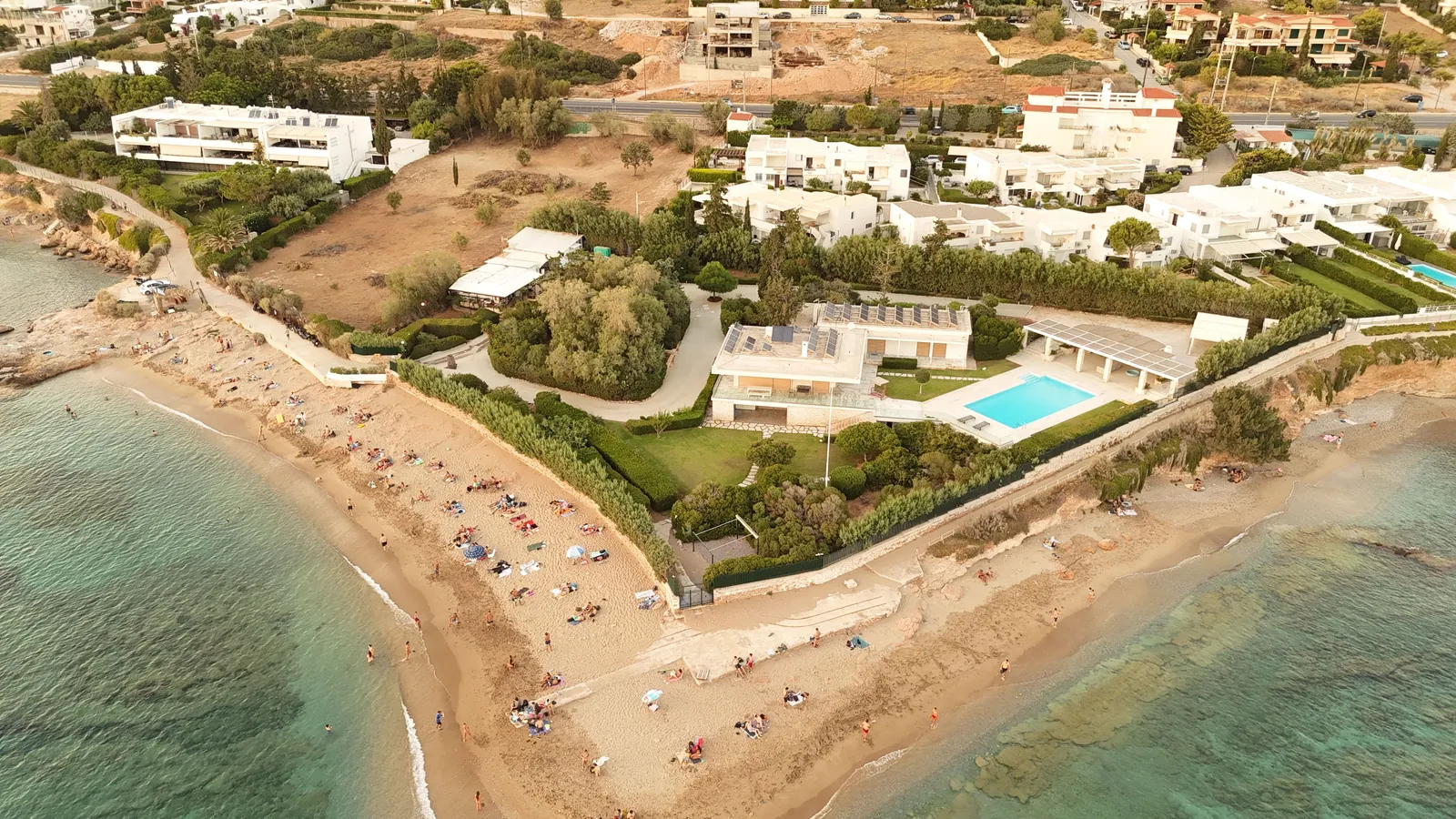
- Athens Riviera: organised beaches stretch from Faliro to Vouliagmeni and Varkiza, with Lake Vouliagmeni for swimming even in winter.
- Marathon: the Tomb of the Athenians and the long Schinias Beach on the east coast; see Marathon.
- Saronic Islands: Aegina, Agistri, Poros and Hydra, reached by ferry from Piraeus, make for a day by the sea.
When to visit Athens
Spring and autumn are the best seasons: temperatures are good for walking, the days are sunny and, in September and October, the sea is still warm along the Riviera. In July and August, temperatures often exceed 35 degrees; a place to stay with a pool or hot tub is worth considering for a midday break. Winter is mild, with fewer people at the museums.
Every summer, from around late May to late August, the Athens and Epidaurus Festival fills the evenings with theatre, dance and music. Its main city venue is Peiraios 260, with ancient drama staged at Epidaurus. Every November, the Athens Authentic Marathon follows the route from Marathon to the Panathenaic Stadium, and places to stay in the centre fill up early. The same is true at Easter, with Good Friday processions and the Resurrection celebrations.
How to get there and get around
Eleftherios Venizelos Airport is in the Mesogeia area, east of the city. Metro Line 3 reaches Syntagma in about 40 minutes and continues to Monastiraki and Piraeus, while the X95 bus runs to Syntagma around the clock and the X96 goes to Piraeus. A taxi is the most comfortable option if you arrive late at night or with a lot of luggage.
Most central sights can be reached on foot, and three metro lines and the tram cover the rest, including routes towards Faliro and the Riviera beaches. You’ll see construction sites for the new Line 4 in central neighbourhoods, with stations planned for areas such as Exarchia and Kolonaki; according to the schedule, the first section is due to be completed in late 2029.
A car in the centre is more of a burden than a help: traffic is heavy, parking is difficult and few central places to stay have a car park. Rent one only for day trips or if you’re staying in the suburbs. Ferries to the islands leave from Piraeus, Rafina and Lavrio; for other bases in the region, see the Attica page.
Athens is part of our guide to where to stay in Attica. If you’d like to combine the city with the seaside and easy access to the airport and Rafina port, also see our guide to where to stay in Artemida.
Frequently asked questions
Quick answers to the most common questions from people planning a trip to Athens.
What is the best area to stay in Athens?
For a first visit, the best areas are around the Acropolis: Plaka for quiet and atmosphere; Koukaki and Makrygianni for an everyday neighbourhood beside the Acropolis Museum; and Monastiraki, Psyrri and Thiseio for those who want food and nightlife right on their doorstep. Gazi suits those looking for nightlife, while the northern suburbs, such as Marousi and Chalandri, are convenient for those with a car or travelling for work.
Are Monastiraki and Psyrri very noisy?
They’re among the city’s liveliest neighbourhoods, with bars, meze restaurants and people out on the streets until late, especially at weekends. If you’re a light sleeper, choose somewhere with soundproofed rooms or a room facing an inner courtyard, and ask which floor it’s on. Alternatively, Plaka and Koukaki are much quieter at night and only a few minutes’ walk from Monastiraki, so you won’t miss out on the city-centre buzz.
Do you need a car in Athens?
No, if you’re staying in the centre. The main sights are just a few minutes’ walk from one another, and the metro, tram and buses cover the remaining journeys, from the airport to Piraeus and the Riviera beaches. Parking in the centre is difficult, and most central places to stay have no parking. A car is useful for trips to Cape Sounion or the east coast, or if you choose to stay in the northern suburbs.
How do you get from the airport to central Athens?
The simplest option is Metro Line 3, which reaches Syntagma in about 40 minutes and continues towards Monastiraki. The X95 bus runs to Syntagma around the clock, while the X96 goes to Piraeus, useful if you’re continuing to the islands. A taxi is the most comfortable choice late at night or when travelling with children and luggage, although journey times depend heavily on traffic.
How many days do you need in Athens?
Three full days are enough for the highlights: one for the Acropolis, Acropolis Museum and Plaka; one for the Ancient Agora, Kerameikos and Monastiraki; and one for the National Archaeological Museum, Syntagma and Lycabettus Hill. With four or five days, you can add a trip to Cape Sounion or a Saronic island, and an afternoon on the Riviera. If the city is just a stop before the islands, one or two nights near the Acropolis are enough for a first look.
Where should you stay in Athens with family or a pet?
For families, aparthotels and homes with kitchens in Koukaki, Makrygianni and Plaka are convenient: you’ll have more space, can prepare breakfast or dinner and can return for a midday rest. There are also entire villas in the historic centre for larger groups. Note that some hotels, such as a five-star hotel in Gazi, accept adults only. There are fewer options if you’re travelling with a pet; one home in Marousi in our guide accepts pets at no extra charge. Always check the rules before booking.
What is the best time to visit Athens?
Spring and autumn are the most pleasant seasons, with mild temperatures for walking and, in September and October, sea temperatures still warm along the Riviera. Summer is very hot: on heatwave days, the Acropolis often closes around midday, so plan visits for early morning. The Athens and Epidaurus Festival runs from late May to late August, and every November the Athens Authentic Marathon fills up places to stay in the centre. Winter is mild and quiet.