Ελληνικά
 English
 Deutsch
 Italiano
 Français
 Español
 Nederlands
 Polski
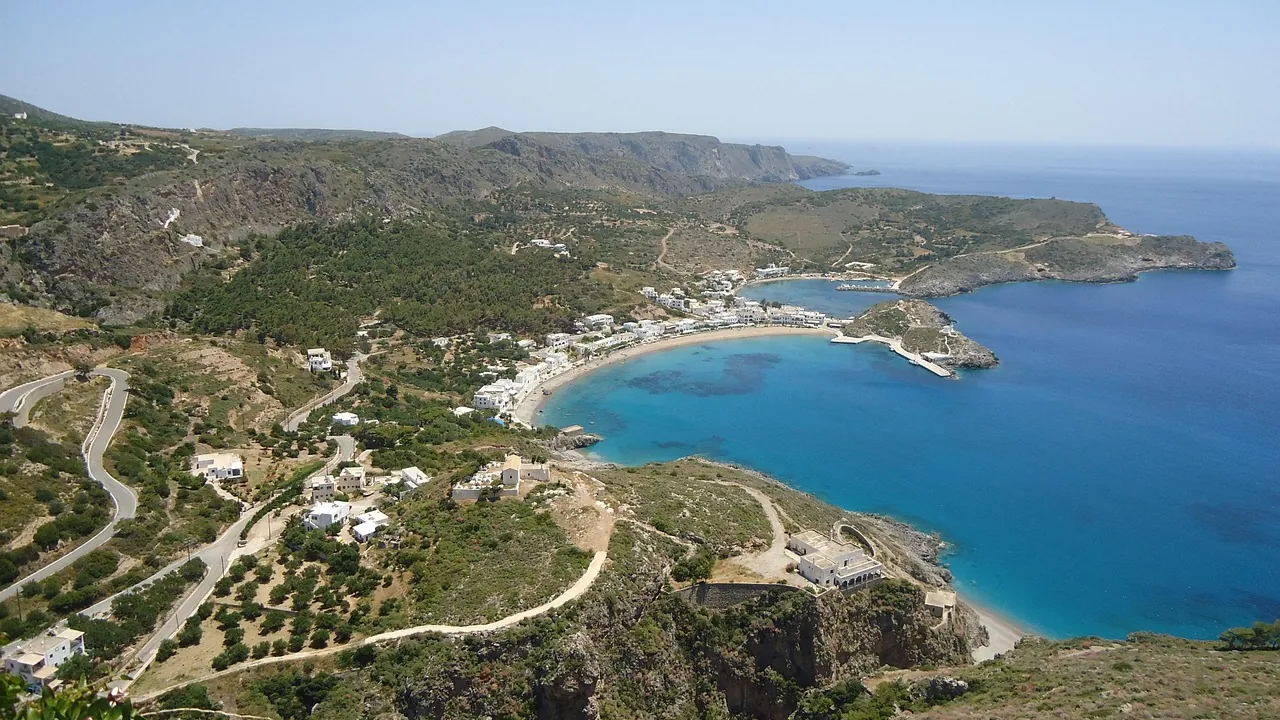
Kythera lies south of Cape Maleas, where the Ionian meets the Aegean. Historically, it is considered part of the Ionian Islands, but administratively it belongs to Attica. It’s an island of mountain villages, water-filled gorges, Venetian castles and coastlines that change character from north to south.
The question of where to stay in Kythera mainly comes down to how much you want to drive and whether you prefer a village or the seaside. Below, you’ll find three areas and the places to stay we’ve selected one by one based on their features; see the full list on our page of places to stay in Kythera.
How to choose an area
Accommodation on the island is mostly holiday homes, guesthouses and small family-run hotels, scattered across villages and coastal spots:
- Potamos: the commercial centre of the north, with a square, banks and cafés, a few kilometres from the airport and Agia Pelagia.
- Agia Pelagia: a seaside settlement on the northeast coast, for those who want to walk down to the sea.
- Diakofti: the main port, on the east coast, with shallow turquoise waters.
- Chora and Kapsali: the capital, with its castle and the little harbour below, in the south.
- Avlemonas: a quiet fishing village on the southeast coast; see our Avlemonas page.
For a first visit, the north is the most balanced choice: the port, airport and several beaches are all within a short drive. Let’s look at the places to stay.
Where to stay in Potamos
Potamos is built in the centre of the island’s northern part, away from the sea but well placed for reaching the whole north quickly. Every Sunday morning, the farmers’ market fills with producers from the surrounding villages. You’ll find more options on our Potamos page.
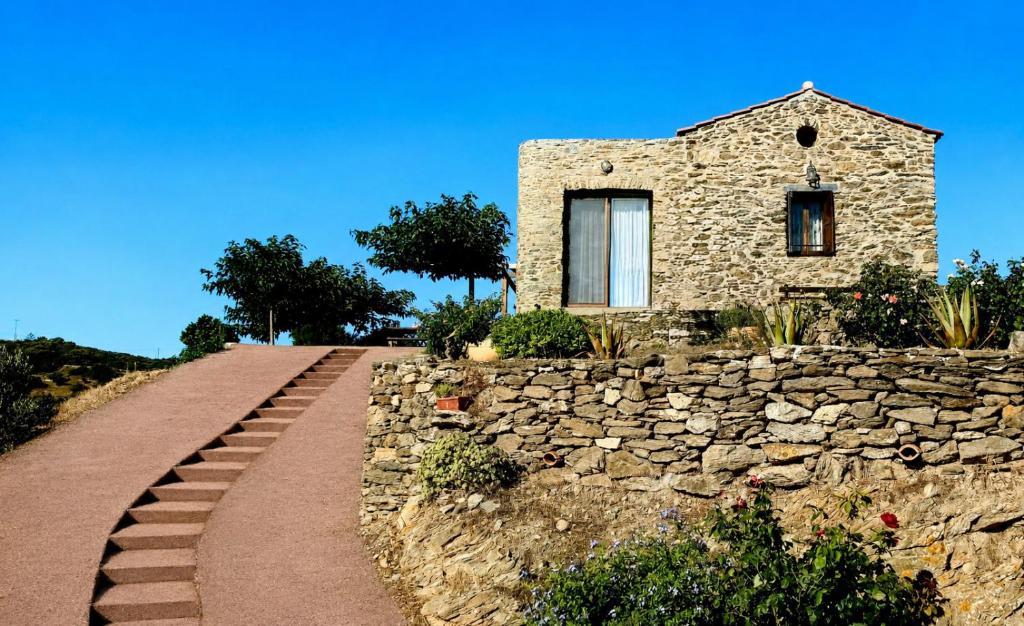
Barbacane
A 70 m² home for up to four people, with a separate bedroom, living room and a terrace overlooking the sea. The garden, patio and kitchen with an oven make it convenient for a week-long stay, and private parking is free. Check-in is only available from 16:00 to 20:00, by prior arrangement.
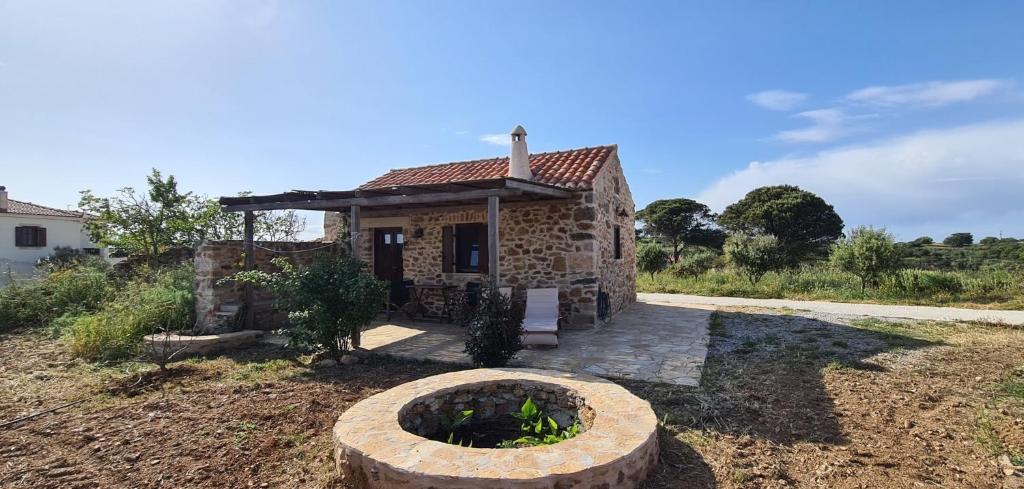
The Stone House
A freestanding stone house with one bedroom, designed for a couple, with a courtyard and a terrace overlooking the mountain. The kitchen is fully equipped, and private parking is free and does not require a reservation. The sea isn’t on the doorstep: you’ll need to drive a few kilometres to Agia Pelagia for a swim.
Where to stay in Agia Pelagia
Agia Pelagia stretches around an open bay of sand and pebbles, with tavernas and small places to stay along the coast. It’s the best base for families who want the sea right nearby. See our Agia Pelagia page, too.

AGIAS PELAGIAS LITTLE BEACH HOUSE
A small house with a kitchen, balcony and terrace, just a few steps from the village beach. Pets are welcome at no extra charge, and Wi-Fi is free throughout. There is no private parking, only free public parking nearby, and quiet hours apply in the afternoon from 15:00 to 17:00.
Where to stay in Diakofti
Diakofti is a small settlement around the port, with the islet of Makronisi connected to the mainland and shallow turquoise waters reminiscent of a lagoon. For more places to stay, see our Diakofti page.
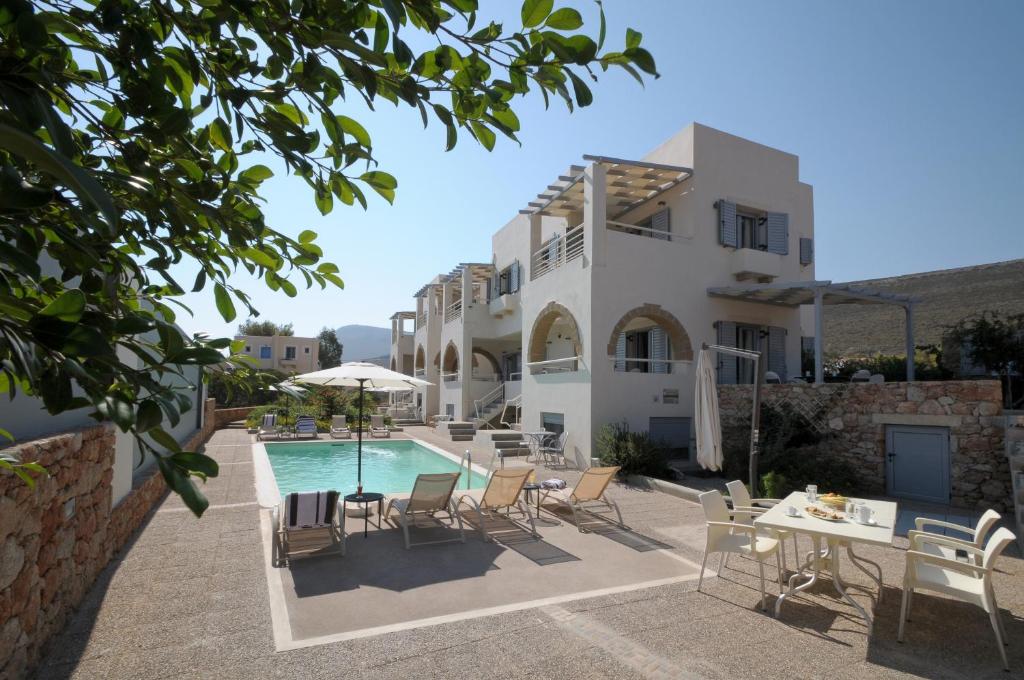
Astarte Sea Villas
A two-bedroom villa for up to five people, with sea views, a garden, terrace and barbecue for outdoor dinners. The outdoor pool is seasonal, and the kitchen has a dishwasher, making it a good fit for families. Parking is public, on the surrounding streets, and parties are not allowed.
What to see in Kythera
In Chora, the Venetian castle, Fortetsa, looks down on Kapsali and the rocky islet of Hytra. At the entrance to Chora, the Archaeological Museum has been open again for ten years, after damage from the 2006 earthquakes. Its exhibits span the Minoan to Roman periods and include the archaic Lion of Kythera.
Near Potamos, Palaiochora, the Byzantine capital abandoned after Barbarossa’s raid in the 16th century, clings to the edge of a deep gorge. To the west, Mylopotamos has watermills, the Fonissa waterfall and the Castle of Kato Chora. On the east coast, Avlemonas has preserved Kastello, a small 16th-century Venetian fort.
In the mountain villages, you’ll find the island’s thyme honey, rusks and faturada, the local liqueur.
Beaches
- Kaladi: a pebble beach with rocks near Palaipoli, reached by a flight of steps.
- Platia Ammos: a sandy beach at the island’s northern tip, below Karavas.
- Kapsali: two small coves below the castle, with tavernas and shallow waters.
- Chalkos: a sheltered bay in the south, ideal for a quiet swim.
When to visit Kythera
June and September combine warm seas with fewer crowds. In August, the island fills with Kytherians from the diaspora, especially from Australia, and accommodation gets booked up early. Spring, with Easter and its traditions, is ideal for the walking trails.
Every summer, the municipality organises the “Journey to Kythera” festival, with events across the island. On 24 September, the island’s patron saint, Panagia Myrtidiotissa, is celebrated, with festivities centred on her monastery on the west coast.
How to get there and get around
The most frequent ferry route is from Neapoli, at the southeastern tip of Laconia, to Diakofti, taking about one hour. In autumn, it runs six days a week; schedules change in winter, so check them before travelling. Another route connects the island with Gytheio, Antikythera and Kissamos in Crete, with a few sailings each week.
The airport, with flights from Athens, is about 23 kilometres northeast of Chora. There are no buses from there, so you’ll need a rental car or taxi. A car is almost essential for the rest of your stay, too.
Kythera is part of the region covered by our guide to where to stay in Attica, which may be useful if you spend a few days in Athens or along the coast of mainland Attica first.
Frequently asked questions
Quick answers to common questions about staying in Kythera.
What is the best area to stay in Kythera?
For most travellers, the north of the island is the most practical base. Potamos has shops, banks and a Sunday farmers’ market, and is close to the airport and the beaches of Agia Pelagia. Agia Pelagia suits those who want the sea nearby, while Diakofti is convenient for arrivals by ferry. Chora and Kapsali, in the south, are farther from the port.
How do you get to Kythera?
The most common way is by ferry from Neapoli in Laconia to Diakofti, a journey of about one hour that runs six days a week in autumn. Less frequent sailings connect the island with Gytheio, Antikythera and Kissamos in Crete. There are also flights from Athens to the island’s airport in the northeast. As schedules change with the seasons, check them before booking accommodation.
Do you need a car in Kythera?
Yes, in almost every case. The villages are scattered, and the best beaches are some distance from the settlements. There are no buses from the airport, so you’ll need a rental car or taxi. Only in Agia Pelagia can you spend a few days getting around on foot, between the beach and the village tavernas. You’ll need to drive to Chora, Palaiochora and Mylopotamos, and in August it’s a good idea to book a car early.
When is the best time to visit Kythera?
June and September are the most balanced months, with warm seas, open tavernas and fewer crowds. Many Kytherians from the diaspora return in August, and accommodation fills up early, so book ahead. Spring is ideal for hiking in the gorges and for experiencing Easter and local traditions. The municipal “Journey to Kythera” festival takes place every summer, and Panagia Myrtidiotissa is celebrated on 24 September.
Is Kythera suitable for families and travellers with pets?
Yes. Families will find homes and villas with two bedrooms and a kitchen, while the shallow waters of Diakofti and the sandy beach at Agia Pelagia are convenient for young children. Travellers with a dog or cat can find a house near Agia Pelagia beach that welcomes pets at no extra charge. In all cases, confirm the accommodation’s terms before booking.