Ελληνικά
 English
 Deutsch
 Italiano
 Français
 Español
 Nederlands
 Polski
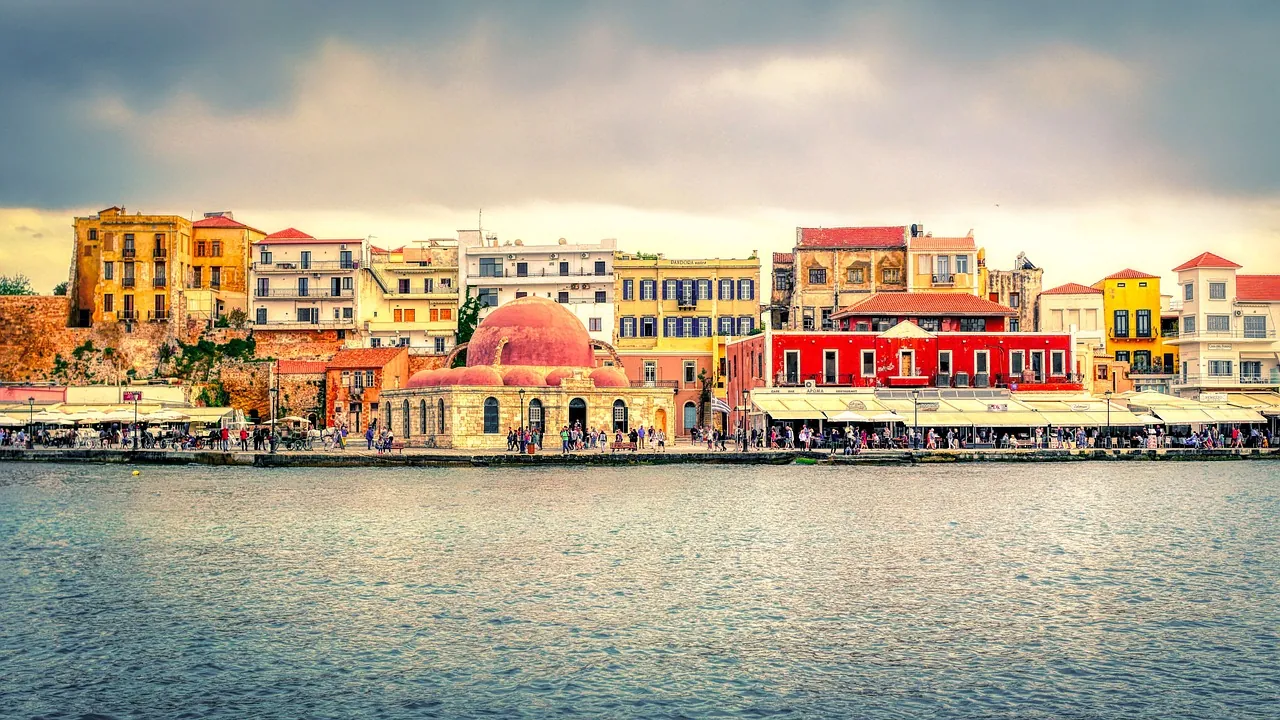
Chania is the Cretan city that has best preserved its old-world character. The Venetian harbour and its lighthouse, the shipyards, the mansions of Topanas and the minarets of Splantzia make up a historic centre that is alive all year round, not just during the tourist season.
The question of where to stay in Chania essentially has two answers: inside the Old Town, without a car and with everything close by, or a little further out, with a pool, more space and easy parking. This guide will help you work out which suits you, with accommodation that we hand-pick one property at a time based on its features.
The city has a wide and varied range of accommodation: small boutique hotels in Venetian buildings, guesthouses, apartments and villas on the hills around the bay. You’ll find the full list on our page of accommodation in Chania.
How to choose an area
Chania isn’t a large city, but the experience varies noticeably from one neighbourhood to another:
- Venetian harbour and Topanas: the city’s most photogenic side, with mansions, narrow lanes and views of the lighthouse. Lively until late at night, so not always quiet.
- Splantzia and Kastelli: the eastern side of the Old Town, around 1821 Square and the hill above the harbour. A more local atmosphere and slightly fewer crowds.
- Around the Municipal Market: where the Old Town meets the new town, close to the intercity bus station and the Municipal Garden.
- Koum Kapi and Halepa: east of the walls, with a seafront promenade, cafés and neoclassical mansions. A quiet alternative within walking distance of the harbour.
- Nea Chora: west of the harbour, with the city’s nearest sandy beach and fish tavernas.
- Outskirts: the Akrotiri peninsula, towards the airport, and the hills above the western beaches, for villas with pools and views. A car is essential here.
For a short trip or a first visit, the Old Town wins hands down: an evening stroll around the harbour and a walk back to your room without needing a taxi transform the whole experience. For a week with children or a car for day trips, an apartment with parking or a villa on the outskirts is usually better value.
Where to stay in Chania’s Old Town
Inside the walls, most accommodation is in renovated Venetian or Ottoman buildings, with just a few rooms and plenty of character. The trade-off is practical: narrow staircases, rarely a lift and almost nowhere to park.
If you’re arriving by car, expect to leave it in a public parking area outside the walls and continue on foot. The four places below let you forget about the car for your entire stay.
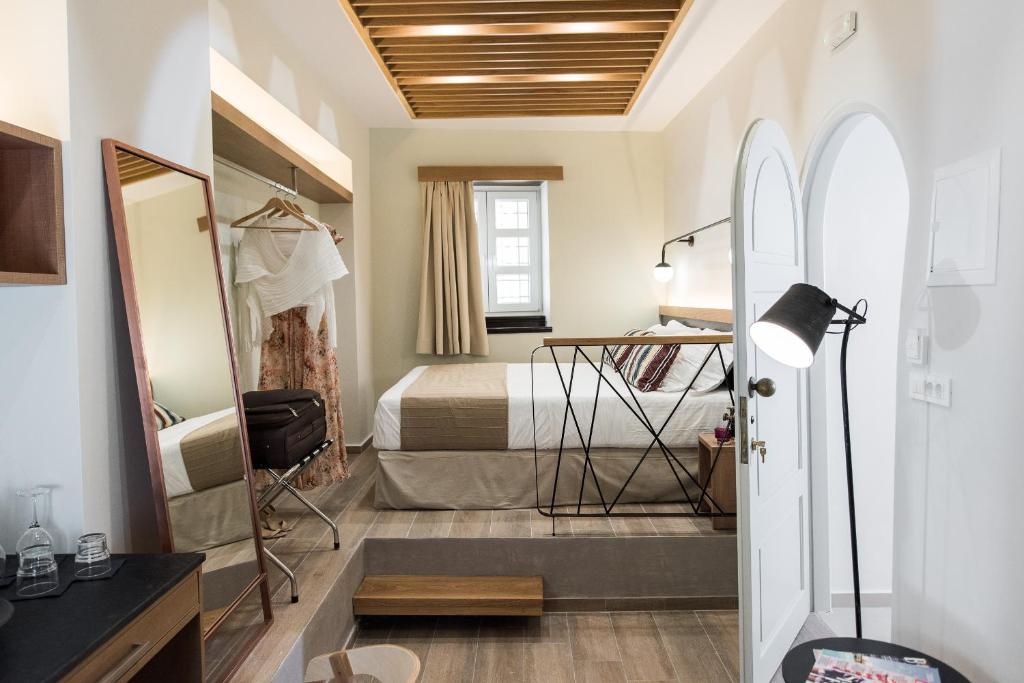
Harismari Cozy Hotel
A small guesthouse in a Venetian building in the Agioi Anargyroi neighbourhood, just steps from the Municipal Market and the Splantzia side of town. Some rooms look out over the Old Town rooftops, and Wi-Fi is free throughout. None of the rooms has a balcony, there’s no parking, and check-in is until 23:00, with advance notice required.

Hanim Boutique Hotel
Rooms and apartments in the heart of the Old Town, all with a kitchen or kitchenette—handy if you want to shop at the market and eat in your room now and then. Some units have a balcony or terrace with city or sea views. There’s no lift, the nearest public parking is a ten-minute walk away, and the minimum stay is two nights.

Thallos The Boutique
Suites exclusively for two, with air conditioning and private bathrooms, in an Old Town building that—unusually for the area—has a lift. A good fit for couples who want to walk everywhere and return to a quiet, well-kept room. Wi-Fi is available in the suites but not the communal areas, there’s no parking, and check-in ends at 23:00.

Elysia Boutique Hotel
A five-star hotel in the Old Town, with its own Mediterranean restaurant serving vegetarian, vegan and gluten-free options. It’s one of the few places in the area with a lift and wheelchair access, while family rooms and suites accommodate up to six people. There’s no parking, and check-in is until midnight.
Boutique hotels with a pool, spa or adults-only policy
A little outside the heart of the Old Town, there’s more room, with pools, hammams and gardens that are almost impossible to find inside the walls. The five places in this section are mainly for couples looking to unwind after a day exploring the streets or beaches.
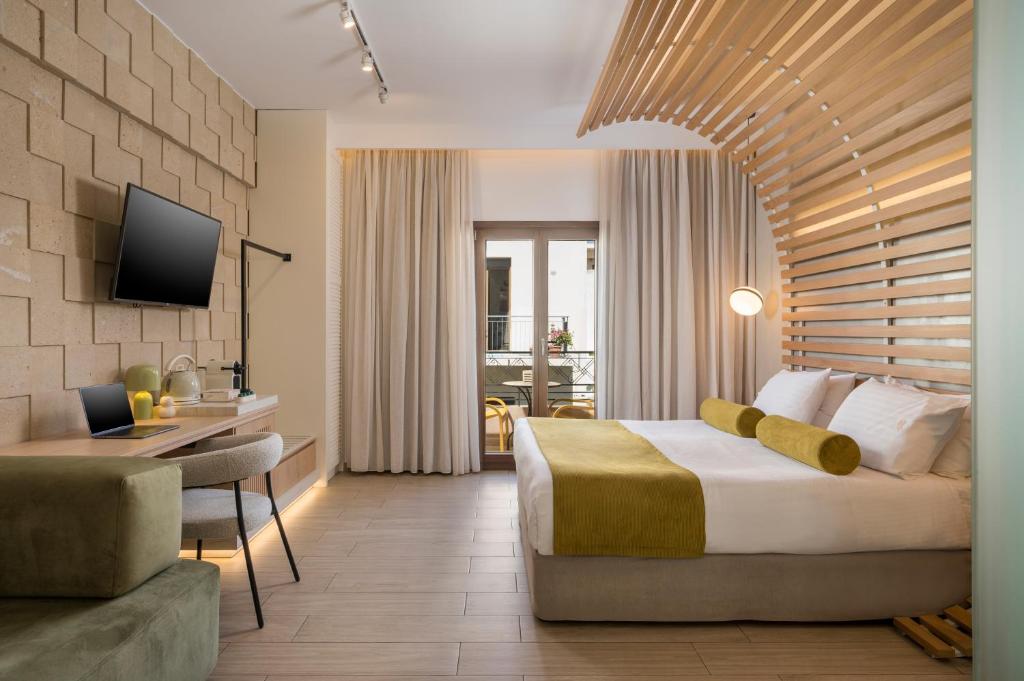
Agave Suites
Suites and apartments close to the Old Town, with museums and historic sights within walking distance. After a day out, you can unwind in the hot tub or work out, and three units have a balcony with city views. Private parking is available for a fee and must be reserved, while check-in is until midnight.

Theta Boutique Hotel
On the Koum Kapi side of town, making it easy to walk both to the seafront promenade and to the historic sights. Many rooms have a balcony with sea or city views, and some have a whirlpool bath—an appealing choice for a romantic weekend. Free parking is public and cannot be reserved, and two room categories on the first floor are not served by a lift.

Domus Blanc Boutique Hotel
A five-star hotel with an outdoor pool open year-round, as well as a sauna, hot tub, spa and gym: a good choice if you’re visiting in spring or autumn. Two suites have a separate bedroom and living room and sleep up to three people. There’s no on-site parking, and the sea isn’t right on your doorstep.
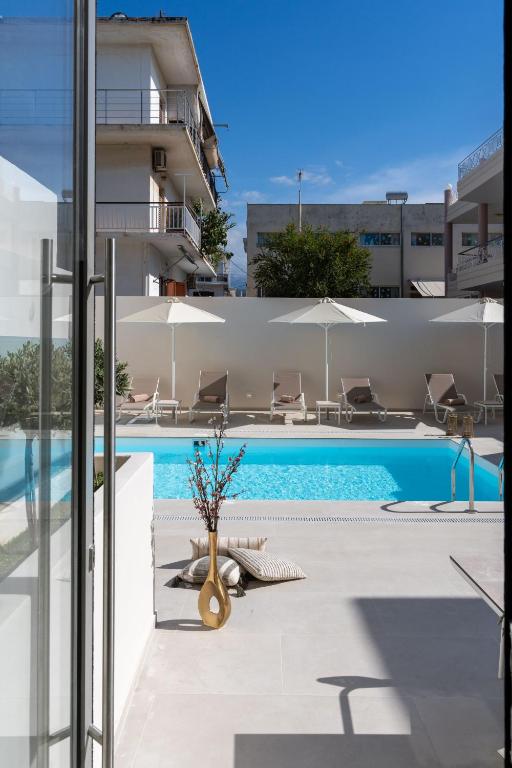
Selected Suites
Adults only, with 32-square-metre suites, each featuring its own steam bath, as well as a hammam for all guests. It’s designed for couples seeking peace and a little pampering in the city. The outdoor pool is seasonal, and there’s no parking.

Nearchou Boutique Hotel
A five-star adults-only hotel with a garden and soundproofed, hypoallergenic rooms, ideal for light sleepers or guests with allergies. A rare advantage in the city: it has free private parking, although spaces can’t be reserved. The suite with a hot tub and terrace is the most distinctive option.
Apartments and villas for families and groups
For families, groups or week-long stays, an apartment with a kitchen or a villa with a pool gives you flexibility with mealtimes and schedules. All three places below have free private parking, making day trips much easier.

Spring Apartments
Two- and three-bedroom apartments with equipped kitchens, in the city and with easy access to the Old Town. Free private parking makes them one of the most practical bases for families with a rental car. Quiet hours apply from 23:00, and you’ll need to let the property know your arrival time in advance.

Margarita's Villas
Villas in Pano Stalos, on the hill above the western beaches, each with a private pool and a terrace overlooking the sea. The kitchen has an oven, hob and dishwasher, and there’s a high chair for little ones. You’ll need a car to get to the beach and the city, and quiet hours start at 23:00.

Katakis LuxuryVillas
Three spacious villas in Agios Onoufrios on the Akrotiri peninsula, with private pools, hot tubs and sea views, a short distance from the airport and the peninsula’s beaches. With three bedrooms and three bathrooms, they comfortably accommodate a family or two couples. The floors are connected only by stairs, and afternoon quiet hours apply.
What to see in Chania
Start your walk at the Venetian harbour, where the stone pier leads to the lighthouse, built by the Venetians and rebuilt during the period of Egyptian rule. On the waterfront stands the Küçük Hasan Mosque with its distinctive domes, the oldest Ottoman building in Crete, now used for exhibitions.
At the western end of the harbour, Firka Fortress houses the Maritime Museum of Crete; the Greek flag was raised there in December 1913, when Crete united with Greece. On the eastern side, seven of the vaulted shipyards remain, where the Venetians built and repaired their galleys.
Behind the waterfront, Topanas and Ovriaki, the old Jewish quarter with the Etz Hayyim Synagogue, are perfect for an unhurried stroll. In Splantzia, the Church of Agios Nikolaos has both a bell tower and a minaret, a rare reminder of the city’s multicultural history.
Museums and markets
- Chania Archaeological Museum: moved from the Venetian monastery of Saint Francis to a new building in Halepa, it covers the region’s history from the Neolithic to the Roman period, with finds from ancient Kydonia.
- Kastelli: the hill above the harbour, where excavations have uncovered parts of Minoan Kydonia, with lovely views of the domes and the sea.
- Macheradika and Stivanadika: the lanes of knife-makers and leatherworkers, where Cretan knives and stivania boots are still made.
- Municipal Market: the cross-shaped building dating from 1913, a city landmark. Check whether its long-running restoration has been completed before you visit.
East of the walls, the Tabakaria, the old tanneries by the water, and the neoclassical mansions of Halepa, once home to consuls and Eleftherios Venizelos, reveal another, more urbane side of Chania. A little further up on the Akrotiri peninsula, the Venizelos Graves offer the widest views over the entire city and bay, especially at sunset.
Beaches near the city
The nearest sandy beach is in Nea Chora, a ten-minute walk from the harbour, while Koum Kapi has more seafront cafés than beach. A little further west, Chrissi Akti and Agioi Apostoloi have shallow waters that are suitable for children.
For beaches with more facilities, the coast continues towards Kato Daratso, Stalos and Agia Marina. On the Akrotiri peninsula, the sheltered sandy beach at Stavros, Kalathas Bay and the rocky Seitan Limania are worth a morning trip.
Day trips from Chania
The city is the natural base for western Crete. By car or intercity bus, most destinations in the region are easy to visit in a day:
- Akrotiri: the monasteries of Agia Triada Tzagaroli and Gouverneto, with a path descending to Katholiko and the sea.
- Samaria Gorge: starts at Xyloskalo, on the Omalos Plateau, and reaches Agia Roumeli after about 16 kilometres, from where you return by boat. It opens in spring and closes in autumn; it may close temporarily in bad weather, and free helmets are provided at both entrances.
- Balos and Gramvousa: the lagoon at the north-western tip of the island, reached by boat from the port of Kissamos or by a dirt road and footpath.
- Elafonisi: the protected beach with pink sand in the south-west, about two hours away by car.
- Aptera and Apokoronas: the ruins of the ancient city overlooking Souda Bay and the stone villages of the hinterland.
- Rethymno: the neighbouring Venetian city, about an hour to the east.
What to eat in Chania
Chania’s cuisine is one of the reasons to stay for several days. The morning starts with bougatsa filled with mizithra cheese and sugar, while tavernas serve kalitsounia, dakos, Sfakian pie with honey and chochlioi boubouristoi (fried snails). Gamopilafo, rice cooked in meat broth, is a celebratory dish.
The harbour is lined with restaurants with a view, but you’ll often eat better in Splantzia, Nea Chora or the villages of Akrotiri. A meal almost always ends with a complimentary glass of tsikoudia and something sweet.
When to visit Chania
Spring and autumn are the best seasons for the city: warm without being too hot, with the sea staying warm until October and fewer people in the lanes. In May, the peaks of the White Mountains are still snow-capped and the countryside is in bloom.
Summer is hot and lively, with the harbour busy until late at night; if you’re planning to visit in July or August, book early. Winter is mild and quiet, and the city stays lively thanks to its residents and students.
Every year, in late May, Chania commemorates the 1941 Battle of Crete with events across the region. Easter, with its processions and Holy Week traditions, is also a very special time to get to know the city.
How to get there and get around
“Ioannis Daskalogiannis” Airport is on the Akrotiri peninsula, about 15 kilometres from the centre, or 25 to 30 minutes by car or taxi. There’s also a bus to the city, with tickets available on board.
Ferries from Piraeus arrive at the port of Souda, about 6 kilometres from the city, with buses and taxis running to the centre. If you’re driving from Heraklion or Rethymno, be aware that roadworks are under way on the BOAK highway and the Chania bypass, so allow a little extra time.
In the city, everything is within walking distance, and the narrow lanes of the Old Town make driving impractical. The intercity bus station is close to the Old Town, with frequent services to the western beaches, Kissamos and Rethymno. For villas, the Akrotiri peninsula and remote beaches, a car is the most practical option. Find other bases on the island on our page about Crete.
Chania is part of our guide to where to stay in Crete, while for flights, ferries and getting around the island, see how to get to Crete. If you’d rather stay by the sea, west of the city, read about where to stay in Kato Daratso, the nearest beach suburb, in Stalos, for a quieter holiday, and in Agia Marina, Nea Kydonia, for a livelier summer.
Frequently asked questions
Quick answers to the most common questions about planning a stay in Chania.
What is the best area to stay in Chania?
For most visitors, the Old Town inside the Venetian walls is the best choice, as the harbour, museums, markets and restaurants are just a few minutes’ walk away. Koum Kapi and Halepa are quieter and within walking distance of the centre. Those arriving by car or with children will be more comfortable in an apartment with parking in the new town or a villa with a pool on the Akrotiri peninsula or the hills above the western beaches.
Do you need a car if you stay in Chania’s Old Town?
Not for the city itself. Inside the walls, everything is within walking distance, the lanes are narrow and most accommodation has no parking, so you’ll need to leave your car in a public parking area outside the walls. The intercity bus station is nearby and connects the city with the western beaches, Kissamos and Rethymno. It’s worth renting a car for a few days if you want to visit Elafonisi, Balos or the villages inland.
How far is the airport from Chania?
“Ioannis Daskalogiannis” Airport is on the Akrotiri peninsula, about 15 kilometres from the centre, or 25 to 30 minutes by car or taxi. There’s also a bus to the city, with tickets available on board. If you arrive by ferry from Piraeus, you’ll disembark at Souda, about 6 kilometres from Chania. Those staying in a villa on the Akrotiri peninsula have the advantage of being very close to the airport.
When is the best time to visit Chania?
Spring and autumn are the most pleasant seasons, with mild temperatures, sea temperatures that stay warm until October and fewer people in the Old Town. Samaria Gorge opens in spring and closes in autumn, making these months ideal for hiking, too. Summer is hot and lively, with the harbour busy until late at night, while winter is quiet and mild. Book accommodation early for July and August.
Is Chania suitable for families with children?
Yes, as long as you choose the right accommodation. Several of the city’s boutique hotels are adults-only, while stairs and the lack of parking in the Old Town can be tiring. Families are better suited to apartments with two or three bedrooms and a kitchen, or villas with pools on the outskirts. The shallow beaches west of the city, such as Chrissi Akti and Agioi Apostoloi, are ideal for young children.
Can you visit Samaria Gorge from Chania?
Yes, and it’s one of the city’s classic day trips. The trail starts at Xyloskalo on the Omalos Plateau and ends at Agia Roumeli after about 16 kilometres. From there, you return by boat to Sfakia or Sougia and then continue by bus. The gorge is open from spring to autumn, but may close temporarily in bad weather. Free helmets are provided at both entrances, and their use is recommended.