Ελληνικά
 English
 Deutsch
 Italiano
 Français
 Español
 Nederlands
 Polski
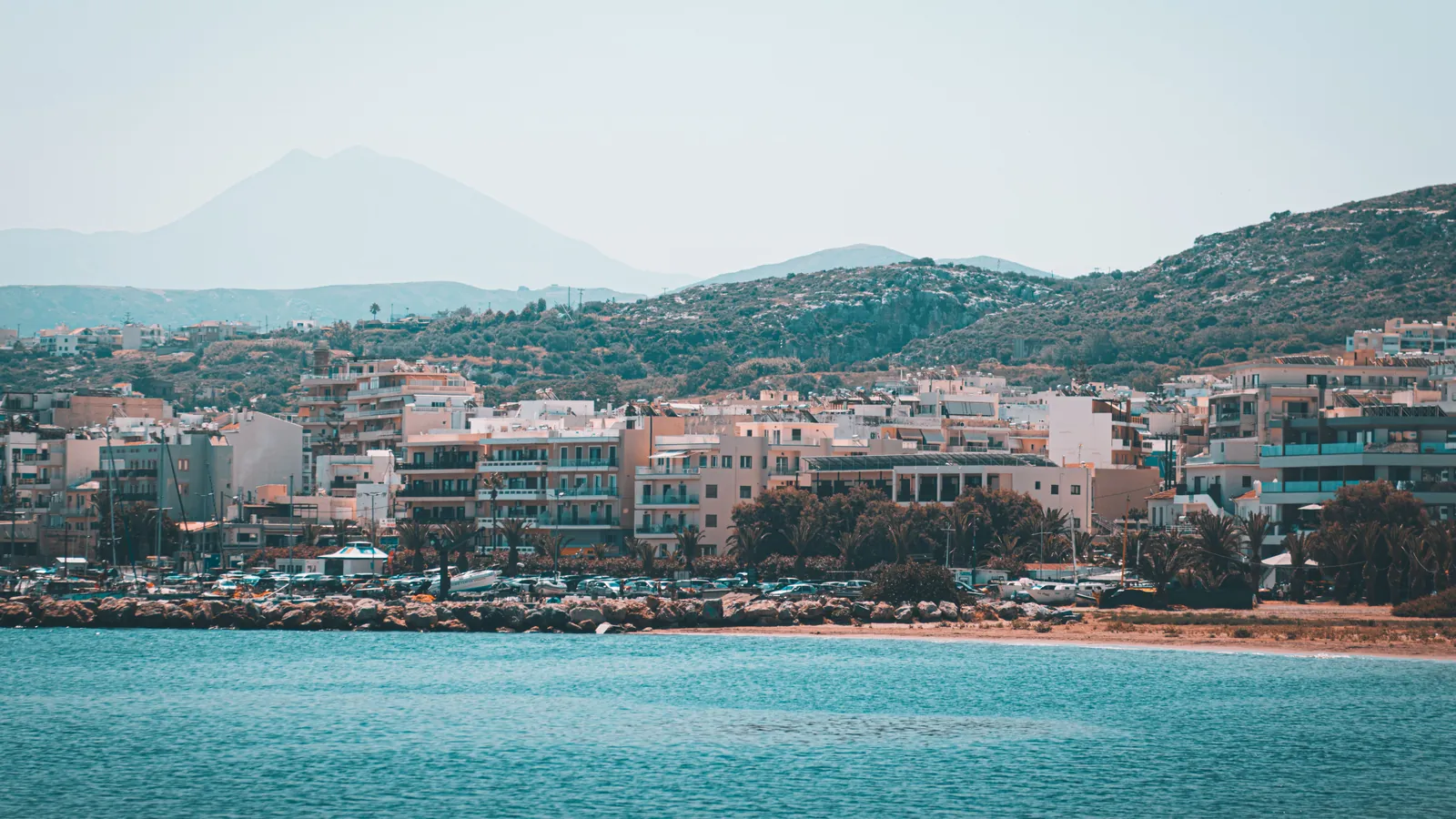
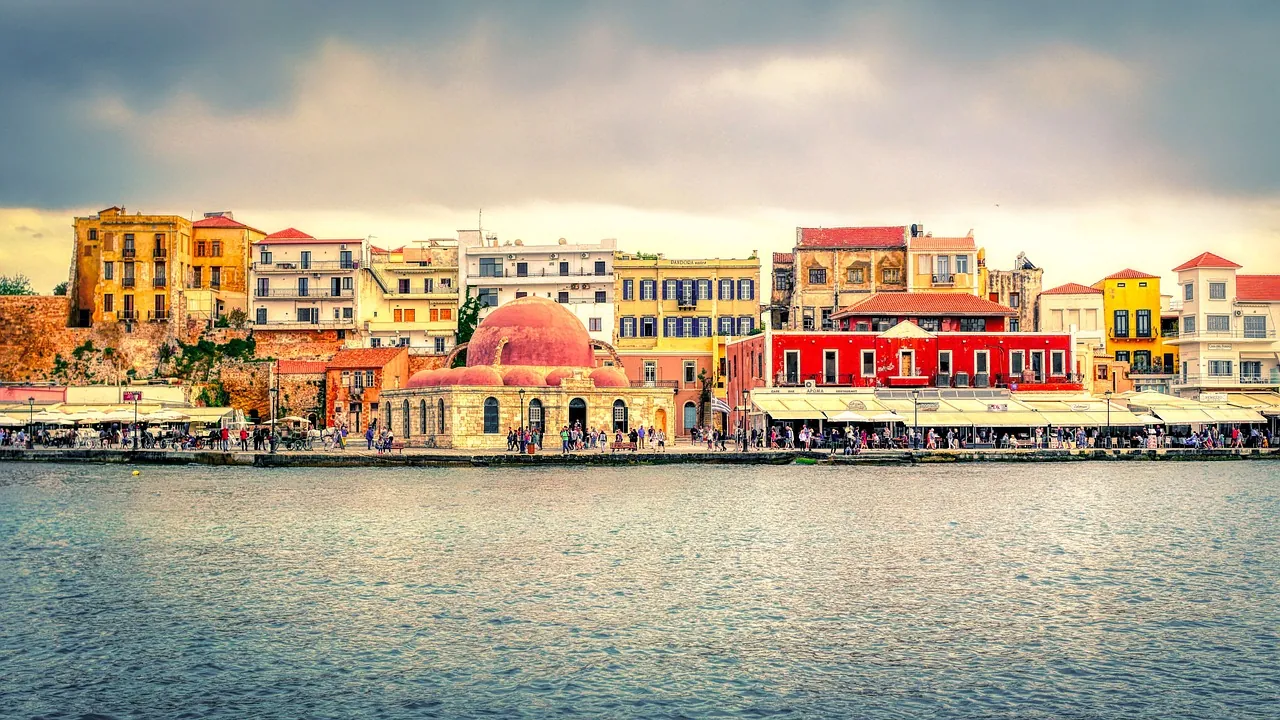
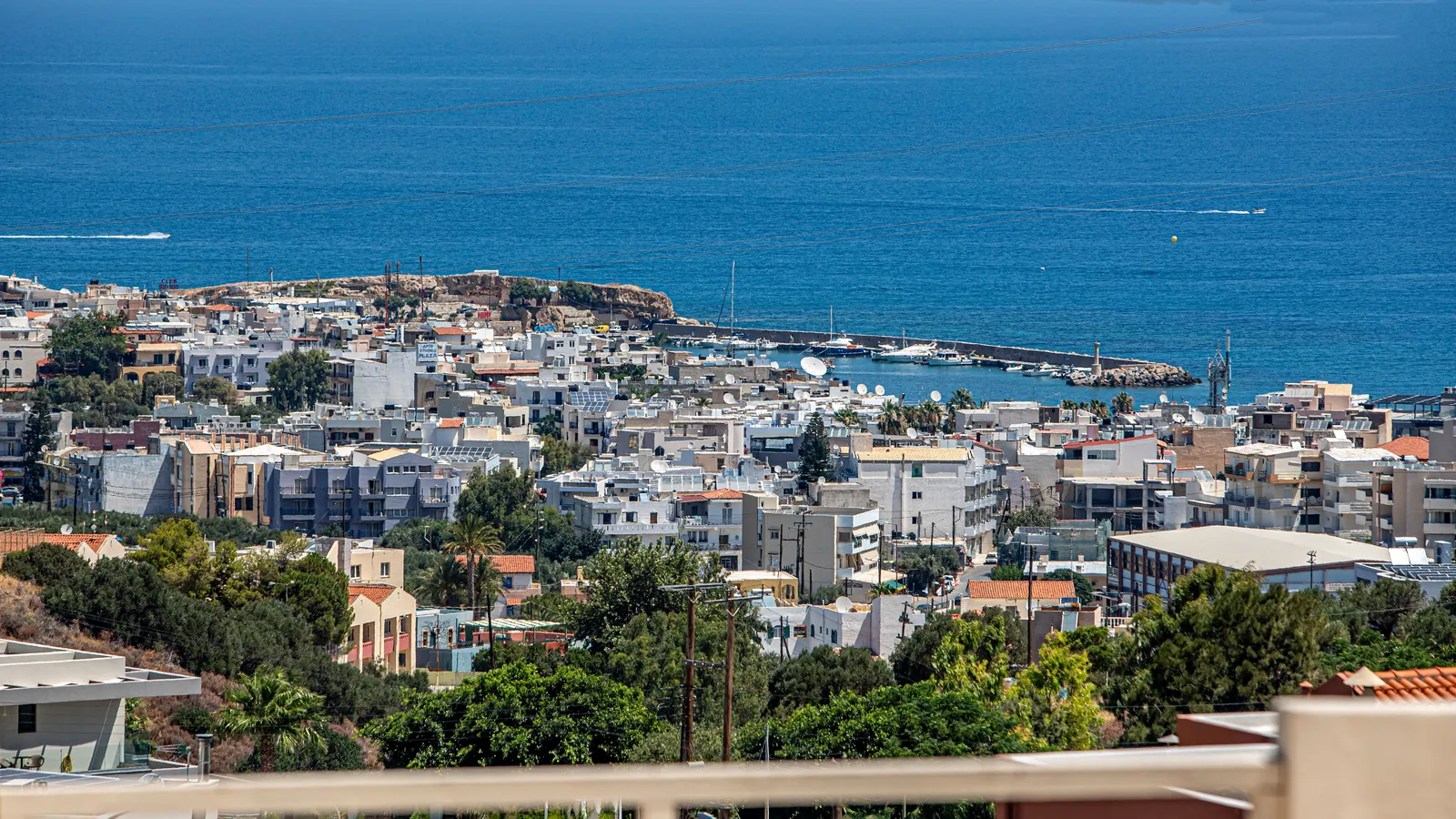
Rethymno is Crete’s third-largest city and perhaps the one that has preserved its old centre most intact. Venetian mansions with wooden oriel windows, minarets, fountains and narrow lanes spread across the foothills of the Fortezza, while a few metres to the east, a sandy beach stretches all the way to Skaleta.
The question of where to stay in Rethymno usually comes down to a choice: do you want to stay in the Old Town, without a car, or would you rather step straight from your room onto the beach? In this guide, we explain what each neighbourhood has to offer and recommend accommodation that we’ve hand-picked one by one, based on its features.
Small hotels, aparthotels and suites in restored buildings predominate in the city, while large resort complexes are few and far between. You’ll find the full list on our page for places to stay in Rethymno.
How to choose an area
Rethymno isn’t a large city, but the experience changes noticeably from one neighbourhood to another:
- Old Town: the Fortezza, Venetian Harbour, museums and most tavernas are just minutes away. Many of the lanes are pedestrianised, so you’ll need to leave your car outside.
- Around the Guora Gate and Municipal Garden: where the Old Town meets the newer city centre, with shops, bakeries and cafés frequented by locals. It’s a little quieter at night and a little easier to get around by car.
- Seafront and Kallithea: east of the centre, along the sandy beach, with apartments and hotels that often have a pool. A good fit for families and anyone who wants to swim every morning.
- Koumbes: the western side, behind the Fortezza, with a rocky coastline, fish tavernas and sunset views. A peaceful option for those who don’t need a sandy beach right outside the door.
For a first visit or a short break, the Old Town is the clear winner: having dinner by the harbour and walking back to your accommodation transforms the whole experience. For a week in summer with children, an apartment with a kitchen near the beach is usually more practical. Let’s look at the places to stay.
Where to stay in Rethymno Old Town
In the historic centre, accommodation is often housed in Venetian or neoclassical buildings, with inner courtyards, stone walls and stairs instead of lifts. The five places below let you forget about the car for your entire stay.
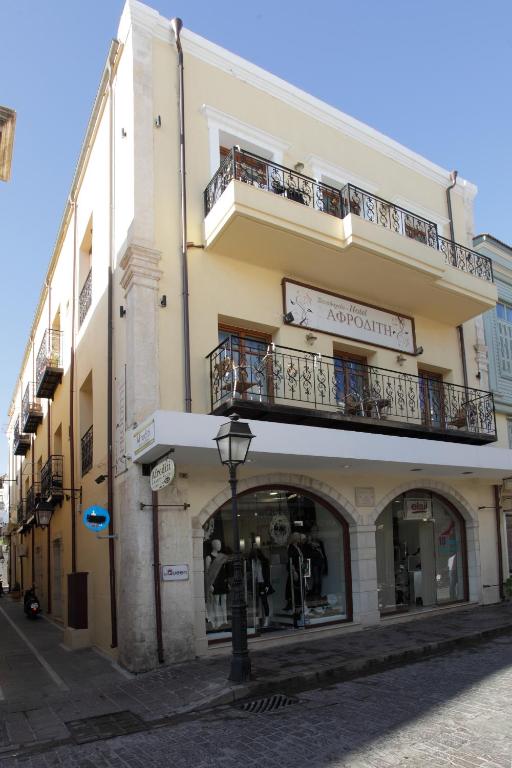
Αφροδίτη
Set in a historic building a few steps from the Venetian Harbour, with studios and apartments featuring fully equipped kitchens and balconies. Pets are accepted on request at no extra charge, and Wi-Fi in the rooms is free. Private parking is available for a fee and must be reserved, and you need to let the property know your arrival time in advance.
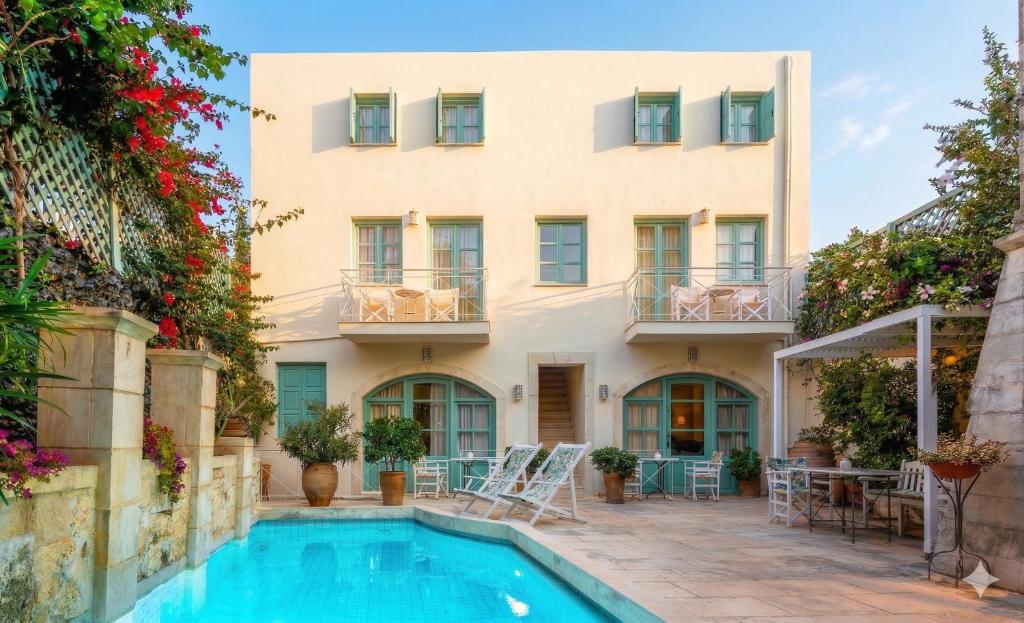
Mythos Suites Boutique Hotel
A four-star hotel in a 16th-century Venetian building, with an outdoor pool in its inner courtyard—a rare combination in the heart of the Old Town. Accommodation ranges from studios to two-bedroom apartments, making it suitable for couples and families alike. There’s no parking, the upper floors are accessible only by stairs, and check-in closes at 22:00.
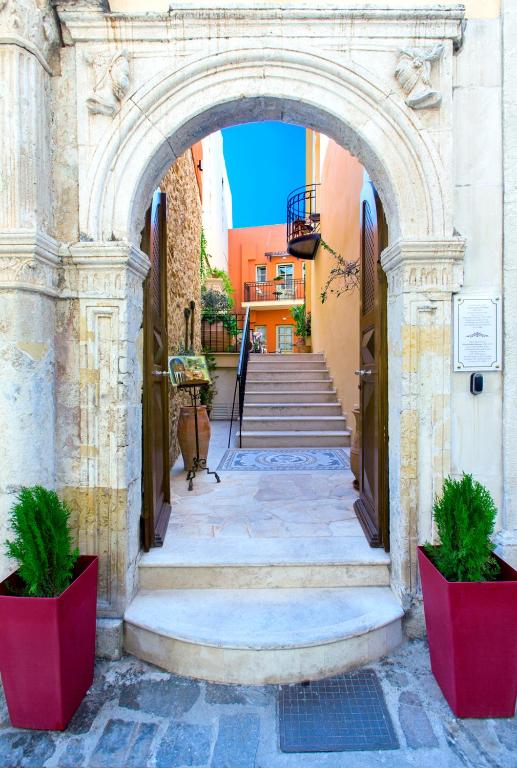
Casa Moazzo Suites and Apartments
A restored neoclassical building in the historic centre, with suites and studios, garden courtyards and a buffet breakfast. Several units have a balcony or terrace, and those with a sofa bed can accommodate three or four people. A minimum stay of two nights is required, the upper floors are accessible only by stairs, and you’ll need to use public parking in the area.
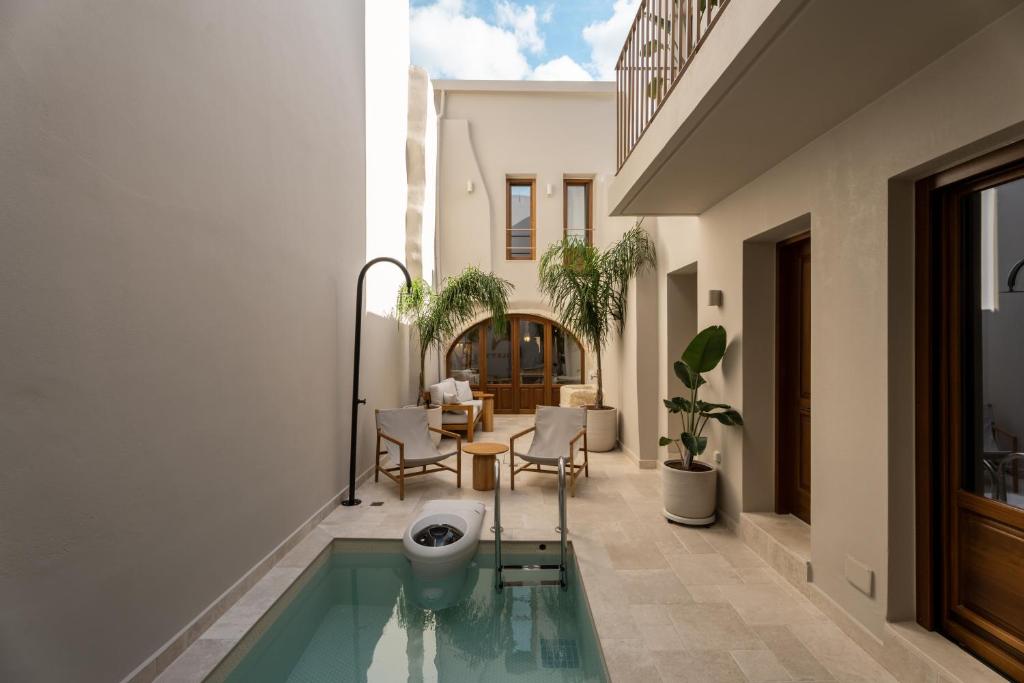
Cortiletto Timeless Suites
Two-level suites with a separate bedroom and living area, an outdoor pool and a garden, within walking distance of the museums and Venetian monuments. Breakfast includes vegetarian and gluten-free options and can be served in your room. The town beach is about one kilometre away, there’s no parking, and a minimum stay of two nights is required.
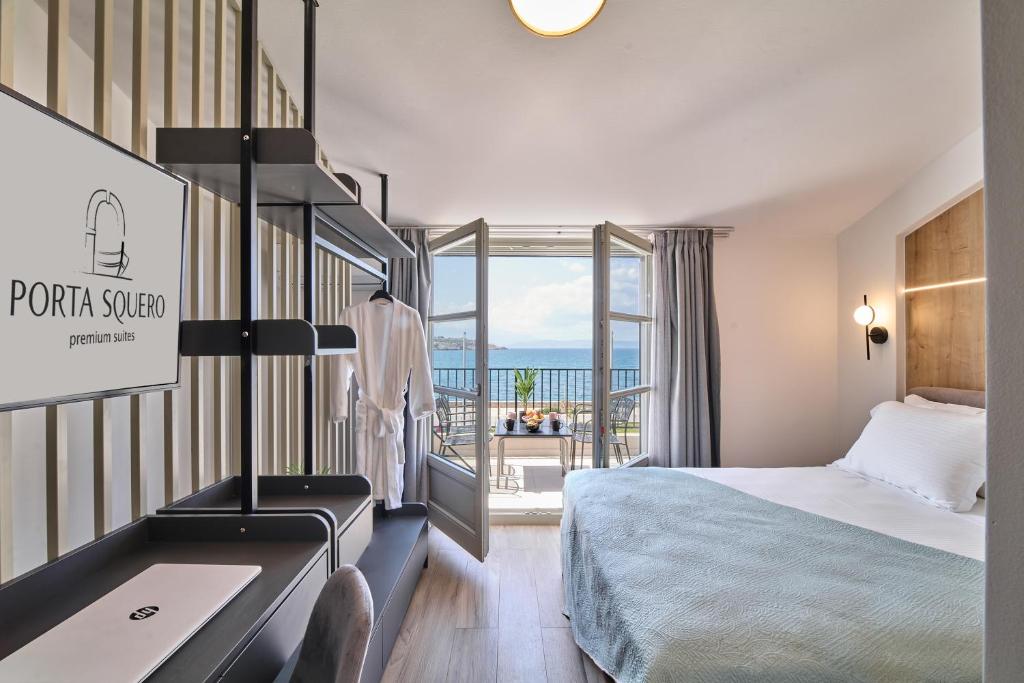
PORTA SQUERO Premium Suites
Suites with fully equipped kitchens and sea views in every category, about 250 metres from the Fortezza. Family rooms and a child’s high chair are available, making it a good option for families who want to cook. There’s no parking, parties aren’t allowed, and check-in is from 15:00 until midnight.
Between the Old Town and the beach
Just outside the historic core, where the Old Town meets the newer city centre, nights are quieter and accommodation often comes with a garden or pool. The lanes and sandy beach are a few minutes’ walk away, so you won’t miss having a car.
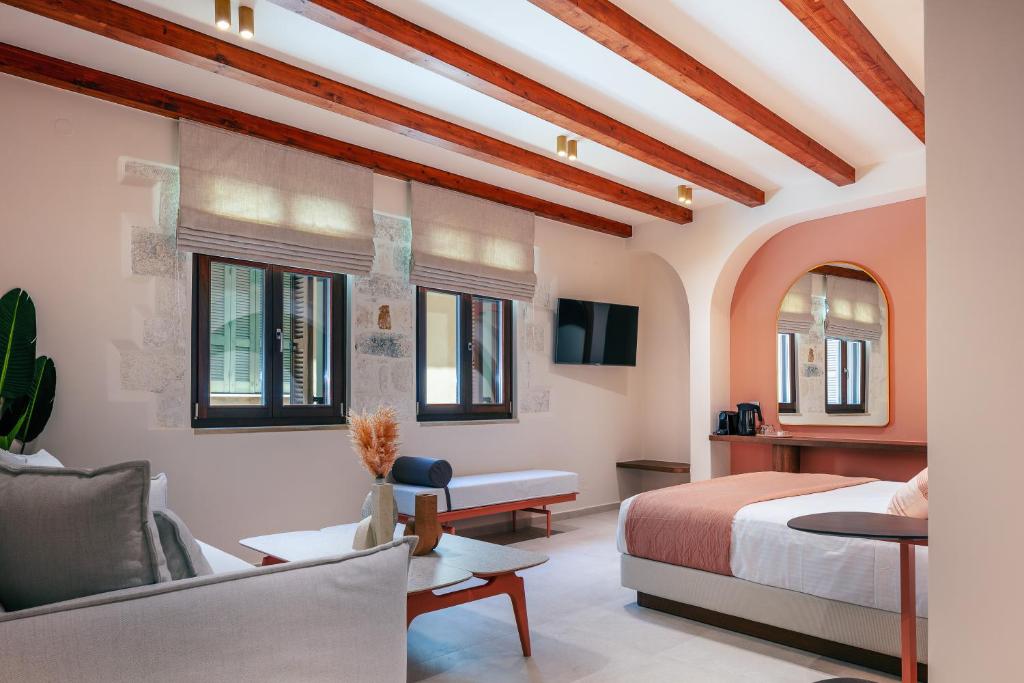
La Montre Luxury Boutique Suites
Just two suites, each around 30 square metres, with a separate living area and soundproofing—a good choice for couples looking for peace and privacy. The museums, Municipal Garden and town beach, 650 metres away, are all within walking distance. You must arrive by 21:00, and there’s no parking.
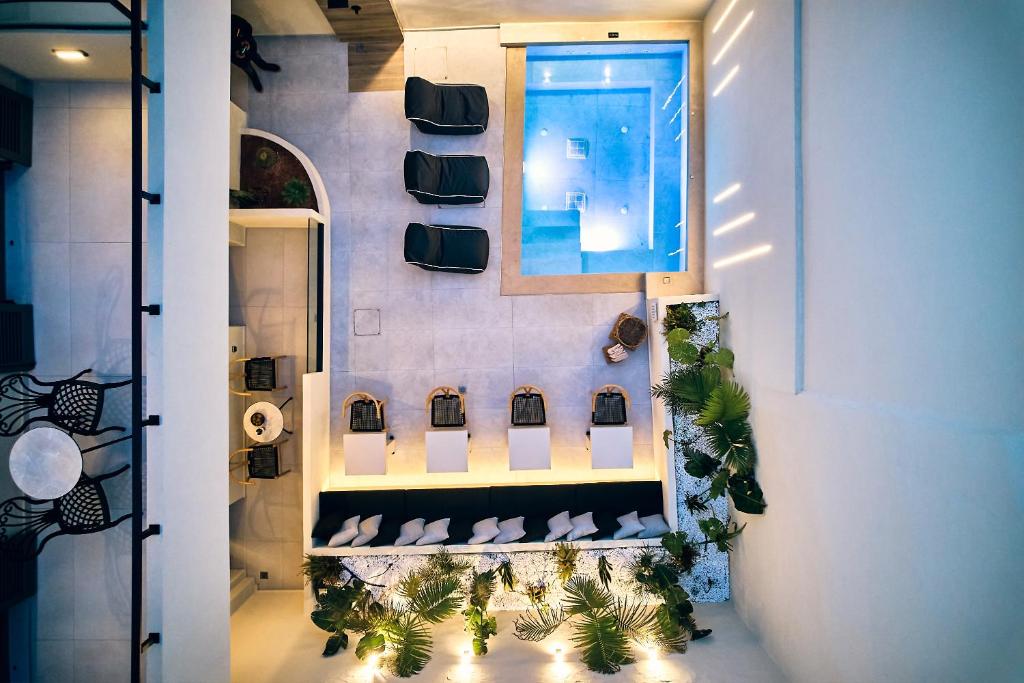
Grande Madonna Luxury Boutique Suites
Apartments and studios with kitchens and dishwashers, a garden, terrace and shared hot tub in the city centre. With family rooms and a child’s high chair, it suits families who want to get around without a car. The hot tub isn’t heated and is open only from May to October, while the upper floors are accessible only by stairs.
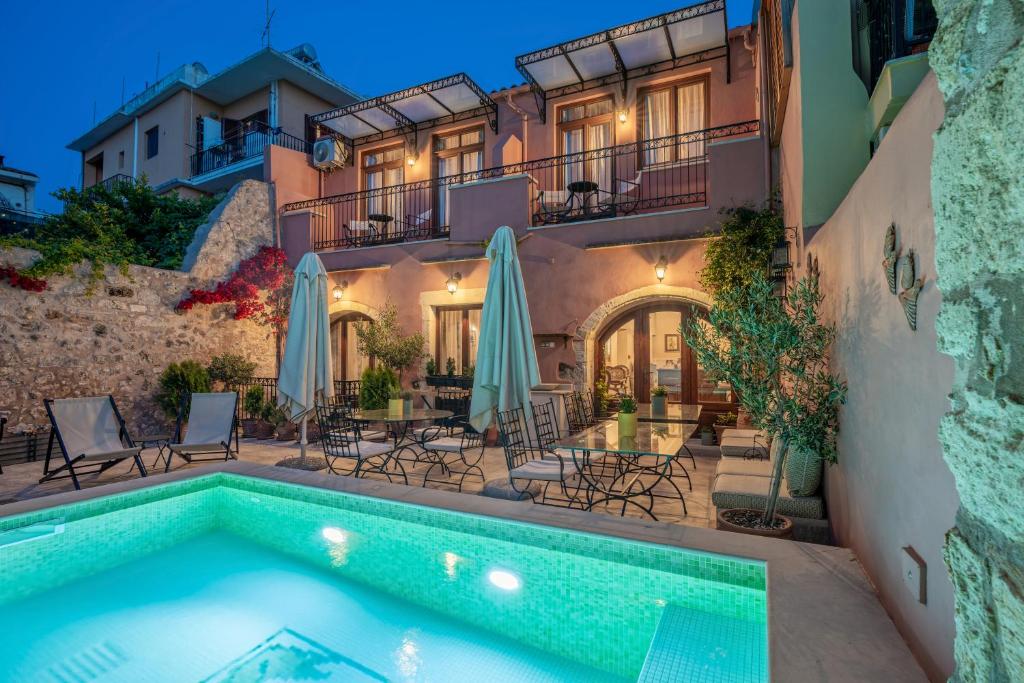
Phaedra Suites
An adults-only hotel with a seasonal outdoor pool, a garden and suites featuring a kitchenette and balcony or terrace. Its location near both the Old Town and the beach works well for couples who want a pool without losing touch with the city. Children aren’t accepted, there’s no parking, and the upper floors are accessible only by stairs.
Near the town beach
East of the Old Town, Eleftheriou Venizelou coastal road follows the sandy beach, lined with palm trees, cafés and tavernas. In summer, the municipal beach fills up with sunbeds and umbrellas; the farther you go towards Kallithea, the more room you’ll find on the sand. These two places put the sea just a few steps away.
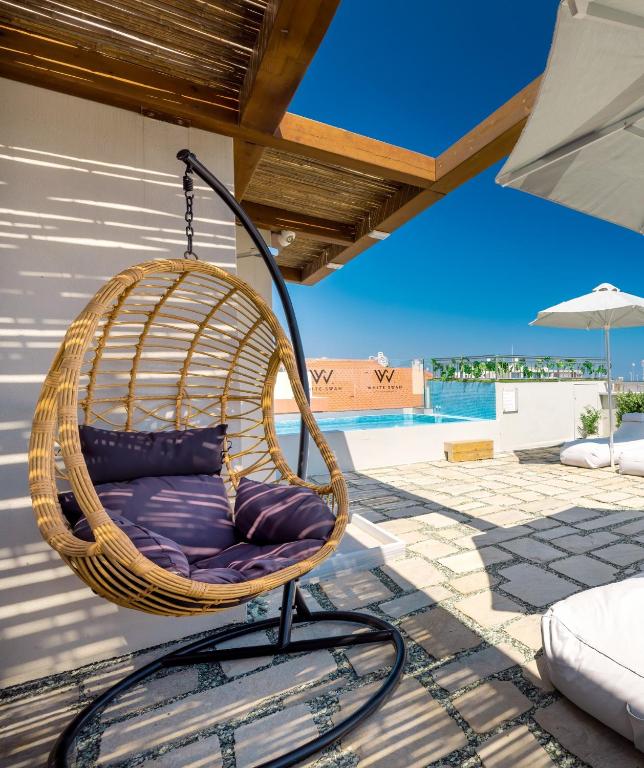
White Swan
Located in Kallithea, a few steps from the beach, with an outdoor pool, hot tub and rooms that all have a kitchen and balcony. The family suite sleeps up to five people, which is hard to find in the city centre. There’s no parking, airport transfers cost extra, and check-in is from 14:00 to 23:00.
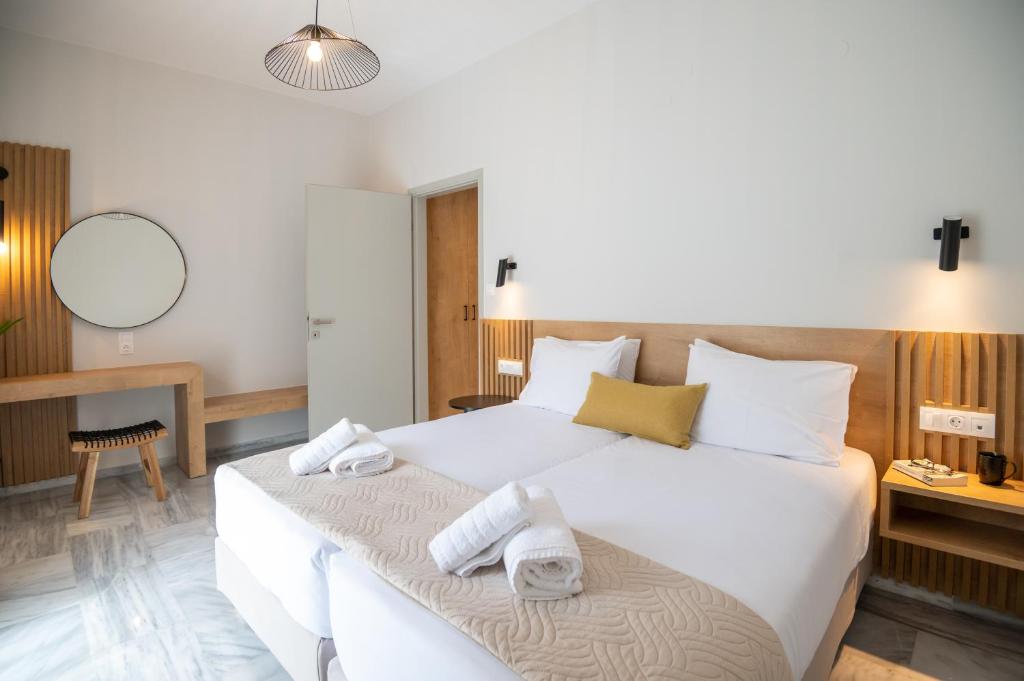
Mardinik Hotel Apartments
Apartments with a kitchen, oven and terrace, some with a separate bedroom and living area for up to four people, about 150 metres from the sandy beach. The garden and free in-room Wi-Fi make it a comfortable base for week-long stays. Quiet hours apply from 23:00 to 08:00, and check-in is only available between 15:00 and 23:00.
For families and longer stays
If you’re travelling with children or planning to stay for several days, look for accommodation with more space and a full kitchen. The two places below stand out for the comfort they offer larger groups and families.
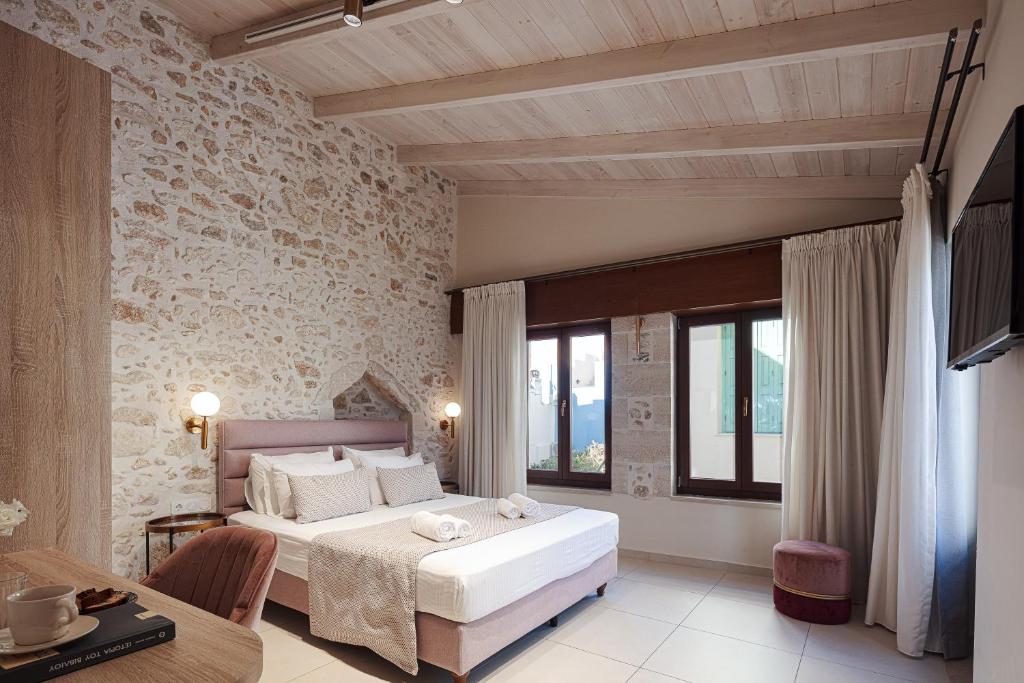
Philikon Luxury Suites
60-square-metre apartments with private kitchens and dishwashers, family rooms for up to four people, and a garden with a patio and sun terrace. The property arranges transfers and rents bicycles—two useful services if you don’t have a car. There’s no parking, parties aren’t allowed, and quiet hours apply in the afternoon from 15:00 to 18:00.
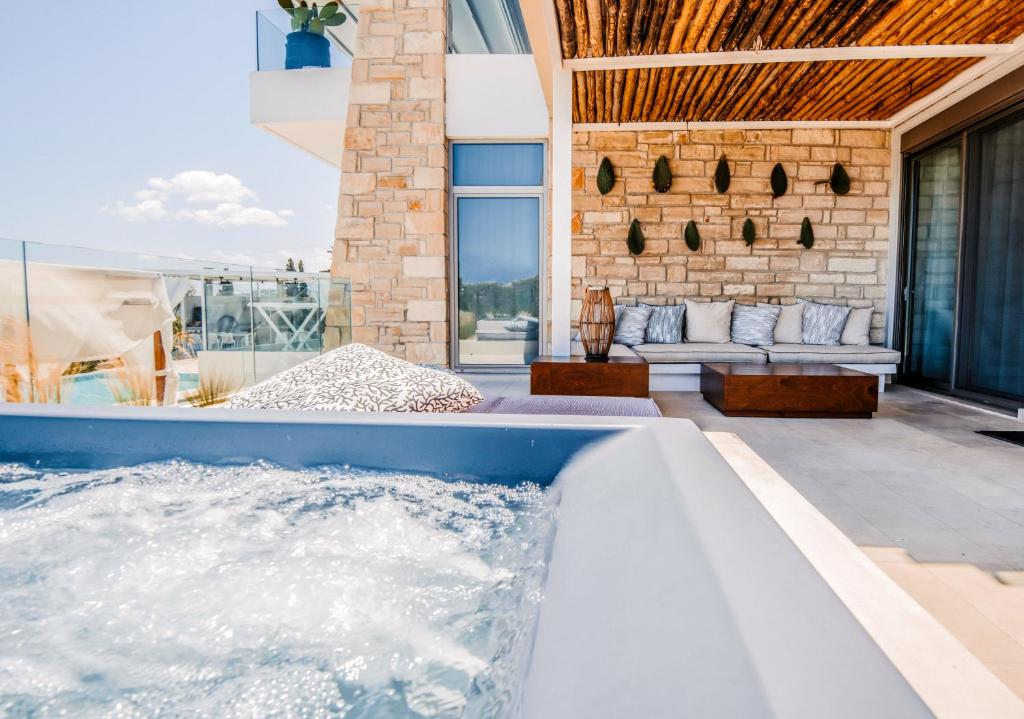
Made of Blue luxury suites collection
Spacious suites with full kitchens, a seasonal pool, sauna, hot tub and gym; children have a pool, playground and safety equipment. Pets are accepted, possibly for an extra charge, and free public parking is available nearby, though there are no private spaces. There’s no lift, and quiet hours apply from 22:00 to 07:00.
Practical tips before you book
Accommodation in Rethymno, especially in older buildings, comes with a few details worth knowing in advance:
- Stairs: in historic buildings, the upper floors are often accessible only by stairs. If you have mobility difficulties, request a ground-floor room.
- Minimum stay: several small properties require a minimum stay of two nights.
- Arrival time: some close check-in as early as 21:00 or 22:00, so let them know in advance if your flight lands late.
- Quiet hours: many properties set quiet hours, sometimes in the afternoon too, and parties are usually not allowed.
What to see in Rethymno
The Fortezza was built by the Venetians in the late 16th century, after the devastating Ottoman raid of 1571, on Paleokastro Hill. Within the walls, you’ll find the Sultan Ibrahim Mosque, gunpowder stores and the ruins of Venetian administration buildings. In summer, the fortress hosts exhibitions and events, including the annual Renaissance Festival.
Exploring the Old Town on foot
The best walk through the Old Town starts at Guora Gate, the only remaining section of the city walls, and follows Ethnikis Antistaseos Street downhill. Along the way, you’ll pass the Neratze Mosque, with its tall minaret, now home to the Municipal Conservatory, and the Rimondi Fountain of 1626, where water still flows from three lion heads. A little farther on, the Loggia was once a meeting place for Venetian nobles.
Finds from the area, from the Palaeolithic era to the Venetian period, are displayed in the Church of St Francis in the Old Town, since the former archaeological museum opposite the Fortezza entrance closed for structural reasons. Studies for the new museum are still being completed, so St Francis will remain the main place to explore the city’s ancient past for some time. Nearby, the Historical and Folklore Museum, in a 17th-century Venetian building, houses textiles, embroidery and tools from the Cretan countryside.
In the evening, everyone ends up at the Venetian Harbour, with its 19th-century lighthouse and restaurant tables along the waterfront. For a quieter meal with sunset views, walk west beneath the Fortezza walls to Koumbes. Try kalitsounia, snails cooked boubouristi-style, gamopilafo and dakos, with a glass of wine from the region’s vineyards.
The town beach
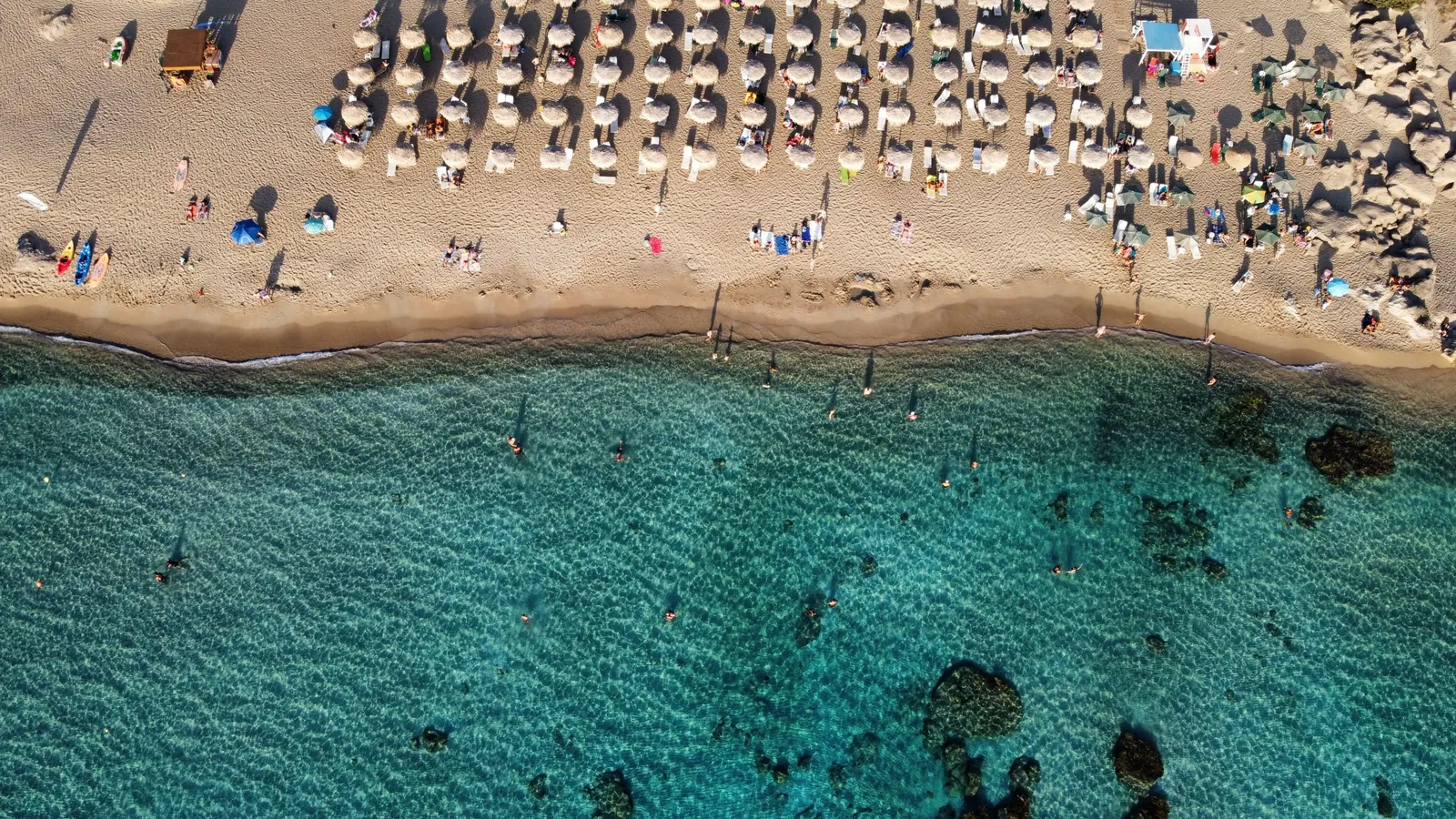
Rethymno’s sandy beach starts just east of the Old Town and continues for more than 12 kilometres to Skaleta, lined with beach bars, tavernas and hotels. The first stretch, in front of the seafront road, is the most convenient if you’re staying in the centre. The farther east you go, the fewer people you’ll find, and windsurfers can find the breeze they’re looking for at Adelianos Kampos.
Beyond the city
- Arkadi Monastery: about half an hour to the southeast, this is a symbol of the 1866 Cretan uprising; the anniversary of the Holocaust is commemorated every year on 8 November.
- Ancient Eleutherna: one of Crete’s most important archaeological sites, with a museum beside the excavations.
- Margarites: a potters’ village on the foothills of Mount Ida, ideal for an afternoon stroll among the workshops.
- South coast: cross the Kotsifou or Kourtaliotiko Gorge to reach Plakias and Preveli, with its palm forest at the river mouth.
- North coast: Georgioupoli to the west and Panormos to the east, for a swim at quieter beaches.
When to visit Rethymno
Spring and autumn are the most pleasant seasons: the sea stays warm until late October, and the Old Town is less crowded than in August. Summer is hot and lively, with busy tavernas and events at the Fortezza. The city doesn’t empty out in winter, thanks to the students at the University of Crete, though many accommodation providers and restaurants close.
The biggest celebration of the year is the Rethymno Carnival, which reaches its peak on the last Sunday of Carnival with the grand parade: thousands of revellers and floats fill the centre, and the last time, more than 350 bus trips were needed to transport people from the car parks. Book early for that weekend, as well as for early November, when the Arkadi anniversary is commemorated.
How to get there and get around
Rethymno doesn’t have its own airport: flights land in Chania or Heraklion. The city is 68 kilometres from Chania, about 1 hour and 10 minutes by car, and 80 kilometres from Heraklion, about 1 hour and 20 minutes; allow a few more minutes from the airports. Those arriving by ferry from Piraeus disembark at Souda or Heraklion.
KTEL intercity buses frequently connect the city with Chania and Heraklion via the Northern Road Axis, and the bus station is on the western seafront, within walking distance of the Old Town. Work to convert the Chania–Heraklion section into a motorway has been under way since early 2026, with construction expected to take five years; work is also in progress on the Rethymno bypass. If you’re driving, allow extra time for the journey.
Within the city, everything is easy to reach on foot, and the narrow lanes of the Old Town aren’t made for cars. If you arrive in your own vehicle, plan to leave it in a public car park on the edge of the centre, as most Old Town accommodation doesn’t have its own parking. For trips to Arkadi, the villages and the south coast, a car is the most practical option. Find other bases on the island on our Crete page.
Rethymno is one of the stops in our guide to where to stay in Crete. If you’d like to combine the city with more time by the sea, see where to stay in Georgioupoli, a little farther west, and where to stay in Plakias, on the south coast. For eastern Crete, see our guide to where to stay in Elounda; all the ways to get to the island are covered in our article on how to get to Crete.
Frequently asked questions
Quick answers to common questions about planning a stay in Rethymno.
What is the best area to stay in Rethymno?
For most travellers, the Old Town is the best choice: the Fortezza, Venetian Harbour, museums and tavernas are just minutes away on foot, and accommodation is often housed in Venetian or neoclassical buildings. Those who want the sea on their doorstep tend to prefer the seafront and Kallithea, east of the centre, where there are more apartments with kitchens and pools. Koumbes, to the west, suits those looking for peace and sunset views.
Do you need a car in Rethymno?
Not for the city itself. The Old Town, harbour and beach are easy to cover on foot, and many of the historic centre’s narrow lanes are pedestrianised. Intercity buses frequently connect Rethymno with Chania and Heraklion. A car is useful for trips to Arkadi Monastery, inland villages and the south coast. If you have one, find out in advance where you can leave it, as most accommodation in the centre doesn’t have its own parking.
How do you get to Rethymno from the airports?
Rethymno lies between the two airports in northern Crete. The city is 68 kilometres from Chania, about 1 hour and 10 minutes by car, and 80 kilometres from Heraklion, about 1 hour and 20 minutes; the journey from the airports takes a little longer. You can rent a car, arrange a transfer or take an intercity bus from the centre of the city where you arrive. Roadworks are under way on the Northern Road Axis, so allow extra time.
What is the best time of year to visit Rethymno?
Spring and autumn are the most pleasant seasons, with mild temperatures, swimmable seas until late October and fewer people in the lanes. Summer is hot and full of events, including the Renaissance Festival at the Fortezza. The city stays lively in winter thanks to its students, and the biggest celebration is Carnival, with the parade on the last Sunday of the Carnival season. Book accommodation early for those dates.
Is Rethymno a good choice for families with children?
Yes, especially if you choose an apartment with a kitchen near the beach or accommodation with a pool. The city’s sandy beach is long and starts beside the centre, while many places to stay offer family rooms, a child’s high chair, or even a children’s pool and playground. One thing to note: some city hotels are adults-only, and many Old Town buildings have stairs but no lift. Check these details before booking.
Where can you park if you’re staying in the Old Town?
Most Old Town accommodation doesn’t have its own parking, as the lanes are narrow and largely pedestrianised. The usual solution is to use public car parks on the edge of the historic centre; they may charge a fee and can’t be reserved. A few properties offer private parking for a fee, with advance booking. If you’re planning only a few day trips, rent a car just for those days and explore the rest of your stay on foot.