Ελληνικά
 English
 Deutsch
 Italiano
 Français
 Español
 Nederlands
 Polski
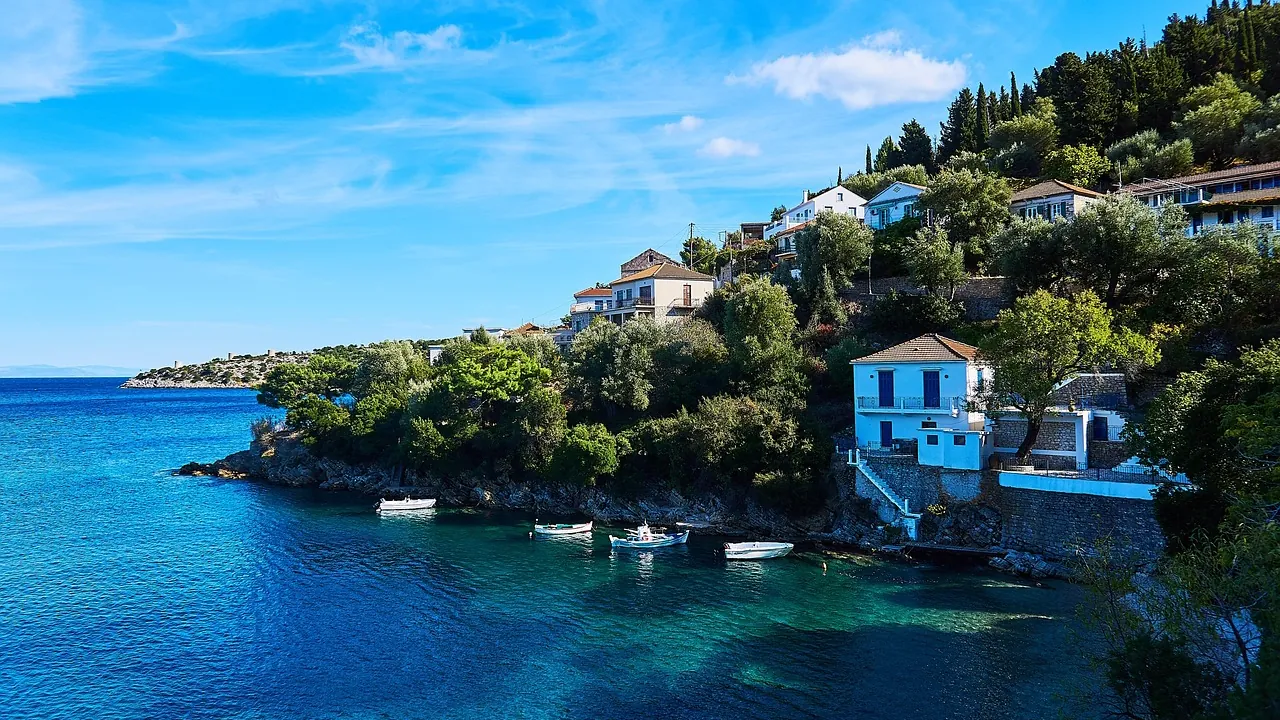
Ithaca is one of the Ionian Islands’ smallest inhabited islands: long and mountainous, it lies opposite the east coast of Kefalonia. It is divided into northern and southern parts, joined at the narrow isthmus of Aetos. There are no long sandy beaches or lively nightlife; instead, you’ll find pebbled coves, mountain villages and a name steeped in the Odyssey.
The question of where to stay in Ithaca has essentially two answers: Vathy in the south, or one of the northern villages, especially Kioni. Below, you’ll find the areas and places to stay we’ve hand-picked based on their features; the full list is on our page for places to stay in Ithaca.
How to choose an area
The island is small, but the roads are narrow and winding, so your base will determine how much driving you do:
- Vathy: the capital, with the most restaurants and places to stay; the only base where you can get by comfortably without a car.
- Stavros: the main village in the north, at a crossroads and close to the School of Homer.
- Frikes and Kioni: two small harbours on the northeast coast, with tavernas right by the water.
For a first visit, Vathy is the best choice: it’s close to Pisaetos, where the ferry from Sami docks, and has all the services you need. For a week of unwinding with a car, Kioni offers peace and quiet. Now, let’s look at places to stay.
Where to stay in Vathy
Vathy’s tiled-roof houses, mansions and narrow lanes spread amphitheatrically around the harbour. All three homes below have a kitchen and sea views; you’ll find more options on our page for Vathy.
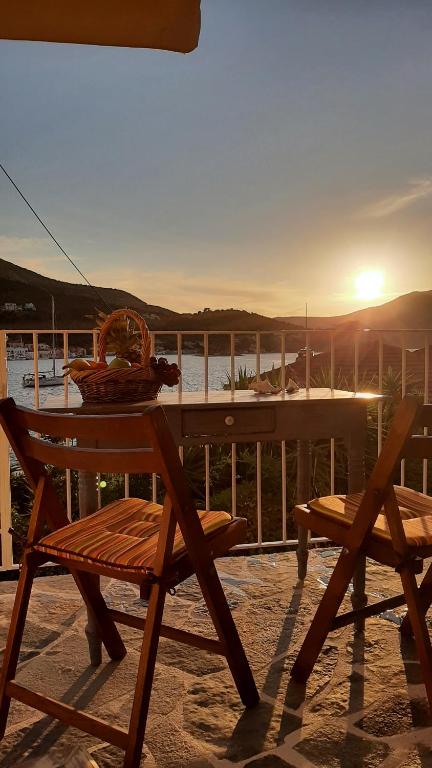
1836 Traditional House
A one-bedroom home, ideal for a couple, with a terrace overlooking the sea and the town’s rooftops. The compact kitchen and washing machine make it convenient for stays of several days, and Wi-Fi is free throughout. There’s no private parking, only free street parking nearby, and check-in is until 21:00.
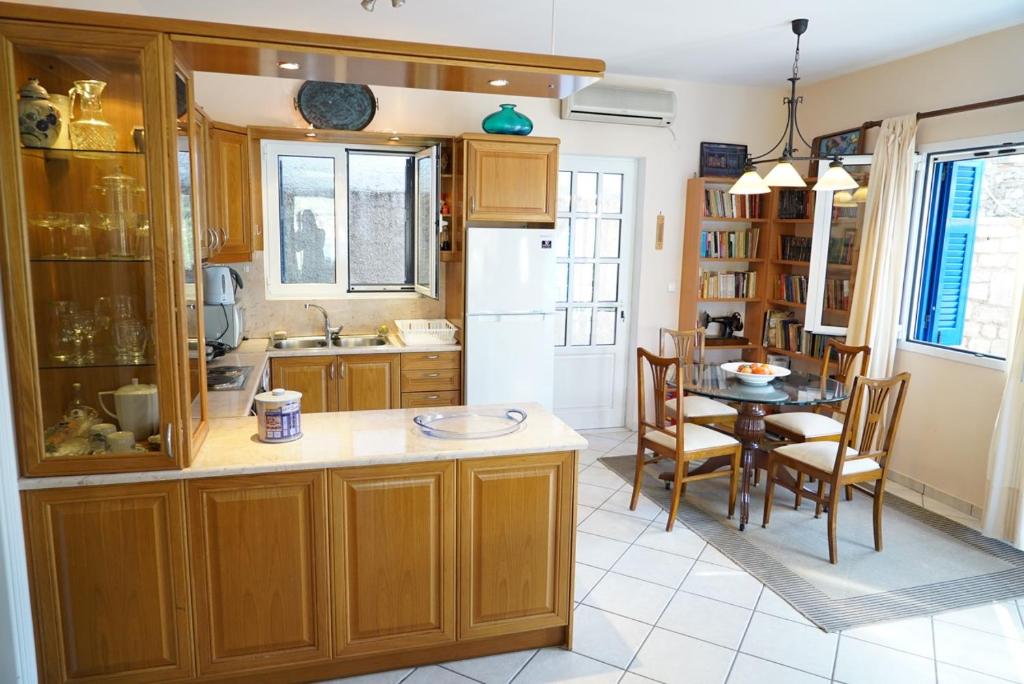
Villa Marika
A two-bedroom home with two bathrooms for up to six guests, plus a garden, patio and terrace with sea views. The kitchen also has a dishwasher, while free private parking makes it easier to head out hiking, canoeing or fishing. The upper floors are accessible only by stairs, and check-in is until 20:00, with advance notice required.
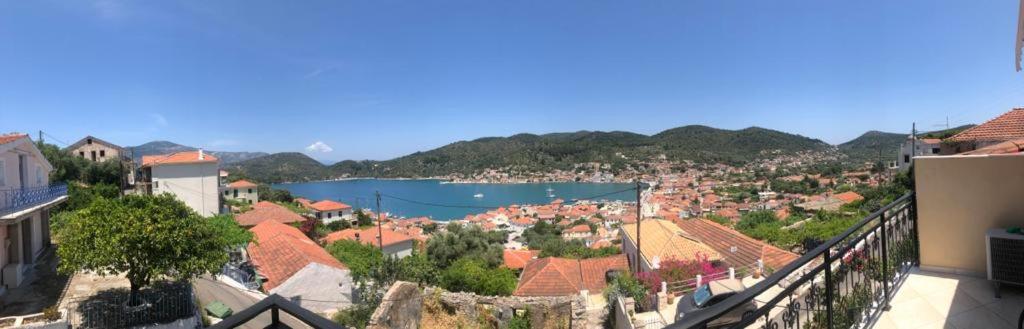
Panoramic View Villa
The most spacious of our Vathy picks: three bedrooms and a living room for a family or group of up to five, a balcony overlooking the Ionian Sea and a private garden. The kitchen has an oven and fridge, so you can cook, and on-site parking is free. Check-in is from 15:00 to 23:00.
Where to stay in Kioni
Kioni is about 24 kilometres from Vathy and was built in the 16th century by residents of the mountain village of Anogi. It is a traditional, protected settlement, with Ionian-style houses around a natural harbour and three ruined windmills at the entrance to the bay. In summer, the harbour fills with sailboats. See our page for Kioni.
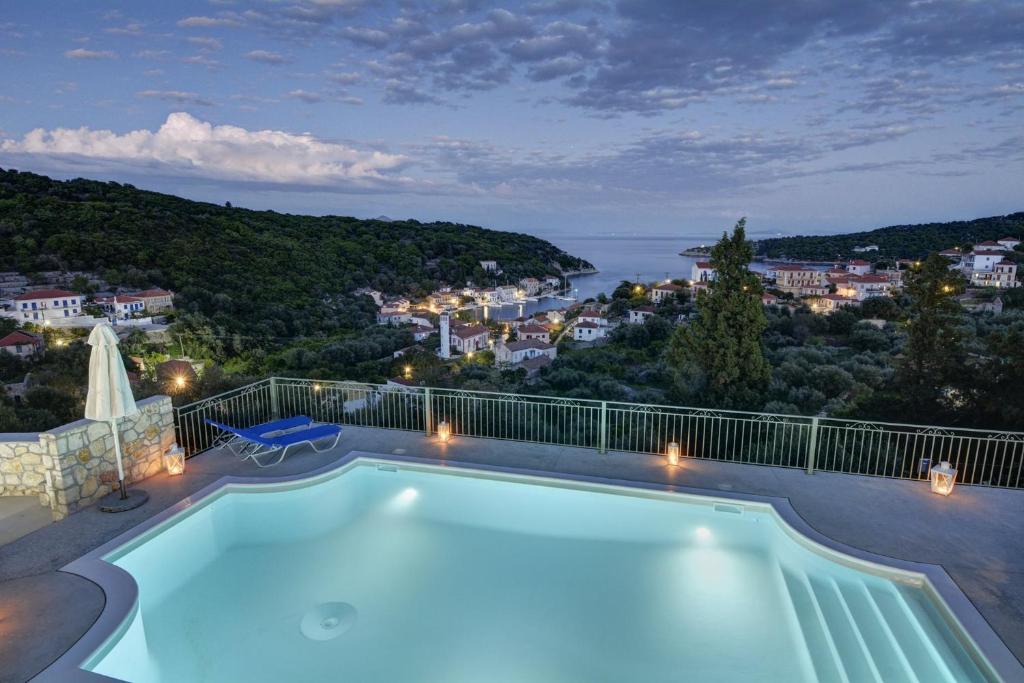
Likoudis Villas Suites,Traditional Ithacan Hospitality Above Kioni Harbot
Suites above Kioni’s harbour, each with its own kitchen and sea views, plus an outdoor pool that’s open during the warmer months—a rare feature on the island. Private parking is free, and pets are allowed on request at no extra charge. A minimum stay of three nights is required, and access is by stairs only.
What to see in Ithaca
Vathy’s Archaeological Museum is being upgraded with a new permanent exhibition in six sections, so check whether it’s open before you visit. At the pastry shops, look for rovani, the island’s traditional honey dessert.
In the north, near Stavros, you’ll find the so-called School of Homer, on a hillside overlooking the sea. In 2026, excavations there uncovered a potsherd bearing a variant of Odysseus’s name, along with votive offerings dating from the Mycenaean to the Hellenistic period—evidence that the hero was worshipped at the site. Higher up, the Monastery of Kathara on Mount Neritos, dedicated to the Virgin Mary Kathariotissa, Ithaca’s patron saint, has panoramic views.
In Anogi, the island’s oldest mountain village, look out for the large menhir-like rocks, especially the well-known Araklis. And, of course, Cavafy’s poem “Ithaca” made the island a symbol of the journey.
Beaches
- Gidaki: the best-known cove near Vathy, reached by boat or footpath.
- Filiatro and Sarakiniko: pebbled beaches close to town.
- Dexa: the bay where, according to tradition, the Phaeacians left Odysseus.
- Mavrona and Rachi: small coves near Kioni for a quiet swim.
When to visit Ithaca
June and September are the best-balanced months: the sea is warm, tavernas are open and the coves are less crowded. In July and August, the harbours fill with boats and places to stay book up early. Spring is ideal for walking the trails.
Every year in early September, for the feast of the Virgin Mary Kathariotissa, the Monastery of Kathara welcomes worshippers from across the island.
How to get there and get around
Ithaca has no airport. The most common route is to fly to Kefalonia, drive to Sami and take a ferry to Pisaetos, a crossing of about half an hour. In summer, there’s also a connection from Vasiliki on Lefkada to Frikes, taking about an hour and convenient if you’re staying in the north.
Pisaetos is a harbour on the west coast, not a settlement, so you’ll need a car or taxi to reach Vathy. With such limited public transport, a rental car or scooter is almost essential for exploring the north. Find other bases in the region on our Ionian Islands page.
Ithaca is part of our guide to where to stay in the Ionian Islands. For ferries, flights and island-hopping routes, see how to get to the Ionian Islands. If you like small islands with little harbours, read where to stay in Paxos; for the large island to the north, see where to stay in Corfu.
Frequently asked questions
Quick answers to common questions about staying in Ithaca.
What is the best area to stay in Ithaca?
For most travellers, the best area is Vathy: it’s the capital, close to the port of Pisaetos, and has the island’s largest choice of restaurants, shops and places to stay. Kioni, on the northeast coast, suits those looking for peace and quiet, views of a little harbour and nearby swimming coves, but it’s about 24 kilometres from Vathy. Frikes and Stavros are also good bases for the north.
How do you get to Ithaca?
Ithaca has no airport, so the most common route is to fly to Kefalonia, drive to Sami and take a ferry to Pisaetos; the crossing takes about half an hour. In summer, there’s also a connection from Vasiliki on Lefkada to Frikes, taking about an hour. Timetables vary by season, so it’s a good idea to check them before booking your accommodation.
Do you need a car in Ithaca?
If you stay in Vathy, you can get around town on foot and take a small boat to some beaches, such as Gidaki. For the northern villages, the Monastery of Kathara, the School of Homer and most coves, however, a car or scooter is almost essential because public transport is limited. Also, Pisaetos is a harbour, not a settlement, so you’ll need a vehicle or taxi to get from there to Vathy.
When is the best time to visit Ithaca?
June and September bring together warm seas, open tavernas and fewer people in the coves. In July and August, the harbours of Vathy, Frikes and Kioni fill with boats, and the few places to stay book up early, so it’s best to reserve well in advance. Spring is ideal for hiking the trails, while in early September the feast of the Virgin Mary Kathariotissa draws many worshippers to the Monastery of Kathara.
Is Ithaca suitable for families?
Yes, especially if you choose a home with a kitchen and outdoor space, such as the two- or three-bedroom homes we recommend in Vathy. The island is quiet and safe, but its beaches are mostly small, pebbled coves, with no long sandy stretches or organised facilities. Some places to stay have upper floors accessible only by stairs, so if you’re travelling with a stroller or have difficulty climbing stairs, ask before booking.