Ελληνικά
 English
 Deutsch
 Italiano
 Français
 Español
 Nederlands
 Polski
The Dodecanese stretch in a long arc, from Patmos and Lipsi in the north to Kasos in the southwest and Kastellorizo at the eastern edge, close to the coast of Asia Minor. That’s why the best way to get there varies from island to island: you can fly directly to the larger islands, while reaching the smaller ones usually involves combining a flight and a ferry.
This guide covers the airports, ferries from Piraeus, connections between the islands and transport options on each one. We select our accommodation one by one based on its features.
By plane: airports in the Dodecanese
Eight islands in the group have airports: two large ones with international traffic and six smaller ones serving domestic flights. Flights from Athens to most of them take around an hour.
Rhodes “Diagoras” and Kos “Hippocrates”
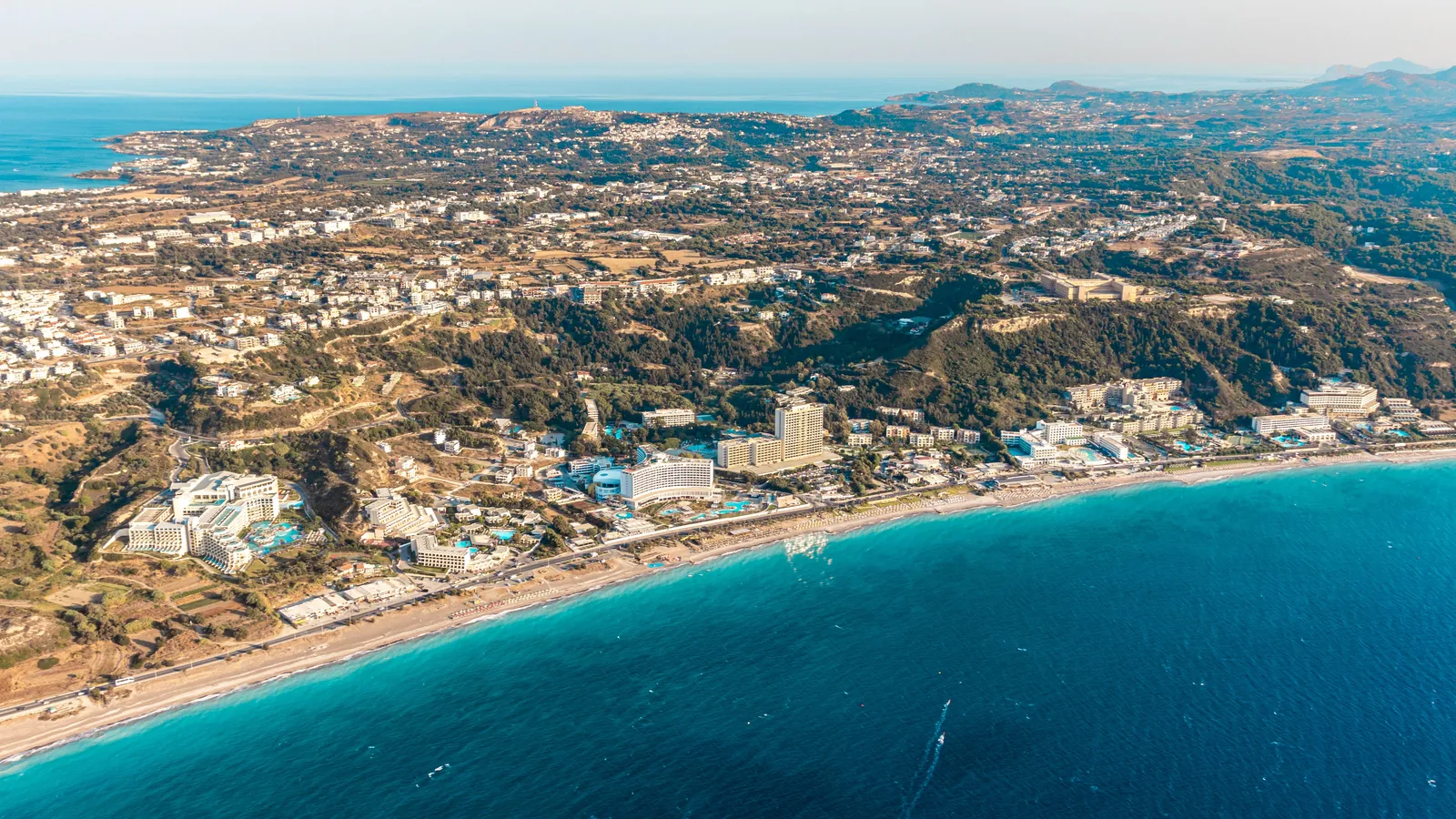
“Diagoras” Airport is on the west coast of Rhodes, near Paradisi, and is the region’s main gateway: in 2025 it handled more than 7 million passengers. Flights to the southern islands also depart from here.
“Hippocrates” Airport is in the centre of Kos, near Antimachia, roughly halfway between Kos Town and Kefalos. It’s also a convenient choice for travellers continuing to Kalymnos, Nisyros or Pserimos.
From Athens, Thessaloniki and abroad
- From Athens: Aegean and SKY express fly to Rhodes and Kos year-round, with several flights a day in summer.
- From Thessaloniki: there are direct flights to Rhodes and, during some periods, to Karpathos.
- From Crete: Heraklion is connected to Rhodes by air.
- From abroad: from spring through October, direct flights arrive in Rhodes and Kos from many European cities, along with charter flights to Karpathos. Flights become much less frequent in winter, when the usual option is a connection in Athens.
The smaller airports
- Karpathos: at the southern tip of the island, with flights to Athens, Rhodes and Crete.
- Kasos: a small airport with flights mainly from Rhodes and Karpathos.
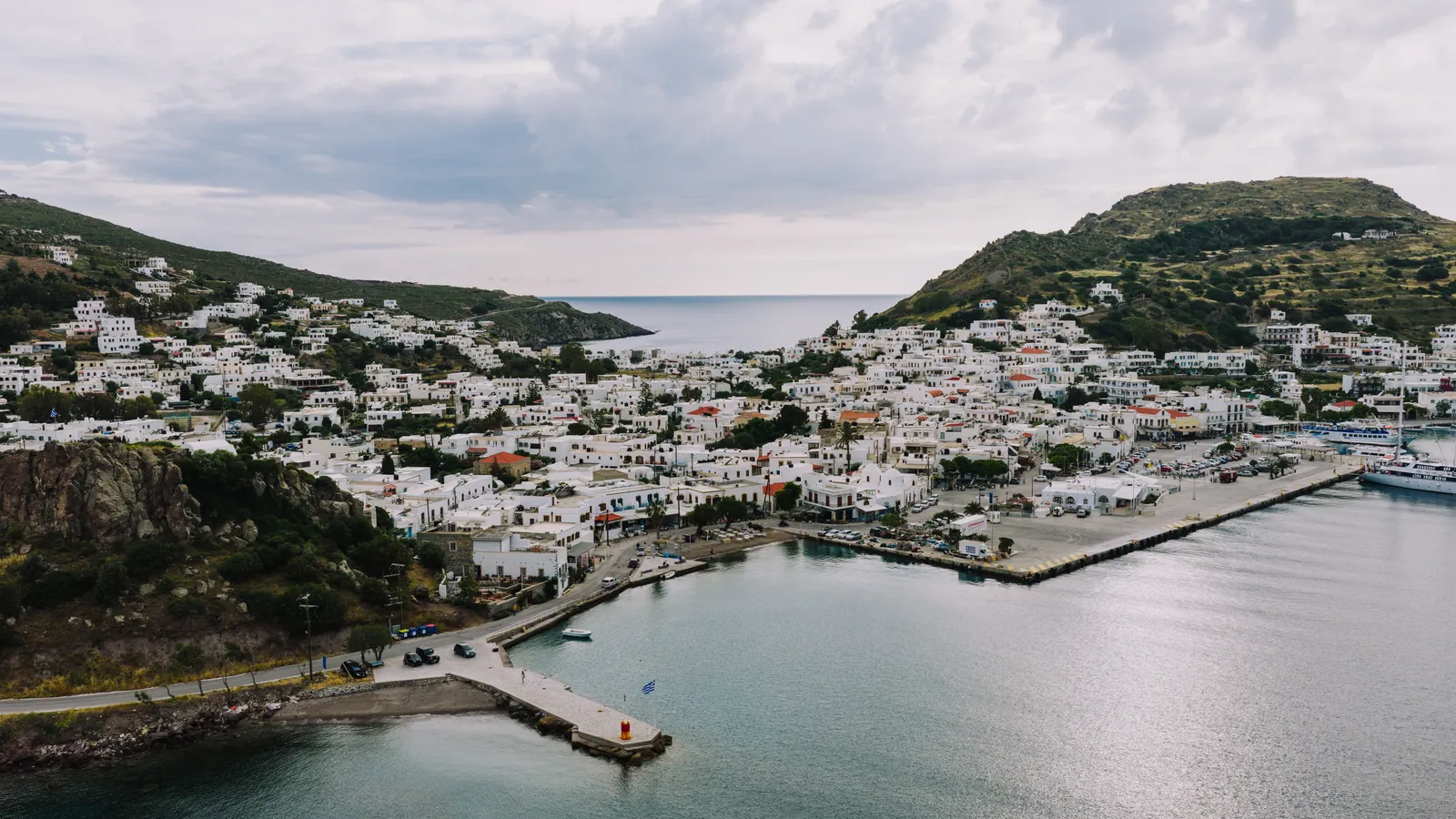
- Leros: at Partheni, in the north, with flights from Athens; also convenient for Patmos and Lipsi.
- Kalymnos: a few kilometres from Pothia, with flights from Athens.
- Astypalaia: with flights from Athens.
- Kastellorizo: with Aegean flights from Rhodes.
Aircraft on these routes are small and seats are limited, so book early for July and August.
By ferry from Piraeus
Large ferries depart from Piraeus and call at several islands in succession, so journey times depend on the intermediate stops. Blue Star Ferries runs daily services to Rhodes, while ferries to Kos usually depart in the evening.
Approximate journey times:
- Patmos: 7 to 12 hours.
- Leros and Kalymnos: intermediate stops on the same route, at Lakki and Pothia.
- Kos: around 9 to 12 hours, with daily services year-round.
- Rhodes: more than twelve hours, usually an overnight journey.
- Karpathos: around 20 hours, with two or three ferries a week.
The ferry is a good option if you want to bring your car or plan to visit several islands on one trip. Astypalaia, at the western edge, is also connected to Piraeus via the Cyclades.
Between the islands
Connections between the islands rely on Dodekanisos Seaways’ high-speed catamarans and conventional ferries. The company serves almost all the islands in the group, from Rhodes and Symi to Lipsi, Agathonisi and Kastellorizo, and also reaches Samos, Ikaria and Fourni.
- From Rhodes: Symi is less than two hours away, and there are services to Chalki, Tilos, Nisyros, Kastellorizo, Karpathos and Kasos. A smaller ferry to Chalki also departs from Skala Kameirou, on the west coast.
- From Kos: from Mastichari, the ferry reaches Pothia on Kalymnos in about 45 minutes, while boats to Nisyros, Pserimos and the northern islands depart from the town’s port.
- Northern Dodecanese: Leros, Patmos, Lipsi and Agathonisi are connected to one another and to Kos. On Leros, high-speed boats dock at Agia Marina, not Lakki.
- Southern Dodecanese: Karpathos and Kasos have ferry connections to Rhodes and Crete via Sitia and Heraklion.
There are also services from Rhodes and Kos to the opposite coast, including Marmaris and Bodrum.
Getting around the islands
Rhodes and Kos
On Rhodes, a bus route connects the airport with the centre of Rhodes Town, while KTEL buses run to Lindos, Faliraki, Kolymbia and the villages along the east coast. On Kos, buses to Kos Town, Mastichari, Kardamena and Kefalos leave from a stop 50 metres from the terminal.
For mountain villages and distant beaches, such as the southern tip of Rhodes, a car makes things much easier; you’ll find rental agencies at the airports and ports.
The smaller islands
On Karpathos, a car is almost essential because the island is long and mountainous. On Kalymnos, Leros and Patmos, many visitors prefer a scooter, while local buses cover the main routes.
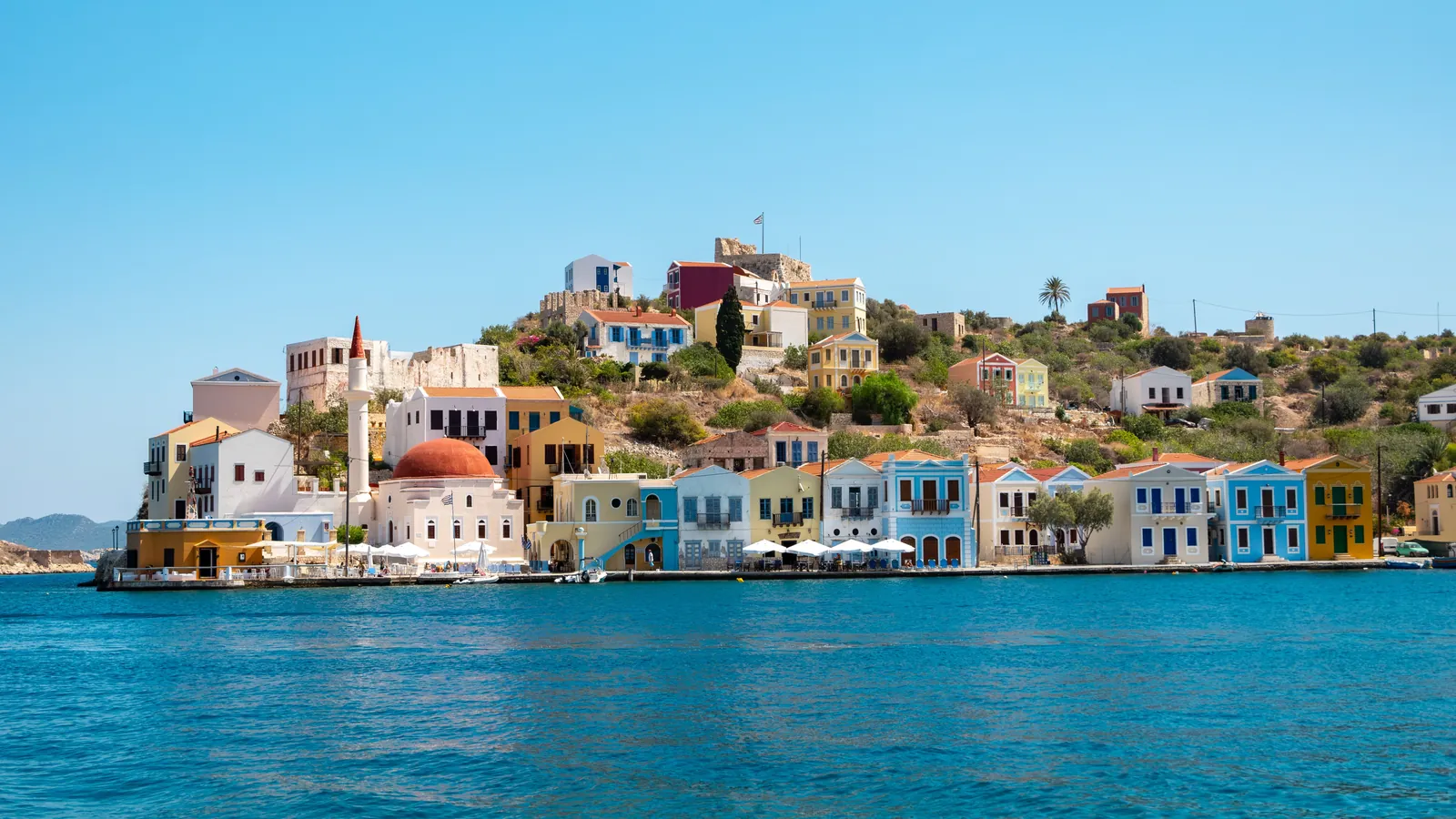
On Symi, Chalki and Kastellorizo, you’ll mostly get around on foot and by small boats to the beaches.
When to go and practical tips
May, June, September and October combine warm seas, plenty of services and fewer crowds. In July and August, ferries, flights and accommodation fill up quickly.
- Allow for the meltemi winds: in July and August, northerly winds can delay or cancel high-speed boats and small fishing boats, and more rarely the large ferries. Leave a day’s buffer before your return flight.
- Fewer services in winter: high-speed boats run less often, international flights almost stop, and many accommodation options on the smaller islands close.
- Book early for holidays: around 15 August and Easter, ferries fill up, and car spaces sell out first.
- Choose your base first: take a look at accommodation on Rhodes or Kos, then choose your airport or port.
Now that you know how to get there, the next step is deciding where to stay in the Dodecanese. If your trip starts on the largest island, see how to get to Rhodes and where to stay in Rhodes. For the other islands, see our guides on where to stay in Kos, Kalymnos and Karpathos.
Frequently asked questions
Quick answers to the most common questions from travellers planning a trip to the Dodecanese.
Which airport should you choose for the Dodecanese?
It depends on the island. Rhodes is the best gateway for Rhodes itself, Symi, Chalki, Tilos and Kastellorizo, while Kos is best for Kalymnos, Nisyros and Pserimos. Leros, with flights from Athens, is convenient for Patmos and Lipsi. Karpathos, Kasos, Kalymnos and Astypalaia have their own small airports. From abroad, Rhodes and Kos have the most direct flights, mainly from spring through October.
How many hours is the ferry from Piraeus to the Dodecanese?
It depends on the island and the intermediate stops. The journey to Patmos takes 7 to 12 hours, and to Kos around 9 to 12 hours. To Rhodes, it takes more than twelve hours and is usually overnight, while the journey to Karpathos takes around 20 hours, with two or three ferries a week. You can bring your car on the ferry, and a cabin makes the trip much more comfortable.
How do you get to islands without an airport, such as Symi or Patmos?
Combine a flight and a ferry. For Symi, Chalki, Tilos and Nisyros, fly to Rhodes and continue by high-speed or conventional ferry; Symi is less than two hours away. For Patmos and Lipsi, the closest airport is on Leros, while ferries also arrive from Kos. Check the schedules before booking your flight, as they change from season to season.
Do ferries run between the islands in winter?
Yes, but there are far fewer services. Large ferries from Piraeus call at Rhodes and Kos year-round. High-speed boats run less often, small boats to the beaches stop operating, and bad weather cancels some trips more frequently. If you plan to visit smaller islands out of season, check the schedules first and leave a day’s buffer before your return flight.
Do you need a car in the Dodecanese?
It depends on the island. On Rhodes and Kos, buses connect the airports with the towns and major resorts, but a car is very helpful for mountain villages and distant beaches. It’s almost essential on Karpathos, because the island is long and mountainous. On Kalymnos, Leros and Patmos, a scooter is usually enough, while on Symi, Chalki and Kastellorizo, you can get around on foot and by small boats.