Ελληνικά
 English
 Deutsch
 Italiano
 Français
 Español
 Nederlands
 Polski
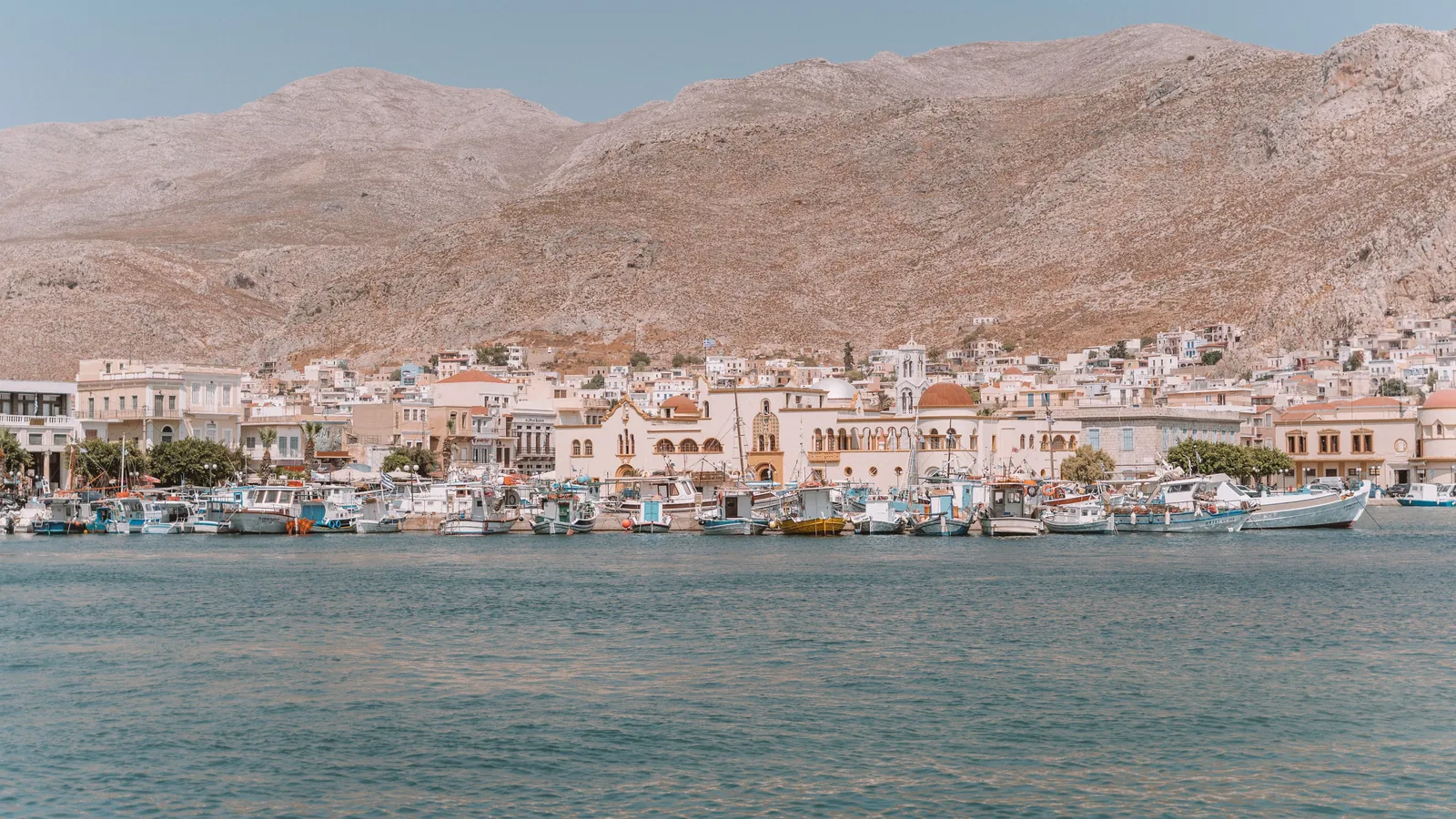
Kalymnos lies between Leros and Kos. It is a rugged, mountainous island with a deep maritime tradition. Known as the island of sponge divers, in recent decades it has also become a major climbing destination, with limestone cliffs rising above the sea.
The question of where to stay in Kalymnos has essentially two answers: in urban Pothia or in the seaside villages on the west coast. Below, you’ll find the areas and accommodation we’ve hand-picked one by one based on their features; see the full list on our page for accommodation in Kalymnos.
How to choose an area
The island is small, but the road from Pothia to Masouri, around nine kilometres, crosses the mountains and takes you into a completely different setting:
- Pothia: the port, museums, cafés and fishing boats; the most practical base without a car.
- Myrties: a small settlement with the harbour for Telendos and sunsets behind the islet.
- Masouri and Armeos: the heart of the climbing scene, with the coast’s largest selection of restaurants and gear shops.
- Telendos, Vathy and Emporios: for those seeking seclusion, with few places to stay and a slower pace.
If you’re coming for climbing or the sea, the west coast is the natural choice. If you’re interested in everyday island life and ferry connections, Pothia comes out on top.
In Myrties
Myrties stretches around a small harbour, directly opposite Telendos, and continues seamlessly into Masouri. The following two properties suit very different needs.
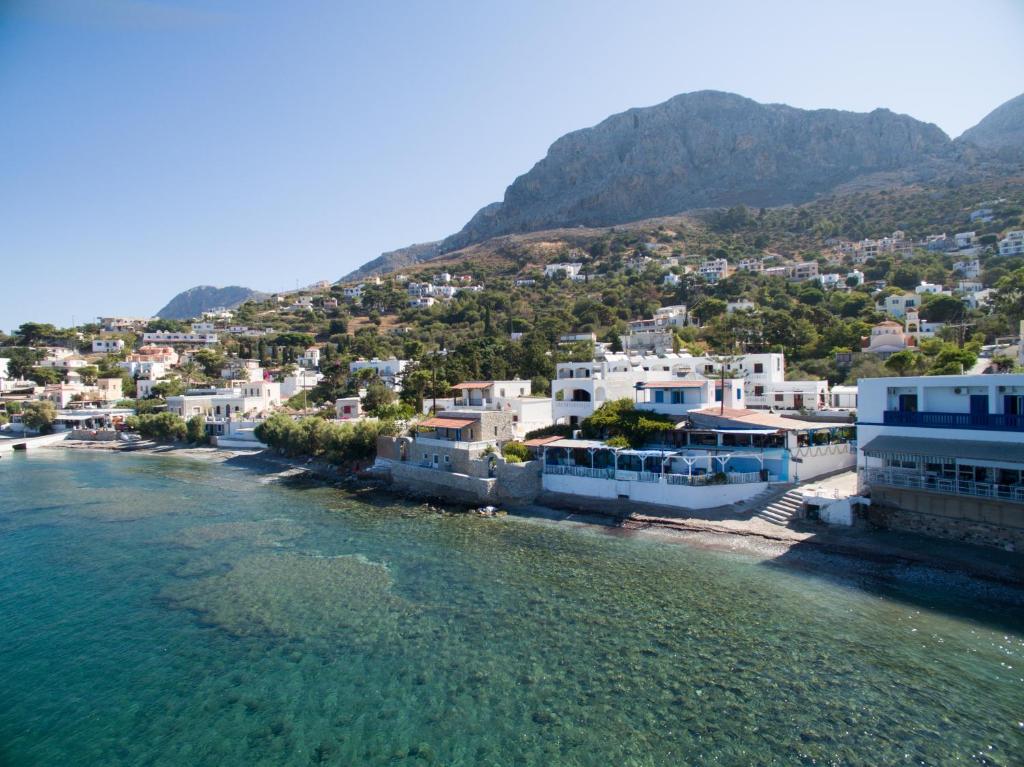
Avra Studios
Simple studios with sea-view balconies and a kitchenette, ideal for anyone spending the day on the crags or trails. There’s no lift, and parking is public. Check-in must be completed by 22:00, which is worth bearing in mind if you’re arriving on an evening ferry.

SPONGIA HOTEL SUITES & Spa
A four-star hotel right by the water, with its own beach, a seasonal pool, sauna and hammam. Family rooms sleep up to four, and two types of units have a kitchen. There’s no parking, and check-in is from 15:00 to 23:30.
In Masouri
Masouri is built amphitheatrically above a sandy beach, with climbing crags just a few minutes’ walk uphill from the road. Life here follows the climbers’ schedule: an early start on the rocks, a swim at midday and dinner at a taverna overlooking Telendos.

Mia Anasa - Luxury Suites
Suites with sea views, a kitchen and dining area in every unit, a gym, and a villa with a private pool and terrace. Layouts sleeping up to five are convenient for families who want to cook. The upper floors are accessible only by stairs, and parties are not allowed.

Carian Hotel
A four-star hotel with an outdoor pool overlooking the Aegean, a spa with a hot tub, sauna and hammam, and a daily breakfast buffet. Reception is open around the clock, while free parking is public, on the surrounding streets. The restaurant closes at 18:00, so you’ll need to head to the village tavernas for dinner.
In Pothia and Armeos
Kalymnos Town, or Pothia, is a bustling port with colourful houses climbing the hillsides. The second option is at the other end of the coast, in Armeos, where Masouri continues north.
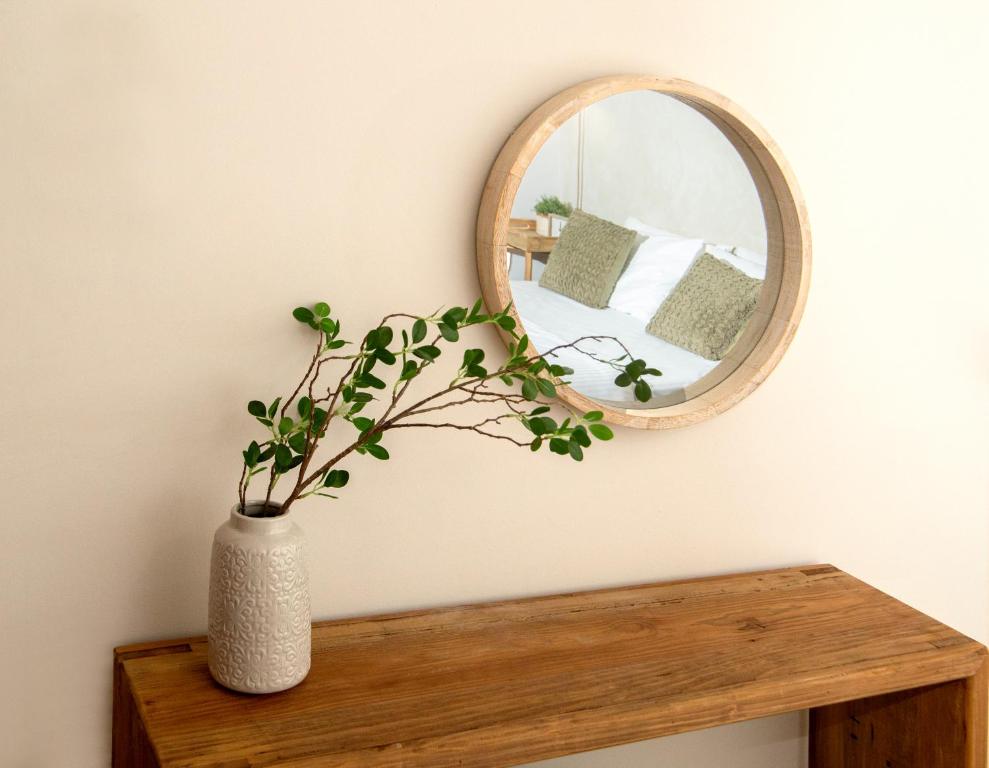
Casa di Emmanuel
An entire three-bedroom house sleeping up to seven, with a kitchen featuring an oven and dishwasher, a balcony and a terrace for outdoor dining. Free private parking is useful in a town with narrow streets. Quiet hours begin at midnight, and payment is made by bank transfer before arrival.

Analeia Luxury Hotel - Adults Only
An adults-only hotel with an outdoor pool, restaurant, bar and rooms with balconies or terraces, many with sea views. Free Wi-Fi is available throughout. There’s no private parking or lift, making it a good fit for couples who get around on foot or by scooter.
What to see in Kalymnos
In Pothia, it’s worth visiting the Archaeological Museum, where the bronze statue of the “Lady of Kalymnos” is on display, and the Maritime Museum, dedicated to divers and sponge fishers. Workshops that process sponges still operate beside the boatyards, while Chrysocheria Castle, above town, offers panoramic views of the port.
Above Chora, the medieval Pera Castle encloses white chapels within its walls. In the northeast, Vathy is a valley of orange and mandarin groves that ends in a narrow, fjord-like bay with the small harbour of Rina, ideal for kayaking.
Climbing and beaches
- Climbing: over a thousand equipped routes on the west and northwest coasts, centred around Masouri and Grande Grotta.
- West coast beaches: Masouri, Myrties, Kantouni and Linaria, close to most places to stay.
- Platis Gialos: a dark-sand beach near Panormos.
When to visit Kalymnos
Spring and autumn are the best seasons for climbing and hiking. July and August are very hot, but the sea breeze and the shade at some crags make it possible to combine climbing with swimming. Every year in October, the International Climbing Festival fills the west coast, so book early if you’re visiting then.
Easter in Pothia is famous for the blasts of dynamite that echo through the mountains around the port. The island quiets down in winter, with many places to stay on the west coast closed.
How to get there and get around
Kalymnos’s small airport, a few kilometres from Pothia, has flights from Athens that take about an hour. Many travellers, however, go via Kos: buses run from “Hippocrates” Airport to Mastichari, from where the ferry reaches Pothia in about 45 minutes. There are also ferries from Piraeus, with a much longer journey.
You can travel from Pothia to Myrties and Masouri by taxi, bus or rental scooter—the preferred option for most climbers. Boats to Telendos leave from Myrties harbour. Find more bases in the area on our Dodecanese page.
Kalymnos is part of our guide to where to stay in the Dodecanese. If you’d like to combine your trip with neighbouring Kos, read our guide to where to stay in Kos; for a larger island with a medieval town, see where to stay in Rhodes. For flights and ferries, see how to get to the Dodecanese.
Frequently asked questions
Quick answers to common questions about staying in Kalymnos.
What is the best area to stay in Kalymnos?
For most visitors, the west coast—Myrties and Masouri—is the best base: it has beaches, tavernas, views of Telendos and climbing crags within walking distance. Pothia suits those arriving by ferry, looking for shops and museums nearby, or staying for a few days without a vehicle. Telendos, Vathy and Emporios are for anyone seeking seclusion and happy with limited services.
Do you need a car in Kalymnos?
Not necessarily. If you stay in Myrties or Masouri, beaches, restaurants and most climbing crags are close by, and you can get to Pothia by taxi or bus. Many visitors rent a scooter, which is convenient on narrow roads and when parking. A car is mainly useful for trips to Vathy, Emporios and more remote beaches, or if you’re travelling with family and lots of luggage.
How do you get to Kalymnos?
The island has a small airport with flights from Athens that take about an hour. Many travellers fly to Kos, where buses run from “Hippocrates” Airport to Mastichari; from there, the ferry to Pothia takes around 45 minutes. There are also ferry connections with Piraeus and other Dodecanese islands, with more frequent sailings in summer, making it easy to include Kalymnos in an island-hopping trip.
When is the best time to visit Kalymnos?
Spring and autumn are ideal for climbing and hiking, with mild temperatures and warm seas through October. July and August are very hot, but they’re the best months for swimming and boat trips. Every October, the International Climbing Festival draws thousands of visitors, so book your accommodation well in advance for those dates. Many places to stay on the west coast close for winter.
Is it worth staying on Telendos?
Yes, if you’re looking for peace and quiet. Telendos has no cars, and life revolves around a few tavernas, small beaches and trails with Early Christian ruins. There are very few places to stay, so booking early is essential. The boat from Myrties takes a little over ten minutes, so you can cross over for climbing or a meal. The last services of the day, however, will determine your schedule.