Ελληνικά
 English
 Deutsch
 Italiano
 Français
 Español
 Nederlands
 Polski
The Dodecanese stretch across the southeastern Aegean, from Patmos and Lipsi in the north to Karpathos and Kasos in the south, with Kastellorizo almost beside the coast of Asia Minor. Despite the name, there are more than twelve inhabited islands, each with its own character.
So the question of where to stay in the Dodecanese starts with choosing an island, then an area. In this guide, we look at the six islands with the widest choice of accommodation, featuring places we select one by one based on their details, before rounding things off with the smaller islands.
Our list includes more than 650 places to stay in the region, around six in ten of them on Rhodes; you can find them all on our page for accommodation in the Dodecanese.
How to choose an island
Distances are measured in ferry hours, so first be clear about what you’re looking for:
- Rhodes: the Medieval Old Town, Lindos and long sandy beaches on the east coast.
- Kos: long beaches, cycle lanes in town and short distances.
- Symi: a neoclassical harbour and beaches reached by boat.
- Kalymnos: sponge divers, climbing and Telendos just across the water.
- Halki: a single settlement, few beds and complete peace and quiet.
- Karpathos: mountainous, with Olympos and beaches that require a car.
Without a car, the easiest options are Rhodes Town, Kos Town, Symi and Halki. For an island-hopping trip, Rhodes and Kos are the hubs for high-speed ferries.
Rhodes
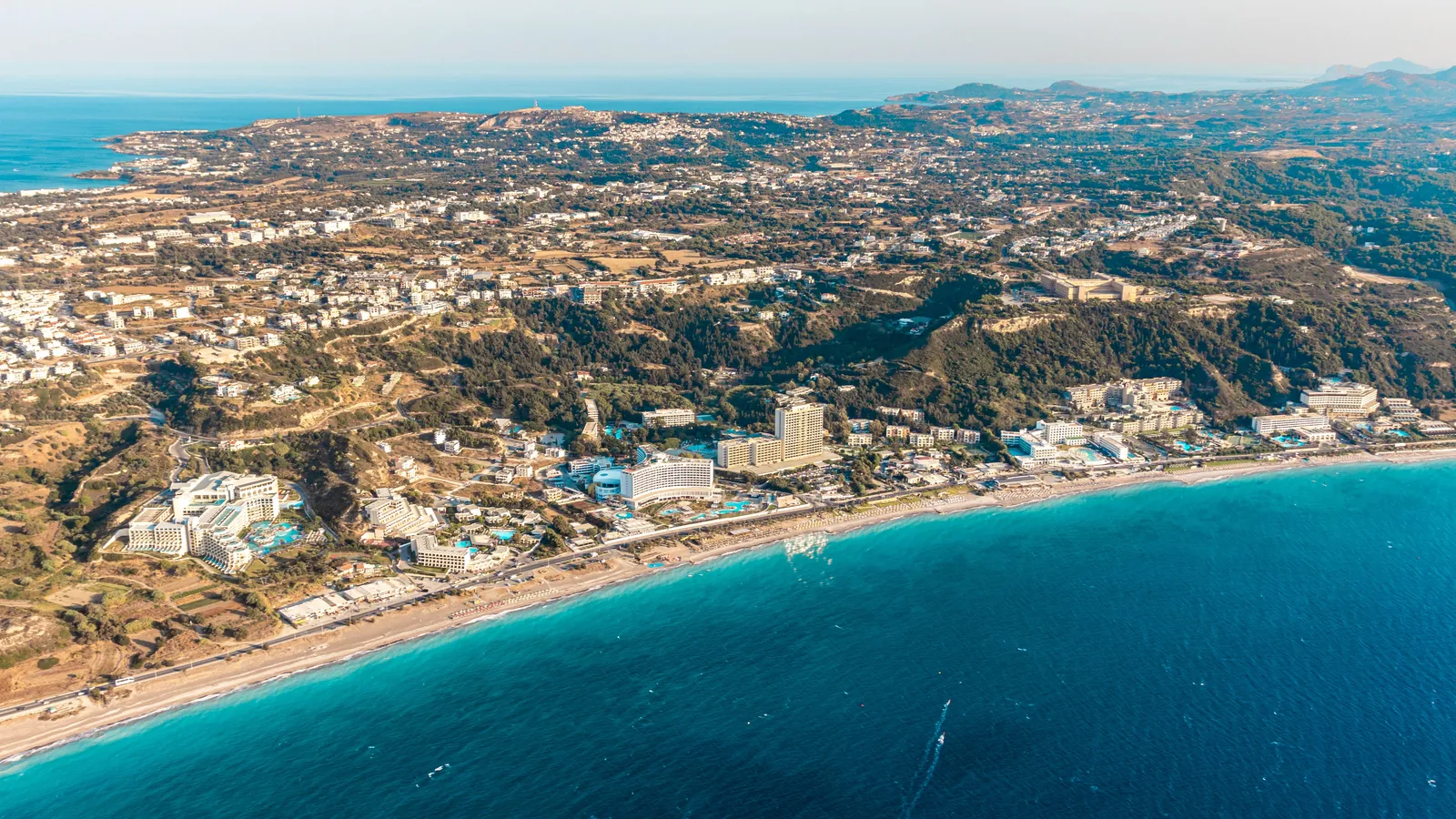
Rhodes has the widest choice of accommodation. Rhodes Town, with its UNESCO-listed Medieval Old Town, is the best base without a car. Since summer 2026, Pervola has also been open beside the Palace of the Grand Master: Hellenistic ship sheds, a Roman road and medieval gardens, closed for around 75 years.
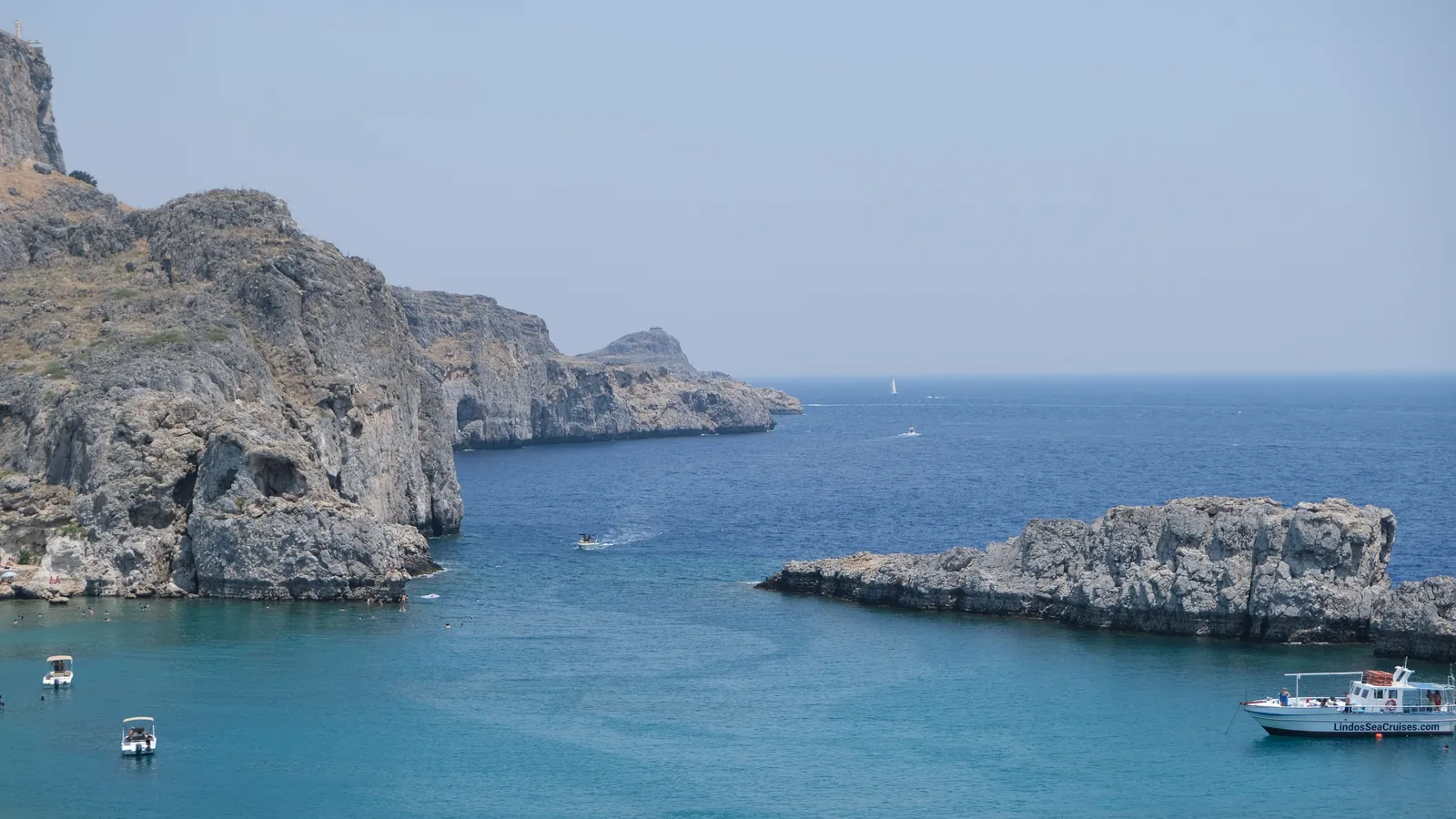
For the sea, the east coast is more sheltered than the west. Faliraki is lively, while Kolymbia and Archangelos suit families. Lindos, around 55 minutes from town, brings history and beach together, while Gennadi offers peace and quiet in the south. See our guide to where to stay in Rhodes, our guide to Rhodes Town and accommodation in Rhodes.
Three picks, from Rhodes Town to Lindos, all adults-only:
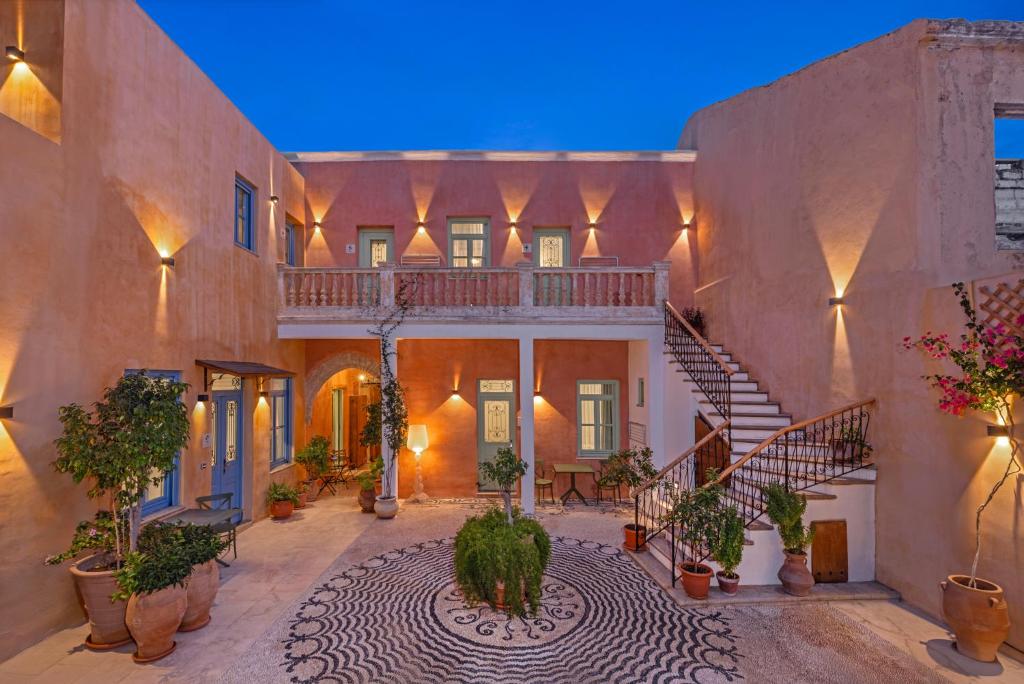
Casa del Sol Suites
Suites for two with a kitchenette and private terrace, within walking distance of the Acropolis of Rhodes at Monte Smith. There’s a garden and courtyard for relaxing, plus free Wi-Fi throughout. There is no parking, and quiet hours are observed from 22:00.
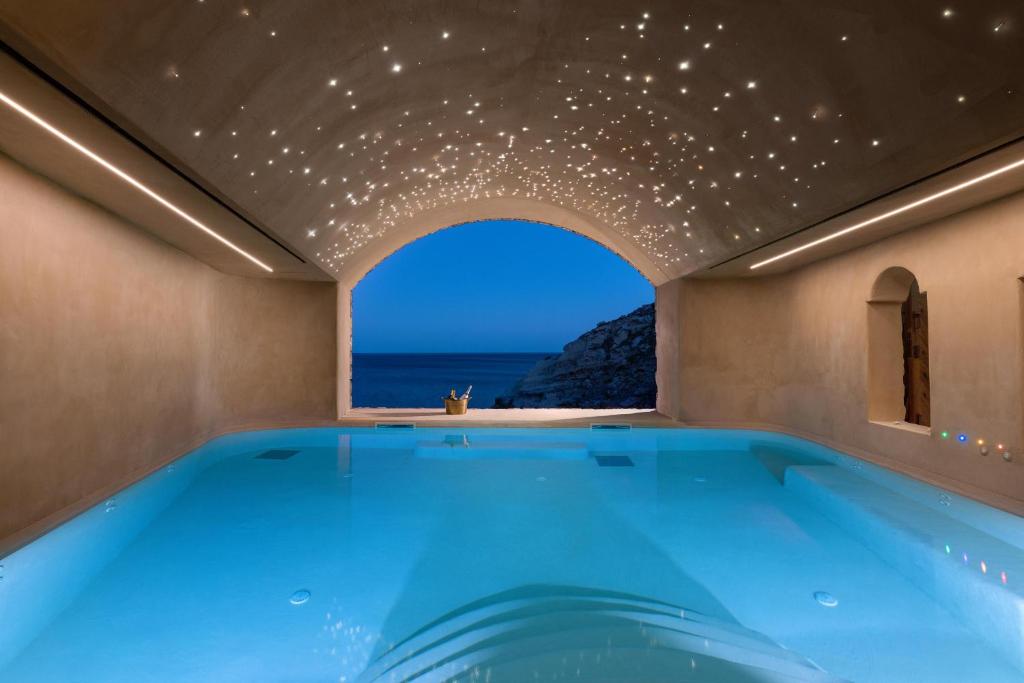
Stone Luxury Suites - Adults Only
Suites with sea views, close to Stegna Beach. The largest, at 65 sq m, have two bedrooms and a kitchen, making them suitable for two couples travelling together. Parking is free; a cash deposit is required on arrival and is refunded.
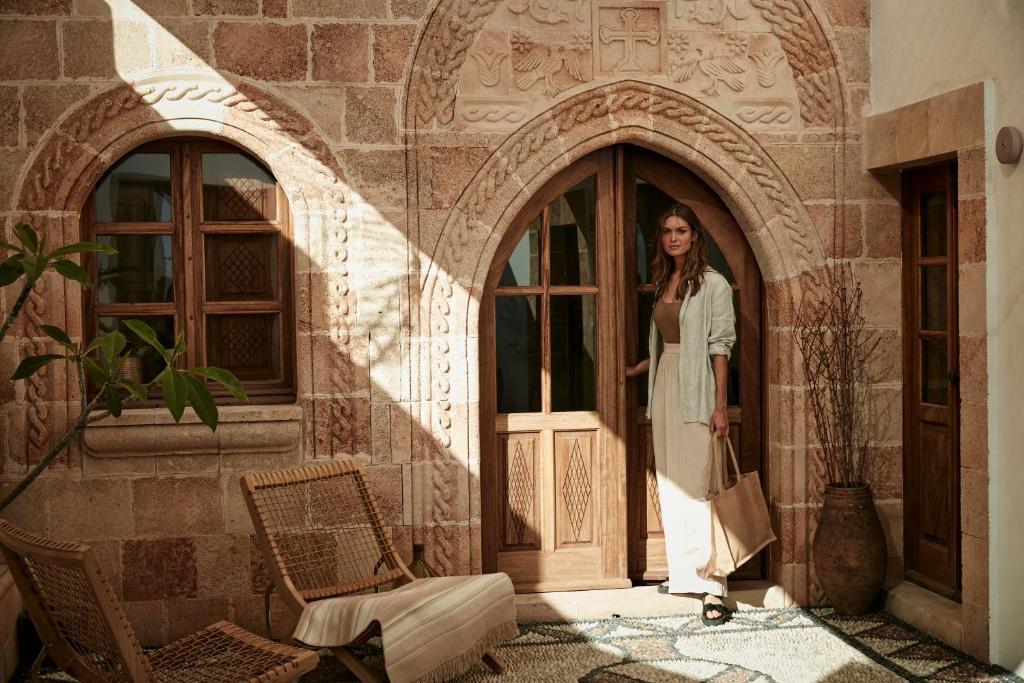
AF Lindia Nature Design Hotel
Suites with an outdoor hot tub or plunge pool, often with coastal views, just a few steps from the beach and the path to the Acropolis. Free private parking is a valuable perk in a village where parking is scarce. A credit card deposit is required.
Kos
Kos is the region’s second major hub. Kos Town brings together ancient sites, Neratzia Castle and the port for ferries to Kalymnos, Pserimos and Nisyros. At Lambi, on the town’s northern edge, the sandy beach begins just beyond the last houses.
Zia, on the slopes of Mount Dikeos, offers views and cooler air; Kardamena, on the south coast, has a long beach and lively evenings; and Kefalos, at the western end, is peaceful. Find out more in our guides to where to stay in Kos and Kos Town, as well as our listings for accommodation in Kos.
Three self-catering options, from Lambi’s sandy beach to the slopes of Mount Dikeos:
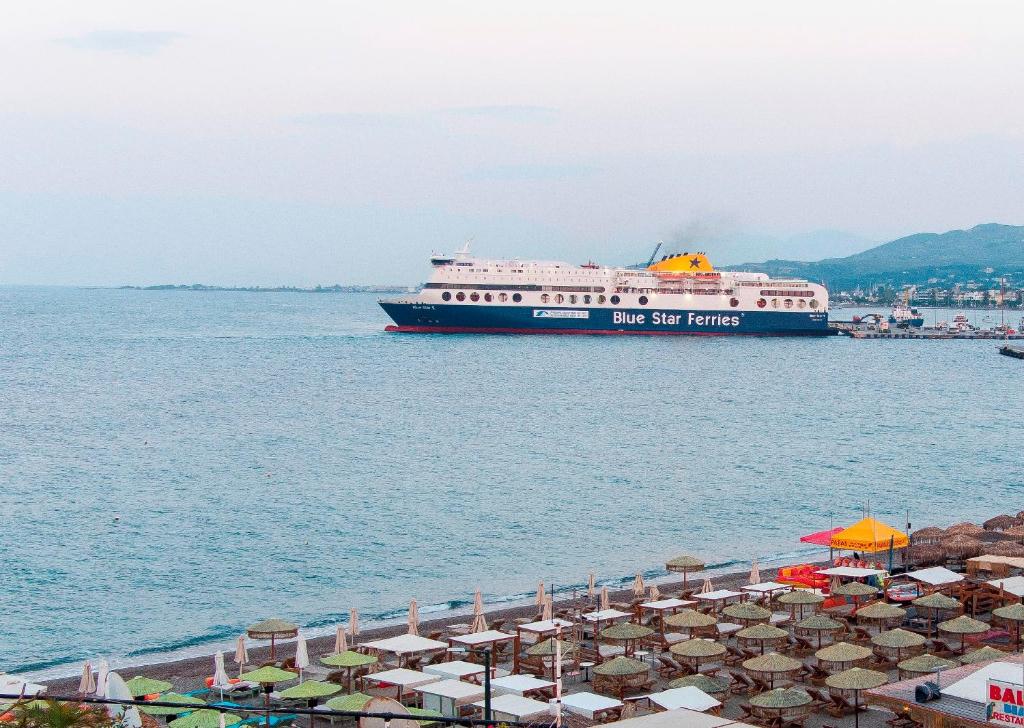
SeaSTAR Beach Apartments
Three homes a few metres from Lambi Beach, each with a kitchen, living area and terrace or balcony overlooking the sea. Adults-only and no parties: ideal for couples. Free Wi-Fi and free public parking on the surrounding streets.
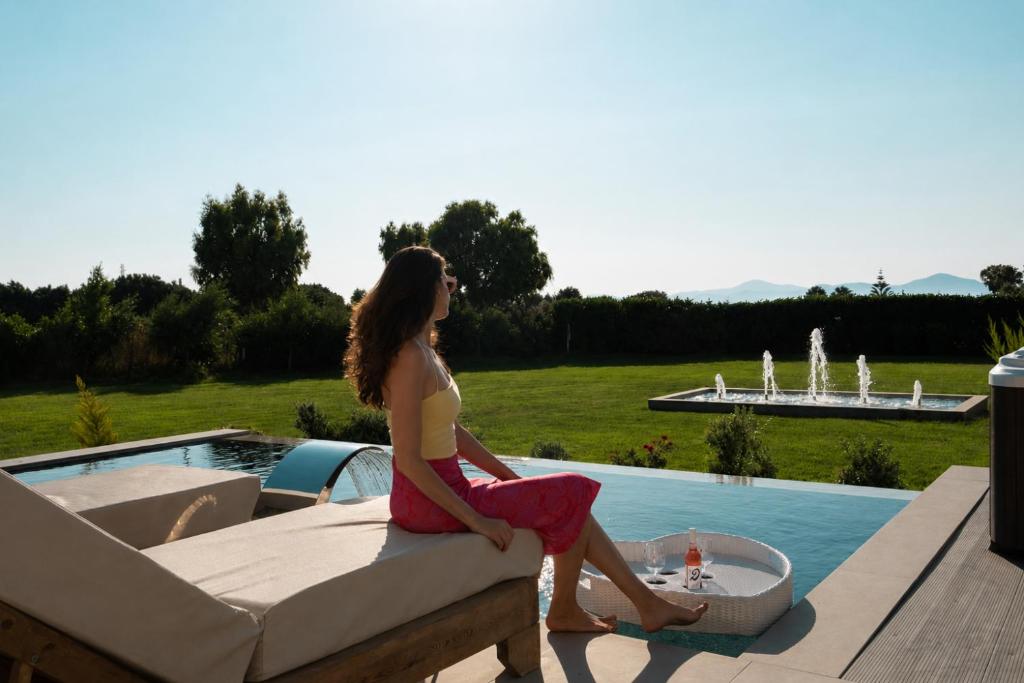
Aphrodite Luxury Villas & Suites-Private Heated Pool & Jacuzzi
Each villa has its own heated pool and hot tub, kitchen, living area and separate bedroom, and sleeps up to three. Bicycles and private parking are provided free of charge. The minimum stay is seven nights.
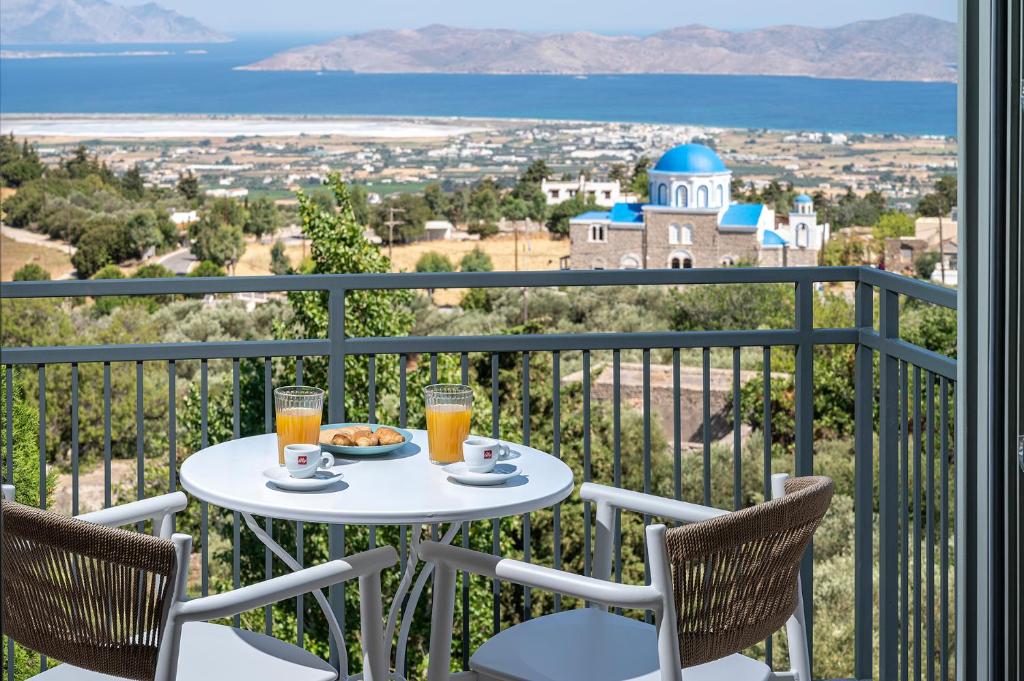
AnamneZia Luxury Suites
Villas high up in Zia, with private entrances, sea-view terraces and kitchens. With one or two bedrooms, they suit couples, families and groups; parking is free. The pool is open only in season, and quiet hours apply from 22:00.
Symi
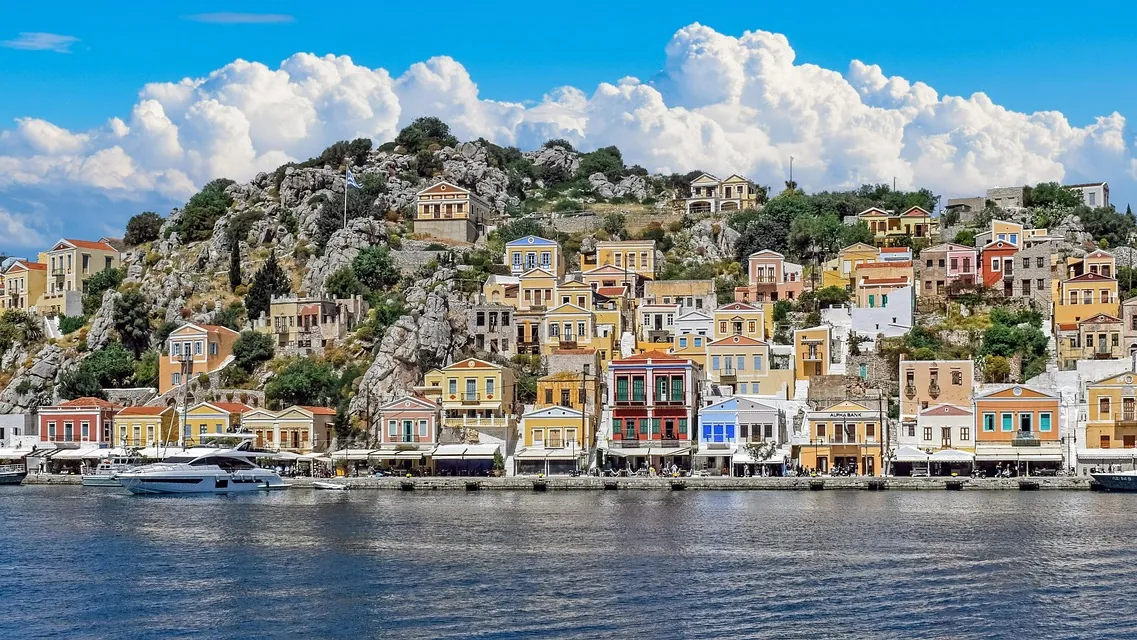
Symi is less than two hours by ferry from Rhodes and has no airport. Gialos, the harbour lined with neoclassical mansions in ochre and blue, is the most convenient base: ferries dock there, and boats to the beaches leave from there. Chorio, high above the harbour, offers peace and views, in exchange for hundreds of steps.
It’s worth staying at least one night: on summer afternoons, Gialos fills with day-trippers from Rhodes, who leave in the evening. See our guide to where to stay in Symi and accommodation in Symi.
Two options close to the port:
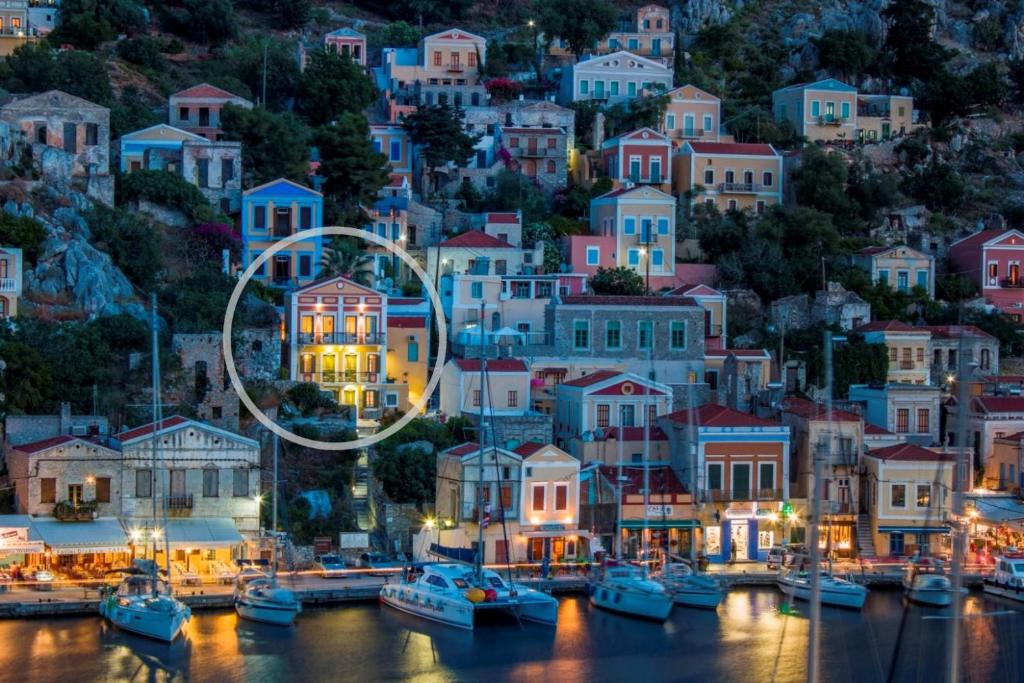
Θέα
Units in Gialos with a kitchenette and sunny terrace; three have balconies overlooking the harbour and the Aegean. Most sleep two, while the attic apartment accommodates up to four. Nos Beach is a short walk away, and Wi-Fi is free.
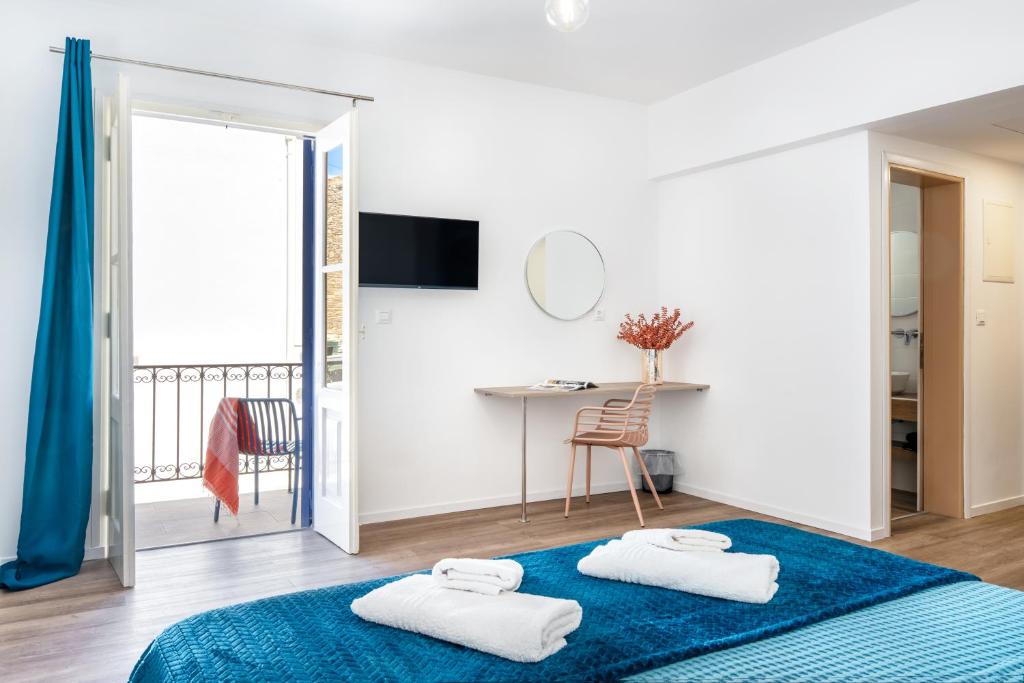
Twelve 12 Islands
Rooms for couples close to the port, some with a kitchenette and, depending on the option, a balcony, terrace or courtyard. Free Wi-Fi throughout. The upper floors are accessible only by stairs, and check-in is from 15:00 to 18:00, so take your ferry arrival time into account.
Kalymnos
Kalymnos is the island of sponge divers and a favourite climbing destination, with more than a thousand equipped routes and an international festival every October. Most visitors stay on the west coast, in Myrties and Massouri, opposite Telendos.
Pothia, the capital and main port, is convenient for those arriving from Kos, around 45 minutes by ferry from Mastichari. Panormos leads down to the small beaches of Kantouni and Linaria. Find out more in our guide to where to stay in Kalymnos and see accommodation in Kalymnos.
A hotel right by the sea and a home for larger groups:
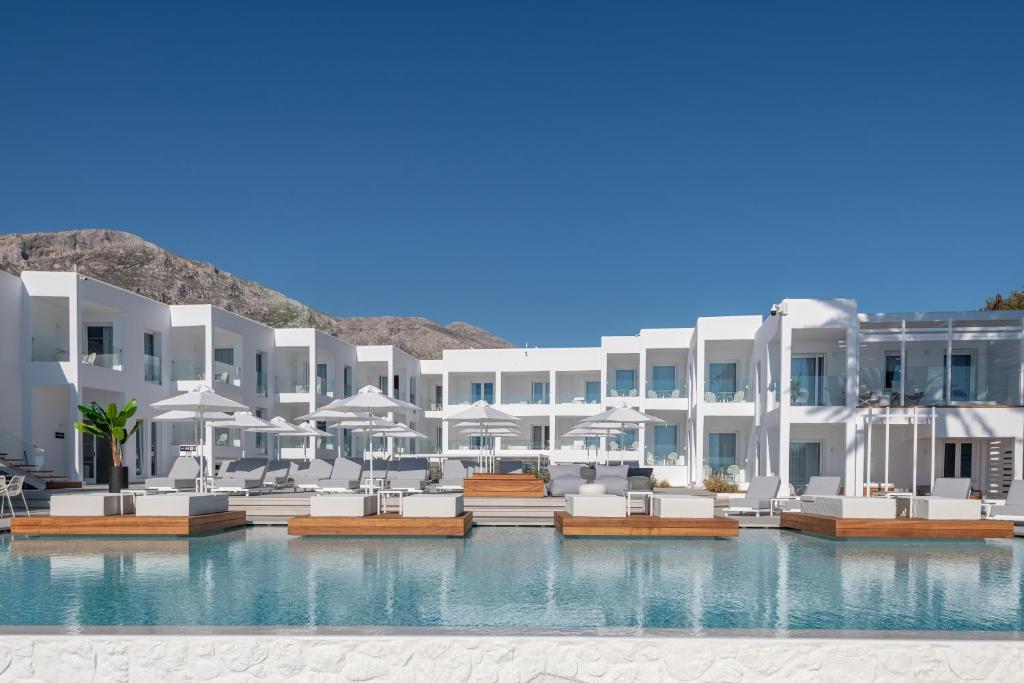
Kantouni Beach Boutique Hotel
Four-star hotel right on Kantouni Beach, with its own stretch of shore, an outdoor pool and activities such as diving, canoeing and windsurfing. Family rooms, children’s meals and free parking make it a good option for families. There is no lift.
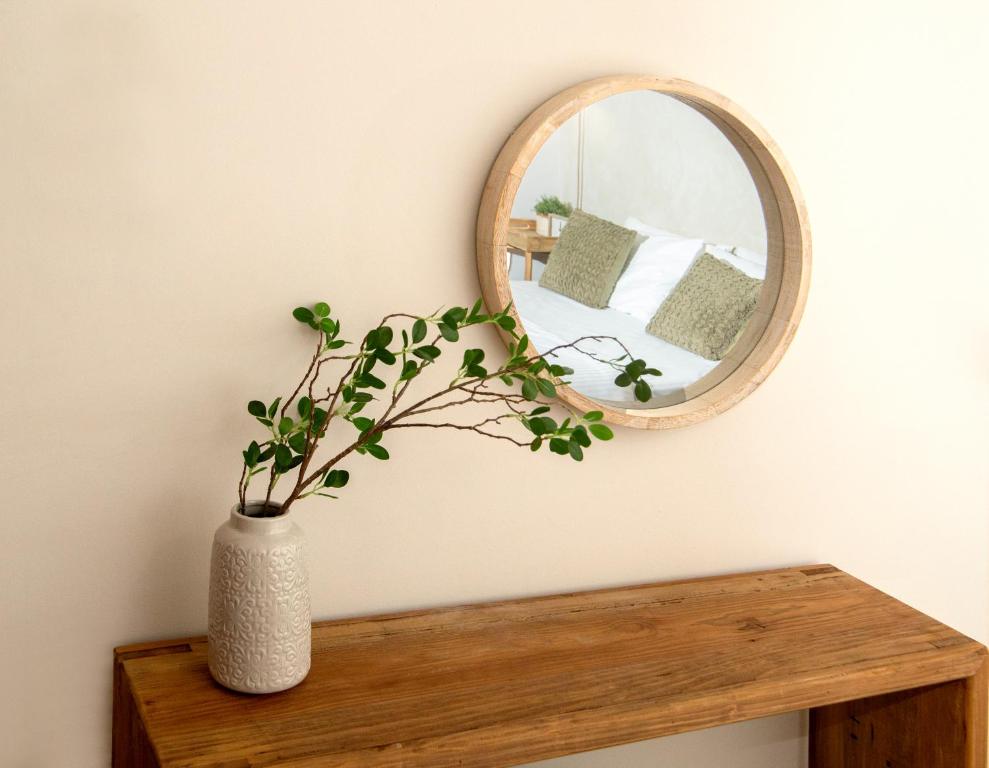
Casa di Emmanuel
A home in Pothia with three bedrooms for up to seven people, a fully equipped kitchen with a dishwasher, a balcony, a terrace and an outdoor dining area. Free private parking is available. The floors are connected only by stairs, and payment is by bank transfer before arrival.
Halki
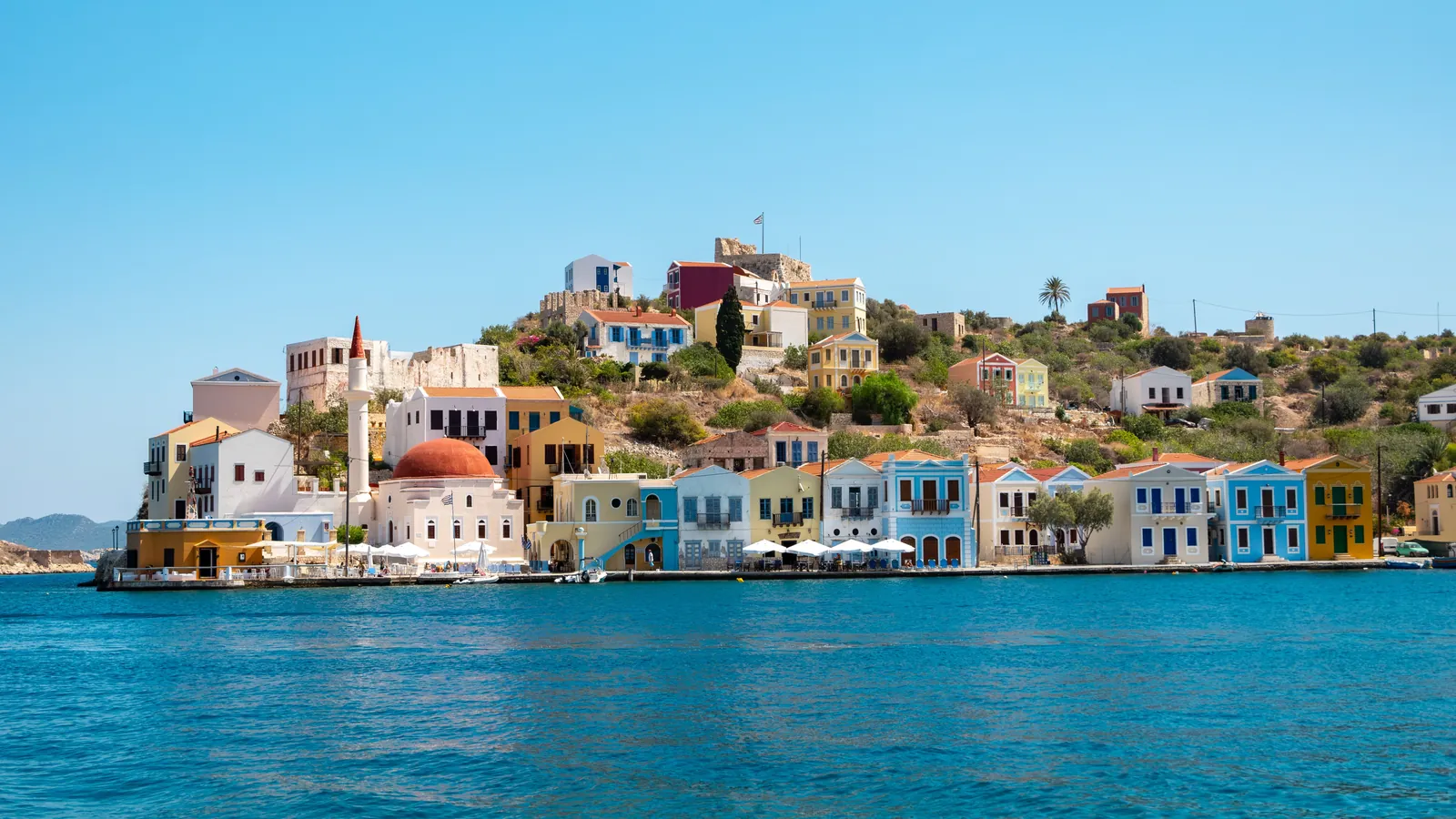
Halki is small and peaceful: almost all accommodation is in Nimborio, the island’s only inhabited settlement, around a harbour lined with colourful mansions. Since June 2026, the island has also had an Archaeological Museum, in a restored building in the settlement.
There is no airport: fly to Rhodes and take a boat from Skala Kameirou on the west coast. The island has around 850 beds, so book early for summer. See our guide to where to stay in Halki and accommodation in Halki.
Two sea-view villas for up to four people:
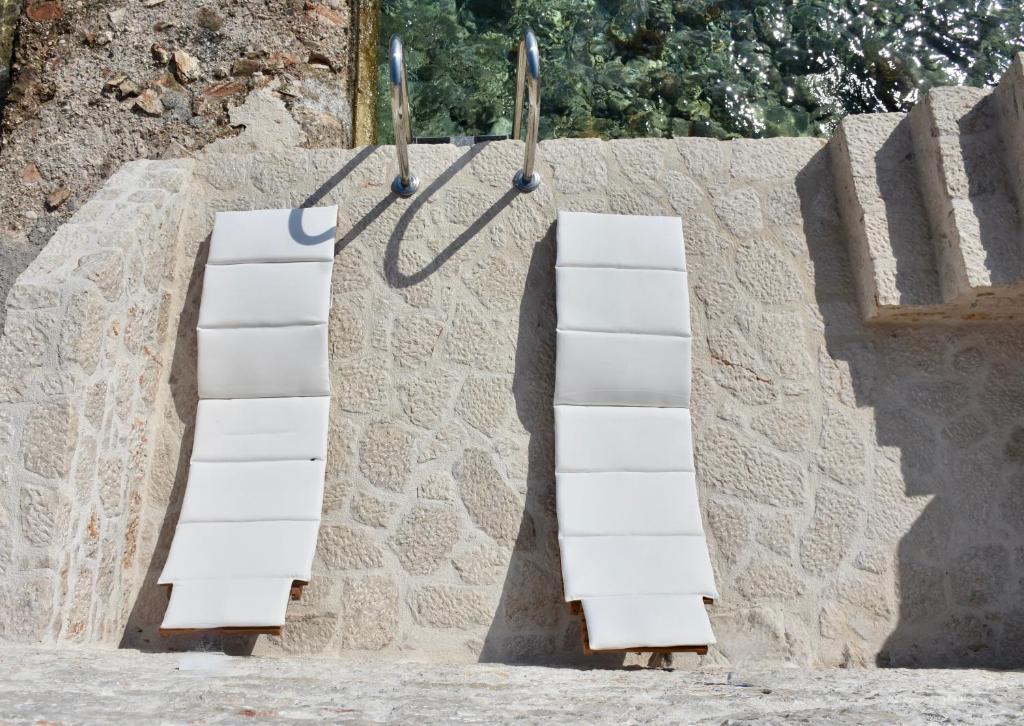
SALT RETREAT - Seafront Villa
A seafront villa with its own beach and a terrace overlooking the water, the mountain and the settlement. It has two bedrooms and two bathrooms, a kitchen, air conditioning and free Wi-Fi. Check-in is from 15:00 to 18:00, so let the property know your boat’s arrival time in advance.
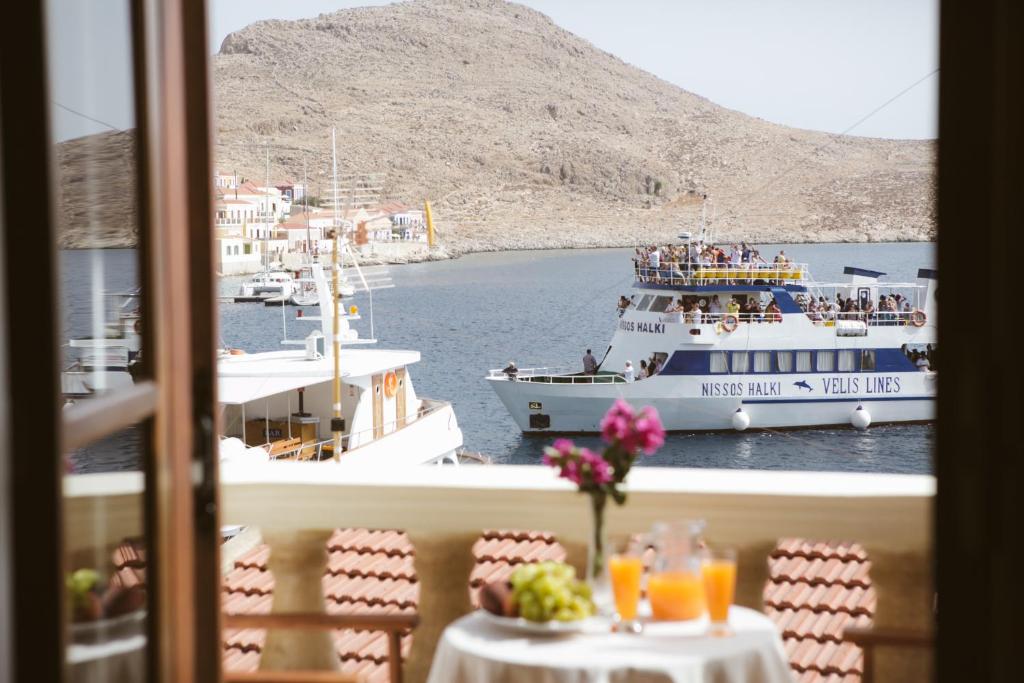
Villa Antonis
A villa in Nimborio with two bedrooms, a living area and a kitchen with an oven, sleeping up to four guests. The sea-view terrace and balcony are handy for eating outdoors, morning and evening. Minimum stay is two nights; arrival is possible until 23:30.
Karpathos
Karpathos, between Rhodes and Crete, is mountainous and long, with the traditional village of Olympos in the north and beaches such as Apella and Amoopi. Pigadia, the capital and main port, is less than 15 kilometres from the airport and the most practical base.
Lefkos, on the west coast, has a sandy beach in an almost enclosed bay and a much slower pace. You’ll need a car almost everywhere. Find out more in our guide to where to stay in Karpathos and see accommodation in Karpathos.
A villa in town and a guesthouse in Lefkos:
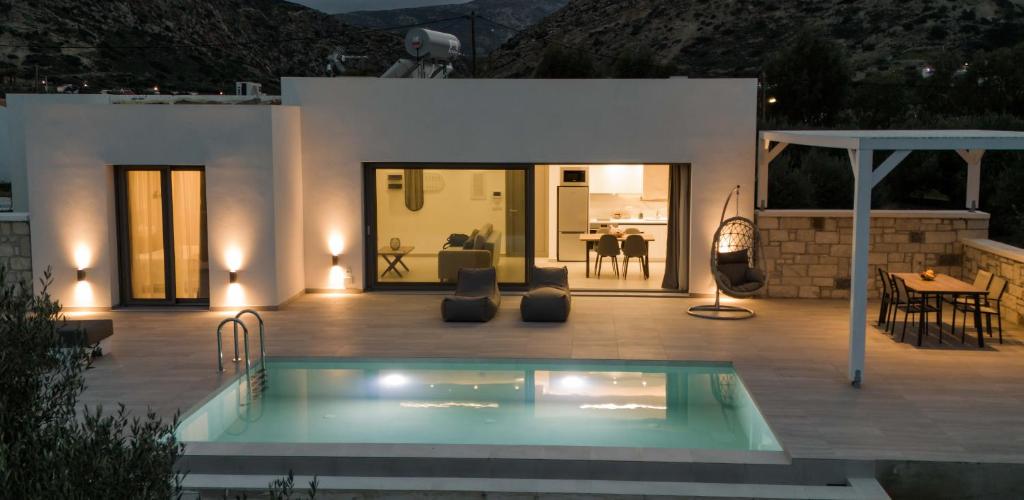
Anthelia Luxury Villas
Villas in Pigadia, each with its own pool, fully equipped kitchen with an oven and a terrace overlooking the garden, sleeping up to four. A children’s high chair and free private parking are helpful for families. Afoti Beach isn’t right next door.
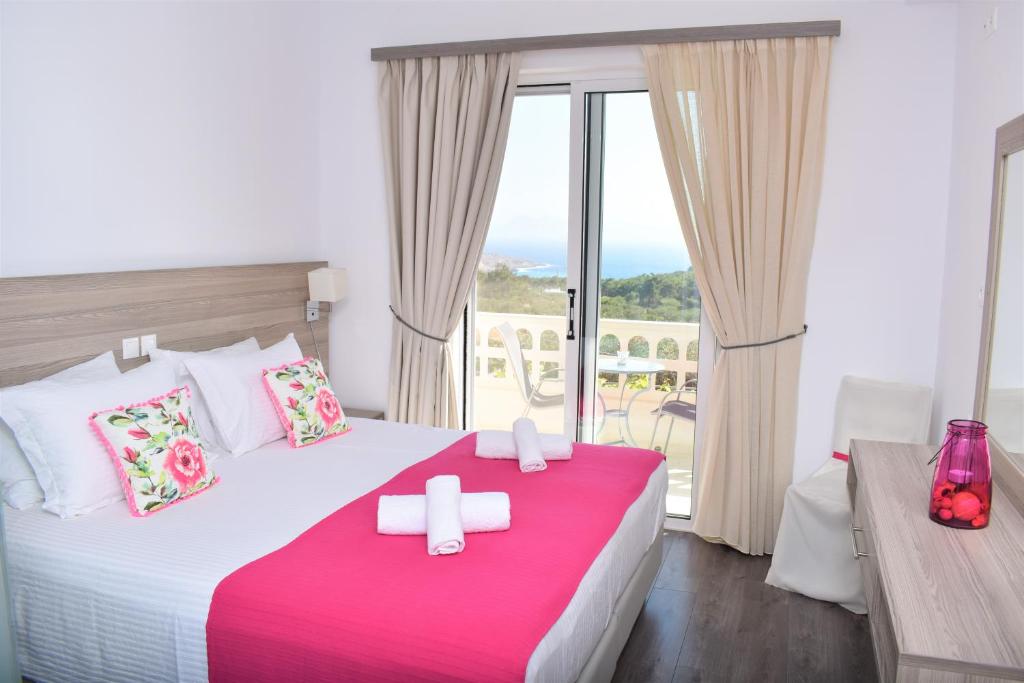
Λευκόραμα
A guesthouse with rooms featuring balconies and sea views, as well as a garden, restaurant, bar and room service. It suits those coming for hiking, diving or windsurfing, and offers free parking. There is no lift, and it isn’t right on the sandy beach.
The smaller islands
Fewer places to stay, but islands worth spending your whole trip on:
- Patmos: the Monastery of Saint John the Theologian and the Cave of the Apocalypse, both UNESCO sites; Skala is the main base.
- Leros: Lakki, with its Italian-era buildings, and the shallow waters of Alinda.
- Nisyros: the Stefanos crater, which you can walk down into; the island is now part of UNESCO’s Global Geoparks Network.
- Tilos: walking trails, migratory birds and Livadia Beach.
- Astypalaia: Chora, with its castle and windmills, and direct flights from Athens.
- Kastellorizo: the country’s easternmost island, with a single settlement, Megisti.
For an even quieter break, take a look at Lipsi and Kasos.
When to go
May, June, September and October combine warm seas with fewer crowds. In July and August, accommodation fills up, and the meltemi winds can delay high-speed ferries and small boats.
Rhodes and Kos remain lively in winter, while many places to stay on the smaller islands close and ferry services become less frequent. Book ferries and rooms early for Easter and the Feast of the Assumption on 15 August.
How to get there and get around
Eight islands have airports: Rhodes and Kos, with flights from Athens year-round and direct flights from Europe in summer; and, served by smaller aircraft, Karpathos, Kasos, Leros, Kalymnos, Astypalaia and Kastellorizo. From Piraeus, the ferry to Kos takes around 9 to 12 hours, while the journey to Rhodes takes more than twelve, usually overnight.
High-speed and conventional ferries run between the islands, with more frequent services in summer. Find details in our guide to how to get to the Dodecanese and our guide to how to get to Rhodes.
Also factor in the climate crisis resilience fee: it is paid at your accommodation before departure, for each night, varies according to the type of accommodation and is higher from April to October.
Each island and each base has its own guide. For the largest island, read where to stay in Rhodes, in Rhodes Town, in Faliraki, in Kolymbia, in Archangelos, in Lindos and in Gennadi. For Kos, find where to stay in Kos and in Kos Town. For the other islands, find where to stay in Kalymnos, in Leros, in Patmos, in Symi, in Halki, in Tilos, in Nisyros, in Karpathos, in Astypalaia and in Kastellorizo. And for the journey: how to get to the Dodecanese and how to get to Rhodes.
Frequently asked questions
Quick answers to the most common questions from those still deciding where to stay in the Dodecanese.
Which Dodecanese island should you choose for a first visit?
For most people, Rhodes. It has the region’s largest airport, year-round flights from Athens, the Medieval Old Town, Lindos and ferries to Symi and the other islands. Kos is the second-easiest choice, with shorter distances and plenty of sandy beaches. If you’re looking for somewhere small and peaceful, combine either island with a few nights in Symi or Halki.
Where should you stay in the Dodecanese without a car?
The easiest bases are Rhodes Town and Kos Town: they have buses to the airport and major beaches, ferries to nearby islands and restaurants within walking distance. In Symi and Halki, a car is unnecessary because you can get around on foot and take small boats to the beaches. Karpathos, southern Rhodes and the mountain villages, on the other hand, almost always require your own vehicle.
Which Dodecanese islands are best for families with children?
Kos is one of the best choices, with long sandy beaches, cycle lanes and short distances. On Rhodes, Kolymbia and Archangelos have calm seas and villas with pools, while Amoopi in Karpathos has shallow, usually sheltered waters. Alinda in Leros also has a shallow sandy beach. One thing to watch out for: many places to stay in the region, including some in our guide, are adults-only, so always check the terms before booking.
Can you visit several islands on one trip?
Yes, and the Dodecanese make it easy. From Rhodes, you can easily reach Symi, Halki and Tilos, while from Kos you can get to Kalymnos, Nisyros and Pserimos. In the north, Leros, Patmos and Lipsi are linked by high-speed ferries. For a ten-day trip, a good combination is four nights in Rhodes or Kos and the rest on one or two smaller islands, with a spare day before your return flight.
When is the best time to visit the Dodecanese?
May, June, September and October are the most balanced months: the sea is warm, ferry services are frequent enough and there are fewer visitors. In July and August, the islands fill up, and the meltemi winds can affect small boats. Rhodes Town and Kos Town remain lively in winter, but many places to stay on the smaller islands close and ferry services become less frequent. For climbing in Kalymnos, spring and autumn are ideal.